Our lives changed in seconds. That’s how Leah Stewart’s family describe the moment they learned she had been attacked by a shark. They say they’re still in shock as Leah continues her recovery. But the image that won’t leave their minds is the surfboard that drifted back to shore with deep bite marks still visible… 👇🦈🏄
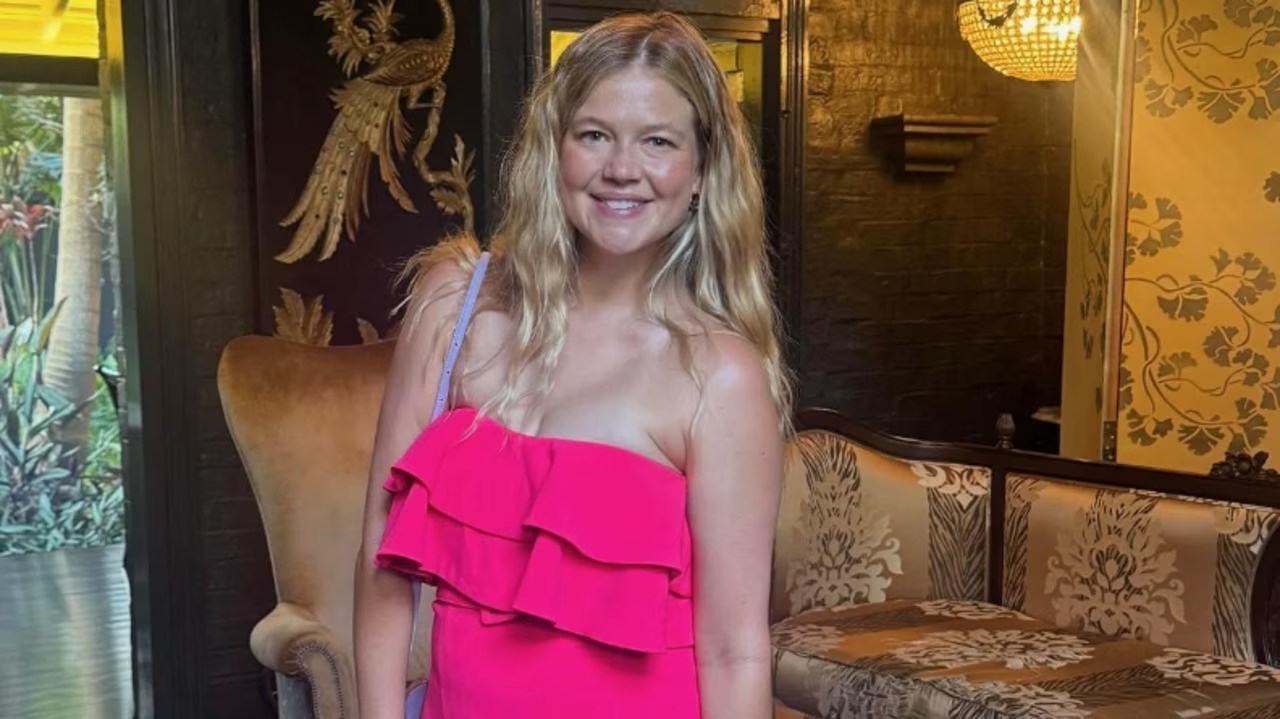
It was a crisp, routine morning at Sydney’s world-famous Coogee Beach, a highly popular eastern suburbs destination celebrated for its vibrant community of swimmers, local families, and calm coastal breaks. The peaceful weekend routine was violently shattered, however, when thirty-four-year-old local schoolteacher and passionate mother Leah Stewart went out for a routine swim with two close friends. Swimming a mere 30 meters from the shoreline—an area widely considered a safe sanctuary by locals—Stewart was suddenly and savagely ambushed by a massive Great White shark.
The violence of the encounter immediately drew the attention of stunned onlookers on the sand. Nicola Logan, a witness who was standing near the beach infrastructure, recounted the sheer terror of watching the water turn crimson in a matter of seconds.
“I saw a massive pool of blood in the water, then a lady kind of motioning to swim, lots of splashing, and then a ski paddler was out trying to bring her in,” Logan recalled to reporters.
The immediate aftermath was a scene of unmitigated chaos as witnesses screamed for help and scrambled to orchestrate an emergency rescue while the ocean predator lingered nearby.

30 METERS FROM SAFETY: THE BRAVE PADDLEBOARD RESCUE
As Stewart fought for her life in the deep water, twenty-five-year-old Charlie Verco, an off-duty lifeguard and champion paddleboarder, spotted the commotion from the surf line. Recognizing that the victim was entirely incapacitated by the rapid loss of blood and extensive trauma, Verco threw himself onto his board and paddled directly toward the hazard zone.
The rescue attempt was a high-stakes race against time, compounded by the horrifying realization that the apex predator was still hunting in the immediate vicinity.
“I started paddling out to see if everything was alright and I could see something in the water. There was a lot of blood in the water, I couldn’t really see what was going on. She popped up and the shark let her go and that was when I got close enough to grab her and put her on my board and take her to shore,” Verco later recounted.
Verco admitted feeling “very scared” as he realized the size of the shark circling near the struggling swimmers. Battling the surf, he successfully hauled Stewart’s heavily bleeding body onto his paddleboard and ferried her back to the safety of the sand. On the beach, members of the public immediately rushed forward to administer emergency first aid, working frantically to staunch the severe hemorrhaging until paramedics arrived.
“SHOCKED AND DEVASTATED”: THE LIFE-CHANGING INJURIES
New South Wales Ambulance units and critical care medical teams arrived at Coogee Beach within minutes, encountering a medical emergency of the highest severity. Ambulance Inspector Mike Corlis briefed media on the sand, confirming that Stewart had sustained profound, life-threatening flesh wounds to her lower left leg and both arms. Stewart had suffered catastrophic blood loss, multiple complex bone fractures, and severe lacerations across her entire body. She was rushed under emergency police escort to St Vincent’s Hospital in a critical, unstable condition.
The tragedy has left her close-knit family entirely “shocked and devastated” as they grapple with the sudden, violent fracturing of their daily lives. In the initial, high-stakes days following the attack, teams of trauma surgeons worked tirelessly through consecutive multi-hour operations to stabilize her vital signs. To save her life, medical staff were ultimately forced to perform a major, life-changing procedure: the complete amputation of her arm.
The family is deeply braced for the long-term reality of her physical deficits and the profound emotional impact the incident will have on Stewart’s eighteen-month-old daughter, August. To support her impending years of specialized care, prosthetics, and adaptive living, her brother Joshua launched a crowdfunding campaign, which has already drawn immense community solidarity, raising hundreds of thousands of dollars.
RECOVERY AND RECONSTRUCTION: THE LONG ROAD AHEAD
While the immediate physical destruction of the ambush has left her family reeling, Stewart has shown a profound, fighting spirit in the intensive care unit. After spending over a week on mechanical life support and enduring five straight days of aggressive surgeries, doctors were briefly able to reduce her heavy sedation and extubate her, bringing her out of her induced coma for a short window of time.
The emotional breakthrough provided her family with a moment of pure hope amid the trauma. Upon opening her eyes, Stewart looked directly at her mother and her partner, Fernando, and managed to whisper her very first words:
“I love you.”
Her brother Joshua shared that despite her severe cognitive disorientation upon waking, her absolute first thoughts were not about her own missing limb or agonizing pain, but about checking on the welfare of her baby daughter. While the family views her early awakening as an absolute miracle, they remain highly grounded about the immense hurdles ahead. Her remaining arm has sustained severe, deep-tissue nerve and tendon damage, rendering her hand completely immobile for the foreseeable future. She faces a grueling, multi-month timeline of intensive physical rehabilitation and rolling reconstructive procedures.
EMBATTLED COASTLINE: THE FURIOUS CULLING DEBATE
Beyond the walls of St Vincent’s Hospital, the horrific attack on the young mother has reignited a fierce, polarized political and environmental debate across Australia regarding shark management and public safety infrastructure. In the immediate aftermath, Randwick Council deployed emergency drones to scan the bays and implemented a sweeping 24-hour closure of all local beaches.
The incident quickly caught the attention of high-profile political figures, with former Prime Minister Tony Abbott entering the public fray by posting a highly publicized video demanding an immediate lethal cull of Great Whites in the area. “It’s so wrong that we don’t cull sharks after attacks. It’s so wrong we don’t put people before sharks,” Abbott stated aggressively.
However, New South Wales Premier Chris Minns has firmly ruled out any localized shark culls, citing Australia’s strict international treaty obligations regarding the protection of threatened marine species. Instead, the state government has committed to a massive escalation of non-lethal, high-tech surveillance, including a world-first scale rollout of advanced shark monitoring drones across public beaches. While the political debate continues to boil, the Stewart family has explicitly declined to comment on the policy crossfire. Their focus remains entirely singular: supporting a brave young mother as she fights to rebuild her life and return home to her daughter.
To learn more about the immediate community response and the courageous efforts to save her life at the scene, you can watch this report detailing the Coogee Shark Attack Victim Rescue. This broadcast features direct updates from the beach and the family’s first statements following the devastating news of her amputation.