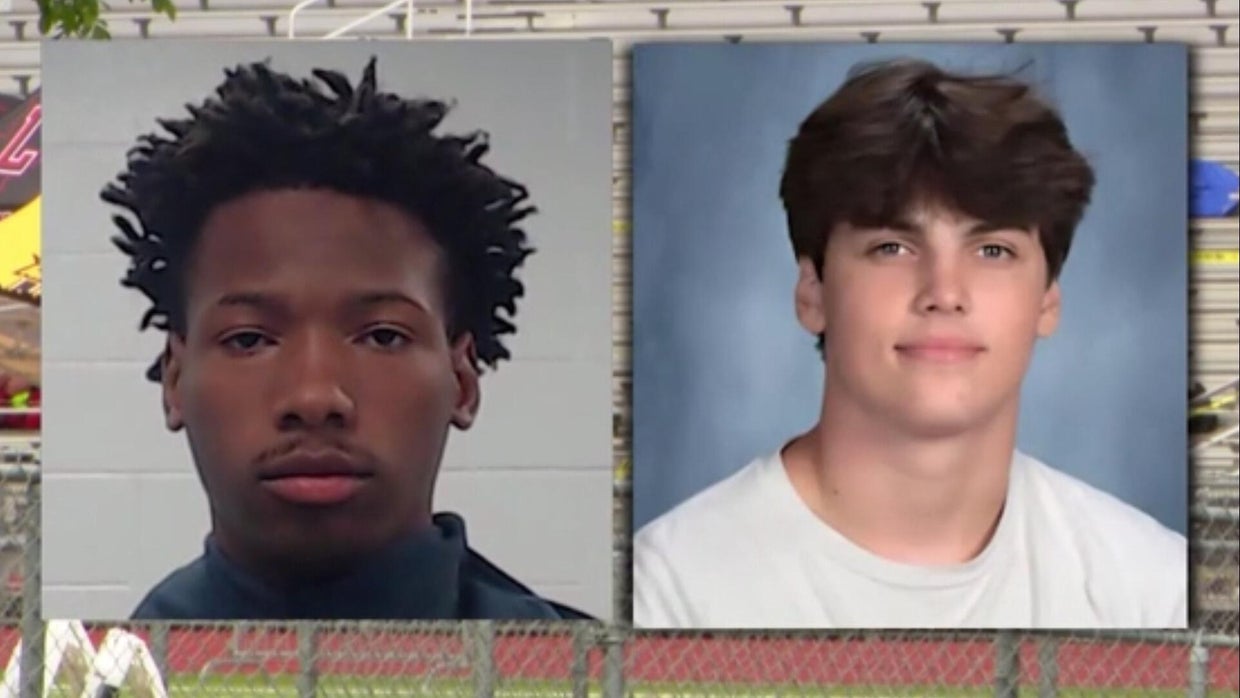
⚠️ FINAL DESTINATION: Caroline Peña arrived at a seemingly ordinary stop in Del Rio just before 2 p.m. Minutes later, according to prosecutors, she was surrounded by three attackers. The biggest question now isn’t what happened there… but why she went there in the first place
THE ARRIVAL AT EAST 10TH STREET
The midday sun over the border city of Del Rio, Texas, usually brings a predictable, heavy quiet to the residential and commercial arteries that cut through Val Verde County. On Thursday, June 25, 2026, that routine stillness was shattered by a sequence of events so swift and savage that it left a family decimated, an entire neighborhood traumatized, and three young women facing first-degree murder charges with unprecedented five-million-dollar bonds. At the center of this tragedy is thirty-two-year-old Caroline “Caro” Peña, a devoted mother of five who drove her black Dodge pickup truck toward what appeared to be a seemingly ordinary stop in the 800 block of East 10th Street. Arriving just before 2:00 PM, Peña stepped out of her vehicle into the humid afternoon air, entirely unaware that within a span of minutes, her life would be violently extinguished on the asphalt just yards away from a busy Sonic Drive-In.
For days following the attack, as social media platforms erupted with graphic bystander video clips and communities gripped their loved ones tighter, public speculation mounted regarding the nature of the ambush. To the casual observer passing by the high-traffic intersection, it seemed impossible that a fatal, multi-person assault could occur in broad daylight without warning. Initial theories painted the scene as a random act of street violence or an unprovoked attack on an innocent bystander. However, as homicide detectives with the Del Rio Police Department meticulously gathered security footage and cross-referenced the digital timelines of everyone involved, a far more complex and troubling narrative emerged. The biggest question gripping the community was no longer the logistical horror of what happened during those bloody minutes outside the drive-through, but rather the heavy underlying question of why Caroline Peña went to that specific location in the first place.

THE DISCOVERY OF THE BLADE AND THE SURVEILLANCE TIMELINE
The public first learned of the crisis at approximately 2:10 PM, when local emergency dispatchers routed patrol units to the Val Verde Regional Medical Center. Staff at the facility had initiated emergency trauma protocols for a female patient who had just arrived via private vehicle suffering from multiple, catastrophic stab wounds to her upper torso. The victim, quickly identified as Peña, was bleeding profusely from deep lacerations to her back and abdomen. Recognizing that the local facility lacked the specialized surgical infrastructure required to repair the extensive internal hemorrhaging, physicians coordinated an emergency medical airlift to transport her to a premier trauma hospital in San Antonio. Despite the rapid mobilization of the flight crew and hours of aggressive surgical intervention, the physiological damage proved insurmountable, and Caroline Peña was pronounced dead at approximately 9:00 PM that evening.
Back in Del Rio, a parallel forensic dragnet was already uncovering the structural framework of the crime. Investigators immediately traced the primary scene back to East 10th Street, where they discovered pools of blood and discarded personal items near the commercial perimeter. Homicide thám tửs secured high-definition surveillance footage from multiple surrounding commercial properties, including the neighboring Sonic Drive-In. The visual evidence was stark and undeniable, capturing the final, desperate moments of the mother of five as she stood her ground, dressed in a pink shirt that was rapidly staining red, while being completely encircled by three young women who aggressively blocked her path of retreat.
The digital archive provided by the security cameras allowed authorities to reconstruct the arrival sequence with pinpoint accuracy. The footage showed Peña’s black Dodge pickup pulling into the vicinity, followed almost immediately by a sleek, black Chrysler 300. The operational timeline established that within less than three minutes of the vehicles crossing paths, a verbal dispute escalated into a physical assault. The footage showed nineteen-year-old Amaya “Cookie” Diaz leaping out of the front passenger seat of the Chrysler, her right hand firmly gripping a sharp blade. According to police affidavits, the teenager immediately engaged Peña, delivering rapid, heavy strikes to her back and abdomen, while her older sister, twenty-one-year-old Kitty Mia Diaz, and their companion, twenty-one-year-old Kyandra Renee Faz, converged on the victim to prevent her from escaping the assault.
COURT DOCUMENTS EXPOSE THE INTENT TO FIGHT
As the three suspects were systematically hunted down and arrested by police units later that afternoon, the core mystery of the case shifted to the legal documents filed in Val Verde County court. It was within these formal criminal complaints that the chilling answer to why Peña drove to East 10th Street was finally revealed to the public. According to the court records obtained by investigative journalists, the entire deadly encounter was rooted in an ongoing, deeply personal feud between the parties involved, rather than a random crossing of paths.

The documents reveal that Kyandra Renee Faz provided a critical, self-incriminating statement during her post-arrest interrogation with detectives. According to the formal complaint, Faz explicitly told law enforcement officers that Caroline Peña had not been ambushed blindly while running a casual errand; instead, Peña had driven her black Dodge pickup truck directly to Faz’s residential vicinity with the specific, predefined intent to engage in a physical confrontation. The legal paperwork notes that Faz stated Peña arrived “with the intent to fight,” signaling that an escalating series of digital threats or interpersonal grievances had reached a boiling point on the afternoon of June 25.
This revelation completely recontextualized the surveillance footage for homicide investigators. The arrival of the black Chrysler 300 was not a random coincidence, but a coordinated response to Peña’s presence at the property. When the Diaz sisters arrived at the scene as reinforcements for Faz, the dynamic transformed from an isolated neighborhood dispute into a lethal, three-on-one confrontation. While the court documents firmly establish that Peña initiated the physical trajectory by traveling to the location to confront Faz, the legal consensus remains clear that the response from the suspects—specifically the introduction of a concealed weapon by Amaya Diaz and the subsequent group beating—constituted a disproportionate, murderous escalation that far exceeded any legal definition of self-defense or mutual combat.
THE CHILLING REACTION OF THE DIAZ SISTERS
What has intensified the local community’s grief and collective anger is the complete lack of remorse and gravity displayed by the suspects immediately following their capture. By 4:00 PM on Thursday, a heavily armed tactical unit from the Del Rio Police Department had surrounded the Diaz residence, taking both Kitty and Amaya into custody without further incident before tracking down Faz shortly thereafter. As the sisters were led out of their home in handcuffs, local independent journalists captured video footage that quickly went viral across national social media networks, sparking widespread public condemnation.
The recorded footage documented twenty-one-year-old Kitty Diaz walking down the front steps barefoot and dressed in minimal clothing, yet she openly leaned toward the media cameras, flashing a broad, unbothered smile as if posing for a celebratory photograph. Her younger sister, nineteen-year-old Amaya, showed a different form of defiance, angrily shouting at reporters to stop recording their processing. The erratic, cold behavior continued even after the suspects were secured inside the rear compartment of the police cruisers. Independent journalists at the scene reported that the window of the patrol unit was briefly lowered, at which point Amaya Diaz stuck her face out toward the crowd, sticking her tongue out and actively goofing off despite having just participated in a stabbing that left a mother of five fighting for her life.
This public display of callousness stood in stark, agonizing contrast to the scene unfolding at the hospital, where Peña’s family was collapsing under the weight of an unimaginable loss. The complete mismatch between the gravity of a homicide and the celebratory, mocking demeanor of the perpetrators has galvanized the local prosecution. Recognizing the severe danger the individuals posed to the community and their flagrant disregard for human life, a Texas magistrate judge took the rare step of setting individual bail at an astronomical five million dollars for each woman, effectively ensuring they remain heavily detained within the GEO Correctional Facility as the grand jury prepares the formal indictments.
THE AGONY OF CHRISTINA SALINAS AND THE RECONSTRUCTION OF A LIFETIME BOND
While the legal system mechanisms grind forward against the three co-defendants, those who truly knew Caroline Peña are left to navigate a desolate landscape of unanswered questions and profound personal guilt. Among the most deeply impacted is Christina Salinas, Peña’s best friend and confidante of eight years. For Salinas, the details of the court documents offer little comfort, as her mind remains permanently locked on a specific, heartbreaking digital timestamp that occurred just minutes before the fatal confrontation on East 10th Street.
On the afternoon of the murder, at exactly 1:35 PM, Peña’s name flashed across Salinas’s phone screen. Because Salinas was in the middle of completing her shift at a local adult daycare facility, she was unable to answer the call before it went to voicemail. It was a standard, seemingly routine missed connection that has now transformed into a source of permanent torment. Salinas is haunted by the agonizing belief that if she had simply picked up the phone, she could have talked her best friend out of driving to Faz’s residence, or at the very least, she would have driven to the scene to stand beside her, potentially altering the fatal outcome.
The depth of their bond makes the loss uniquely devastating for Salinas. The two women had been virtually inseparable for nearly a decade, functioning more like sisters than friends. Just the evening prior to the attack, they had gathered in Peña’s kitchen, laughing and cooking sopa de fideo with Peña’s young daughter. The reality of her friend’s death materialized for Salinas in the most horrific way imaginable when she happened to glance at a local community watch page on social media later that afternoon. An anonymous user had posted a raw photograph of the active crime scene near Sonic, showing a woman in a bloody shirt. Salinas did not need to see the victim’s face; she instantly recognized the precise way Peña’s hair was pinned up in her signature bun and the exact fabric of the clothes she had been wearing. Salinas dropped everything and sprinted to the emergency room, managing to arrive while Peña was still conscious and fighting to breathe before medical teams administered sedatives for the San Antonio flight. Salinas was able to press a final, desperate kiss against her best friend’s forehead at the helipad, a final memory that now overlays years of shared milestones and quiet family evenings.
THE CHRONICLE OF THE VILLAGE: FROM TEEN MOTHERHOOD TO STABILITY
To truly understand the magnitude of the void left by Caroline Peña’s death, one must look beyond the violent circumstances of her final destination and examine the resilient life she managed to build in the border community. Her journey was defined by an early, intense introduction to the responsibilities of adulthood. Years ago, as a young teenager navigating an unexpected pregnancy, Peña transitioned out of the traditional high school system and enrolled in Cradles in the Classroom, a specialized regional academic program designed to support young parents as they completed their diplomas while simultaneously learning the fundamentals of infant care.
It was within the walls of that alternative classroom that Peña met Zelina Ochoa, another teen mother who would become a lifelong companion. The two young women forged a survival pact, bringing their infant sons to school with them, balancing textbooks on their laps while managing diapers and feeding schedules. Ochoa recalls that during those lean, terrifying early years of motherhood, Peña functioned as an emotional anchor for everyone around her. When Ochoa finally managed to secure her very first independent apartment, she had virtually no resources to furnish it. Without hesitation, Peña stripped her own modest living space to provide her friend with baby clothes, a functional television, a VHS player, and children’s videotapes to ensure the young child had a comfortable environment.
This spirit of radical generosity became Peña’s defining characteristic as she matured into her twenties and thirties. Despite managing a massive household of five children—including a set of twins—she operated as a central support hub for an entire network of extended family and friends. Her oldest son is currently seventeen years old, standing on the absolute precipice of his high school graduation, a milestone that Peña had spent nearly two decades anticipating with immense pride. Ochoa emphasizes that Peña possessed an innate, natural-born instinct for maternal care that extended far beyond her immediate biological offspring, routinely stepping in to watch neighbors’ children, cook large communal meals, and offer financial or emotional shelter to anyone experiencing a crisis. In describing the foundational role Peña played in the social fabric of Del Rio, Ochoa noted that while society often references the ancient proverb that it takes a collective village to raise a single family, Caroline Peña didn’t just participate in that network; for those who had nothing else to rely on, she single-handedly embodied the village.
THE GRAVITY OF THE CHARGES AND THE ROAD AHEAD FOR DEL RIO
As the physical evidence from the 800 block of East 10th Street is formally cataloged into court archives, the city of Del Rio faces a long, painful process of cultural recovery. The revelation from court documents that the confrontation was intentional does not diminish the community’s collective trauma; rather, it highlights the devastating ease with which interpersonal feuds can escalate into lethal violence when weapons are introduced into tense environments. The local police department has reiterated that their investigation remains highly active, leaving open the potential for additional criminal charges to be levied against the co-defendants or any third parties discovered to have facilitated the confrontation or helped suppress evidence.
For the five children left behind, the legal outcomes of the upcoming first-degree murder trials will do nothing to alter the permanent reality of their domestic life. While Amaya, Kitty, and Kyandra face the absolute maximum penalties under Texas state law—potentially including life sentences without the possibility of parole—their families will still retain the ability to visit them through prison glass. For the Peña children, however, their mother has been abruptly transformed from a living, breathing source of unconditional love and protective shelter into a silent memory.
The story of Caroline Peña’s final destination remains etched into the contemporary history of Val Verde County as a tragic cautionary tale regarding the volatile nature of modern street conflicts. As her family and friends gather in the coming days to lay the thirty-two-year-old mother to rest, they are united in their determination to ensure that her identity is not defined by the horrific video clips circulating online or the specific violence that claimed her life outside the drive-through. Instead, they choose to remember the vibrant, bubbly woman with the infectious laugh who dedicated her entire existence to nurturing the next generation, ensuring that the legacy of the natural-born mother who was the village will continue to resonate through the lives of the five children she loved above all else.