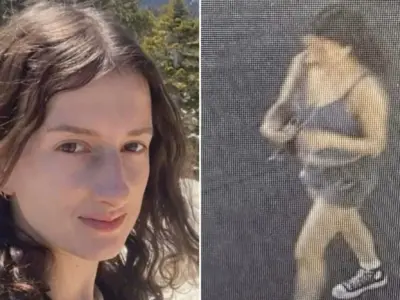
SEARCH CALLED OFF: Nolan Wells’ Family Left With No Answers After Holiday Trip Ends in Mystery
SEARCH CALLED OFF: Nolan Wells’ Family Left With No Answers After Holiday Trip Ends in Mystery
What began as a July 4 outing turned into a massive search for 18-year-old Nolan Xavier Wells after he disappeared near Horn Island, Mississippi.
Now the search has ended—but for Nolan’s family, the most painful part is only beginning, as the final hours before he vanished remain unexplained
******************
The sun-drenched shores of Horn Island, a secluded barrier reef floating just off the Mississippi coast, are typically associated with celebration, freedom, and the carefree energy of youth. Accessible only by private watercraft, the island serves as a popular sanctuary for locals looking to escape the mainland, particularly during major holiday weekends. However, over the recent Fourth of July weekend, this serene landscape became the setting for a harrowing nightmare that has left a community shattered and a family trapped in an agonizing search for answers.
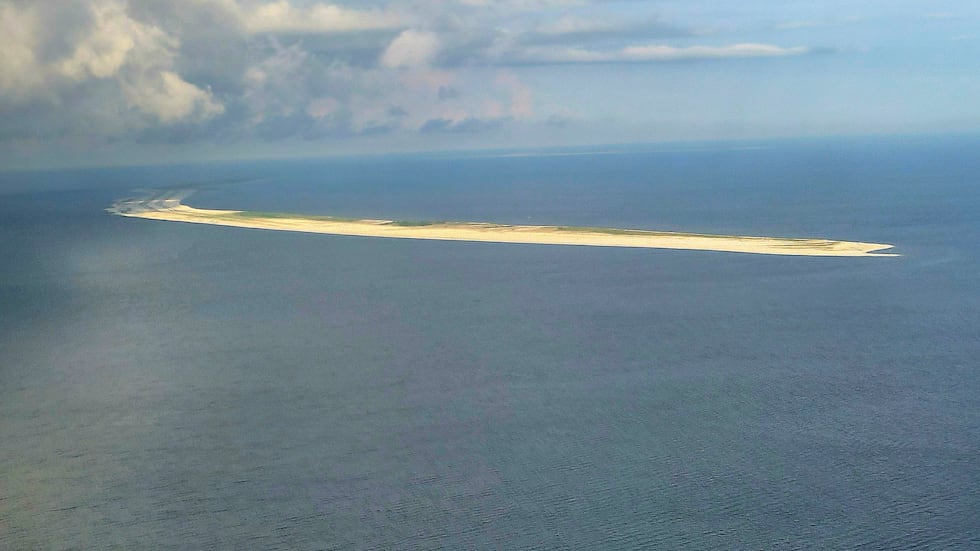
Nolan Xavier Wells, an 18-year-old student-athlete with a promising future, ventured out to the island with a group of friends to celebrate the national holiday. He was a young man of imposing physical stature and vibrant character, a general business major who had successfully earned a spot on the football team at Southwest Mississippi Community College. By all accounts, he was a dedicated teammate, a loving son, and a friend who consistently went out of his way to uplift those around him. Yet, when the holiday weekend drew to a close and the boats returned to the mainland, Nolan was not on board. He had vanished into the dense brush and shifting sands of the isolated barrier island, triggering a massive, multi-agency rescue operation that gripped the region for days.
The desperate hope that sustained Nolan’s family through days of scorching summer heat was abruptly crushed when the active search came to a somber halt. The United States National Park Service, working alongside local law enforcement, discovered a body on the remote western tip of Horn Island. While formal identification is still pending the results of official DNA testing being conducted by Jackson County Coroner Bruce Lynd Jr., the Jackson County Sheriff’s Department has confirmed that the recovery efforts have ceased, as the physical characteristics of the deceased match Nolan’s description. For his loved ones, the end of the search does not mark the beginning of closure; instead, it marks the opening of a painful new chapter defined by grief, confusion, and an unyielding demand for accountability.
The Scale of the Search and the Agony of the Aftermath

The disappearance of a college athlete on an island miles from the mainland prompted an immediate and massive mobilization of emergency resources. The logistical challenges of searching a barrier island—characterized by thick marshland, unpredictable coastal currents, and extreme summer temperatures—required an extraordinary level of coordination. Over several grueling days, a vast network of search-and-rescue teams combed every inch of the terrain, utilizing aviation assets, K-9 units, and marine patrols.
The operation drew together a powerful coalition of local, state, and federal agencies, each deploying specialized equipment to navigate the hostile island environment. The Jackson County Sheriff’s Department led the ground coordination, while the U.S. Park Service managed the federal land boundaries of the Gulf Islands National Seashore. Simultaneously, the Department of Marine Resources monitored the surrounding waters, supported by the tactical rescue capabilities of the United States Coast Guard. Adding a deeply personal, community-driven element to the grid search were the volunteers of the United States Cajun Navy, an organization renowned for deploying private citizens and vessels to assist in missing persons cases across the Gulf Coast.
Despite the relentless efforts of these rescue teams, the discovery of the body on the island’s west end transformed a rescue mission into a death investigation. For Nolan’s mother, Christine Wonsley, the reality of the loss has brought an overwhelming wave of heartbreak. Taking to social media to honor her son, she described the profound void his absence leaves behind, emphasizing that his father, their extended family, and his inner circle of friends are completely devastated. She remembered Nolan as a remarkably special soul, a young man who possessed a natural gift for cheering up others and bringing joy into every room he entered, expressing the bittersweet comfort that God had taken his time in creating such a beautiful spirit.
A Wall of Silence: The Questions Detonating on the Mainland
As the shock of the discovery settles over the community, the grief felt by Nolan’s family is increasingly compounded by frustration. The central, agonizing mystery of the case revolves around the final hours leading up to Nolan’s disappearance. Horn Island is not a place one can accidentally wander away from on foot; it requires a boat to reach and a boat to leave. This geographical reality has forced investigators and the public to confront a deeply unsettling question: How does an 18-year-old college football player get left behind on an isolated island while the rest of his party returns safely to the mainland?
The pain of this question is worsened by what the family perceives as a profound lack of transparency. In the immediate aftermath of Nolan’s disappearance, the individuals who accompanied him to the island have remained largely silent, providing no public accounts, explanations, or timelines of the events that transpired on the night of July 4. This wall of silence has left Nolan’s family in an informational vacuum, forced to mourn their son without understanding the basic facts of how he died or why he was abandoned.
In the face of growing public outrage and wild rumors circulating online, Nolan’s grandfather, Christopher Wells Sr., stepped forward to speak on behalf of the family. While acknowledging that the parents are preparing themselves for the absolute worst-case scenarios regarding the autopsy results, he made an impassioned plea for focus, restraint, and an unyielding pursuit of the truth. He emphasized that while it is absolutely time for concrete answers, the public must remain mindful that the immediate family needs physical space and the emotional freedom to grieve. He firmly stated that the community must halt the counterproductive finger-pointing and allow professional law enforcement agencies to conduct a thorough, unbiased investigation into the timeline of that fateful night.
The Intersection of Race, Social Media, and Public Suspicion
In the absence of official information, the vacuum has been filled by intense public scrutiny and a rapidly escalating discourse on social media platforms. The case has touched a raw nerve across the nation due to the stark demographic reality of the gathering. Nolan Wells was the only Black individual present within his social circle on the island that day, a detail that has caused the internet to explode with suspicion, anxiety, and demands for systemic justice.
For millions of onlookers tracking the case online, the silence of the witnesses has fueled theories of negligence, abandonment, or worse. Activists and community members have argued that if the racial dynamics had been reversed, the legal and public response would have been handled with an entirely different level of urgency. This perception has transformed a local tragedy into a national flashpoint, illustrating the deep-seated distrust that many minority communities harbor toward the conventional handling of mysterious deaths.
The intense online speculation has frequently drawn historical parallels to other high-profile, unresolved tragedies involving minority individuals in predominantly white spaces. Chief among these is the 2018 death of Tamla Horsford, a 40-year-old Black mother of five who died under highly mysterious circumstances after attending an overnight birthday party at a home in Forsyth County, Georgia. Like Nolan, Horsford was the sole Black person in attendance, and her death—initially ruled an accidental fall from a balcony—was plagued by a lack of clear witness testimony, conflicting timelines, and a severe lack of initial transparency that forced her family to fight for years to have the case reopened. The eerie similarities between the two cases have amplified the collective demand that the Jackson County Sheriff’s Department leave no stone unturned in examining the digital footprints, phone records, and forensic evidence of everyone present on Horn Island.

The Long Journey Toward Accountability
The investigation into the death of Nolan Wells is now entering its most critical phase. While the physical search on the barrier island has concluded, the forensic and analytical search is just beginning. Detectives are tasked with reconstructing a meticulous timeline of the July 4 holiday, a process that relies heavily on data extraction, interview techniques, and the final determinations of the medical examiner’s office.
The upcoming steps in the investigation will be vital in determining whether criminal charges will be filed:
+-----------------------------------+-----------------------------------+
| Investigative Phase               | Core Objectives & Targets         |
+-----------------------------------+-----------------------------------+
| Autopsy & Toxicology              | Establish the exact cause and     |
|                                   | time of death on the island.      |
+-----------------------------------+-----------------------------------+
| Digital Forensics                 | Analyze cell tower pings, texts,  |
|                                   | and social media posts from July4 |
+-----------------------------------+-----------------------------------+
| Witness Re-Interviews             | Cross-reference statements to     |
|                                   | identify timeline contradictions.  |
+-----------------------------------+-----------------------------------+
The results of the autopsy, paired with toxicology reports, will provide the scientific foundation of the case, revealing whether Nolan succumbed to environmental factors like heat exhaustion and dehydration, suffered an accidental injury, or if there was any indication of foul play. Simultaneously, digital forensics experts will work to retrieve deleted messages, location data, and time-stamped photographs from the phones of the individuals on the boat, mapping out exactly when Nolan was last seen alive and when the group departed the island.
For Southwest Mississippi Community College, the loss of Nolan is a devastating blow to a campus community that viewed him as a leader and a symbol of potential. On the football field, he was known for his work ethic and his ability to unite his peers; in the classroom, his pursuit of a business degree spoke to an ambitious vision for his life beyond sports. The sudden termination of that potential has left a permanent scar on his coaches, professors, and fellow students.
As the Mississippi coastline moves past the holiday season, the quiet sands of Horn Island stand as a stark reminder of a young life cut tragically short. Nolan Wells’ family remains in a state of suspended animation, caught between the crushing weight of their immediate grief and the burning necessity for clarity. They refuse to let Nolan’s memory be washed away by the tides of an incomplete investigation. In the face of silence, their collective voice grows louder, serving as a powerful warning to the authorities that they will not rest until every detail of that fateful night is brought completely into the light.