“THAT’S NOT WHAT THEY SAID”: The Last Conversation With Nolan Wells Is Now at the Center of the Investigation
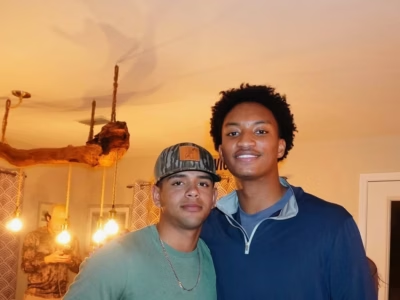
The tragic and complex investigation into the death of 18-year-old Nolan Xavier Wells has taken another startling turn as family members, legal representatives, and civil rights advocates continue to press for complete transparency across the Mississippi Gulf Coast. As his grieving family absorbs the painful reality of a life cut short, new investigative updates have brought fresh urgency to a case already defined by conflicting narratives and unanswered questions. The young woman believed to be the final person outside of Nolan’s immediate friend group to speak with him on the day of his disappearance has come forward with her account, and it sharply contradicts the narrative provided by his traveling companions. This direct clash in testimonies has reignited public scrutiny and intensified the pressure on local authorities, reinforcing the family’s position that vital details surrounding Nolan’s final hours on Horn Island remain obscured beneath layers of shifting explanations and institutional hesitation.
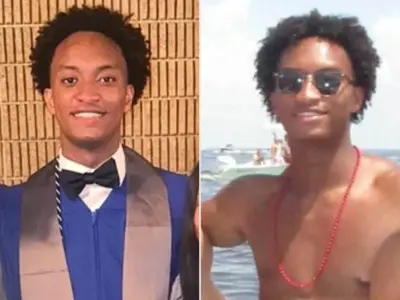
The timeline of July 4 remains a labyrinth of contradictions and missing pieces that continue to confound independent observers. Nolan, a freshman wide receiver at Southwest Mississippi Community College who harbored dreams of playing Division I college football and eventually reaching the NFL, was widely popular, social, and full of life. On that fateful Independence Day, he joined a group of friends for a boat trip out to Horn Island, a popular barrier island located a few miles off the Mississippi coast. For many young people in the region, a holiday getaway on the barrier islands is a cherished tradition of sun, sand, and peer camaraderie. However, what began as a routine holiday trip ended in unimaginable tragedy when Nolan journeyed to the island and never returned alive, with his lifeless body washing ashore two days later.
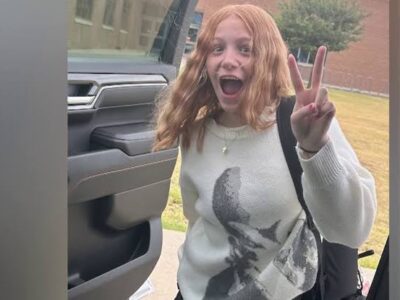
According to statements released by Jackson County Sheriff John Ledbetter during the early stages of the investigation, the teenagers returned to the mainland later that evening without Nolan. Initial law enforcement interviews suggested that Nolan had allegedly chosen to remain behind on the island of his own accord, and that his friends operated under the assumption that he would secure a boat ride back with someone else. However, this narrative has been forcefully challenged by legal representation, independent witnesses, and now the critical testimony of Katie McCormack. McCormack, identified as the individual who spoke with Nolan before he vanished, shared her account with investigators, stating explicitly that Nolan planned to return to the mainland on the boat with his friends. This statement stands in stark opposition to the claims initially reported by the members of Nolan’s friend group, who maintained that Nolan chose to remain behind voluntarily.
The profound divergence between these two accounts has become one of the most glaring contradictions in the entire case, leaving investigators and legal teams confronting a pivotal dilemma regarding the true sequence of events. If Nolan intended to leave the island with his peers, something must have disrupted those plans, raising immediate and troubling questions about why his cell phone and keys were found in the possession of the friends who returned to the mainland. Prominent civil rights attorney Ben Crump, who is leading an independent investigation into the teenager’s death alongside a team of legal experts, has emphasized that these irreconcilable differences in witness statements demand rigorous, impartial scrutiny rather than hasty acceptance of preliminary police summaries.
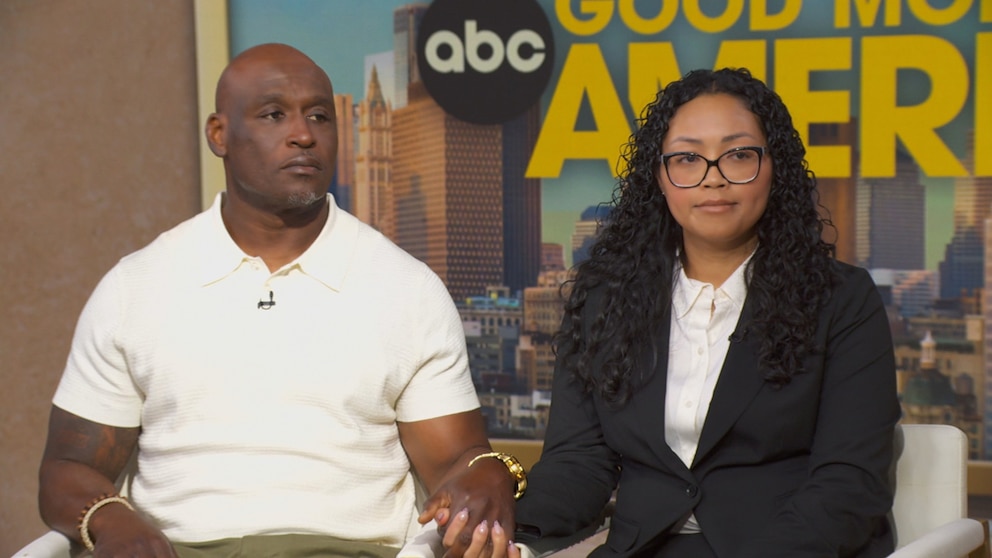
The deepening mystery of the last conversation and the conflicting accounts of his companions form only a portion of the broader evidentiary puzzle. During the deeply emotional funeral service held at Center Pointe Church in Ocean Springs, Mississippi, officiated by the Rev. Al Sharpton, Nolan’s mother, Christine Wonsley, shared one of the most poignant and heartbreaking details about her son’s inner world. Amidst the collective grief and the soaring demands for justice championed by civil rights leaders, she offered a tender glimpse into the future Nolan had envisioned for himself—a future cut tragically short following his disappearance. While remembering his protective, nurturing spirit and his deep compassion for others, Mrs. Wonsley revealed that Nolan harbored a cherished dream of becoming a father. He often spoke about his ultimate goal of having three children, and his vision was so vividly detailed and deeply felt that he had already chosen their names: Sophia, Charlotte, and Olivia.
The revelation added a profound layer of sorrow to an already heavy day, transforming the memorial from a standard service into a painful reminder of everything Nolan should have experienced. For a young man characterized by coaches, teammates, and family as gentle, radiant, and deeply faith-filled, the desire to build a loving family underscored the vast potential extinguished by his untimely death. As mourners packed the sanctuary to honor a life defined by kindness and community impact, the shared knowledge of these unfulfilled dreams brought many to tears, reminding all in attendance of the vibrant legacy of a young man whose biggest dream will forever live on in spirit through the names Sophia, Charlotte, and Olivia.
The memorial service itself drew nationwide attention, attended by cultural icons, civil rights leaders, and athletes, including legendary film director Spike Lee, former NFL star wide receiver Terrell Owens, and actor-producer Tyler Perry. Perry generously covered the entirety of the funeral expenses and pledged half of a newly announced reward for any credible information leading to a breakthrough in the case. Standing before the packed sanctuary, the Rev. Al Sharpton delivered a searing, powerful eulogy that connected the tragedy of Nolan Wells to the painful historical legacy of the American Deep South, noting that before communities can heal, they must confront historical realities and institutional shortcomings. Sharpton pointedly questioned why Nolan’s phone and keys were found with his friends, why those companions failed to immediately notify authorities or emergency services upon realizing he was missing, and why local officials appeared hasty in dismissing the possibility of foul play early in the investigation. He urged the congregation and the public to withhold final judgment while demanding absolute transparency, stating unequivocally that somebody in the community knows the exact truth of what transpired on Horn Island.
Following Sharpton’s address, attorney Ben Crump led the congregation in a resonant, emotional chant asserting that Nolan’s life mattered, while Nolan’s father, Elmore Wonsley, comforted his grieving wife. The collective grief of the family was mirrored by legislative bodies; earlier in the week, members of the Congressional Black Caucus issued a joint statement demanding a fully independent, transparent, and rigorous federal inquiry into the death, emphasizing that the sheer volume of unresolved questions makes standard local assurances insufficient. As the case transitions from initial mourning to aggressive legal scrutiny, attention has crystallized around thirteen pivotal moments and evidentiary gaps that continue to haunt Nolan’s family and confound independent investigators.
The first major evidentiary gap involves the departure contradiction, focusing on why official statements claimed Nolan chose to stay on Horn Island when independent witnesses, including Katie McCormack, testified he intended to board the return boat with his friends. The second centers on the belongings paradox, questioning how Nolan’s cellular phone and house and car keys ended up in the physical possession of his peers who returned to the mainland while he remained behind. The third involves timeline delays, probing why there was a noticeable delay before authorities were notified that an eighteen-year-old companion was missing from the remote island. The fourth addresses the digital footprint and deleted messages, as independent legal review suggested that text messages and communication logs appeared to have been deleted from Nolan’s recovered mobile device, prompting questions about who altered or removed those files.
Continuing down the investigative ledger, the fifth point examines the initial official response, asking why local law enforcement appeared quick to publicly discount foul play before a comprehensive forensic examination of the scene and witnesses was completed. The sixth focuses on island dynamics, questioning who else was present on Horn Island during the July 4 holiday and whether comprehensive interviews were conducted with every single party camped or boating near the vicinity. The seventh highlights the exact cause of death, evaluating what the detailed findings of the independent autopsy—commissioned by the family and flown to Washington, D.C., with support from national figures—reveal about trauma or physical distress prior to his body entering the water. The eighth point reviews search protocols, questioning how thorough and expansive the initial search and rescue operation was during the crucial forty-eight-hour window between his disappearance and the discovery of his body.
The ninth point examines forensic processing of the boat, asking whether the vessel used by the group has been subjected to rigorous forensic processing, including DNA and fingerprint analysis, to map exact seating arrangements and movements. The tenth addresses witness consistency, questioning whether statements provided by the traveling companions have undergone rigorous cross-examination to reconcile inconsistencies between initial police summaries and subsequent disclosures. The eleventh concerns the grand jury commitment, evaluating what specific evidence will be laid before civilian jurors to ensure total impartiality now that the local prosecutor has agreed to present investigative files. The twelfth points to community pressure and intimidation, questioning whether potential witnesses in Ocean Springs and surrounding areas are withholding crucial testimony due to social pressure or fear of retaliation in a tight-knit community. Finally, the thirteenth addresses systemic accountability, examining how historical patterns of racial disparity and institutional skepticism in Mississippi influence the transparency, speed, and thoroughness of modern death investigations involving Black citizens.
As investigators attempt to reconcile these conflicting statements and evidentiary gaps, the broader legal and forensic landscape of the case is moving forward under an intense microscope. With two separate autopsies now completed, including the independent evaluation commissioned by the family, experts are analyzing medical findings to determine the exact sequence of physical events prior to Nolan’s body washing ashore. Official findings regarding the precise cause of death have not yet been publicly released, keeping the family and public waiting for definitive scientific answers. Meanwhile, the anticipated presentation of the case before a grand jury marks a critical next step where civilian jurors will examine the evidence, witness testimonies, and conflicting timelines to determine accountability.
The quest for accountability in Nolan Wells’ death has galvanized civil rights advocates across the United States. In press conferences following the funeral services, Ben Crump outlined the legal roadmap ahead, noting that independent autopsy results and cooperation between national civil rights legal teams and local prosecutors represent crucial steps toward recovering deleted digital evidence and uncovering the absolute truth. If messages were indeed scrubbed from the device, forensic data recovery specialists may yet extract the digital breadcrumbs that explain how an idyllic holiday outing transformed into a fatal tragedy.
Furthermore, the legal implications surrounding the handling of key evidence continue to draw sharp commentary from legal experts nationwide. Questions regarding the chain of custody for personal items recovered from the scene, the precise meteorological and tidal conditions around Horn Island during the Fourth of July weekend, and the exact coordination between local municipal police departments, county sheriff deputies, and state-level investigators have all become central pillars of public scrutiny. Legal analysts note that in high-profile cases involving unwitnessed deaths in remote or coastal jurisdictions, establishing an airtight, scientifically verified timeline is paramount. Every single gap in the official record—from the initial hours following the discovery that Nolan was missing to the delayed public disclosures regarding witness statements—compounds the family’s anguish and fuels public demands for absolute transparency. As civil rights organizations continue to monitor developments closely, the commitment to achieving a fully independent and uncompromised review of the evidence remains stronger than ever, ensuring that every facet of the investigation is subjected to the highest standards of scrutiny and public accountability.
For Christine and Elmore Wonsley, no legal victory can bring back their son, whom coaches and classmates remembered as a radiant presence who never met a stranger. Yet, as the community of Ocean Springs digests the profound echoes of Rev. Sharpton’s eulogy and the relentless advocacy of Ben Crump, one message remains absolute: Nolan Wells’ story will not be swept under the rug. The thirteen unanswered questions, combined with the stark contradictions between his friends’ statements and Katie McCormack’s final conversation, remain an open ledger demanding accountability, truth, and unyielding justice, ensuring that the memory of Nolan Xavier Wells and his unfulfilled dreams for the future are never forgotten.