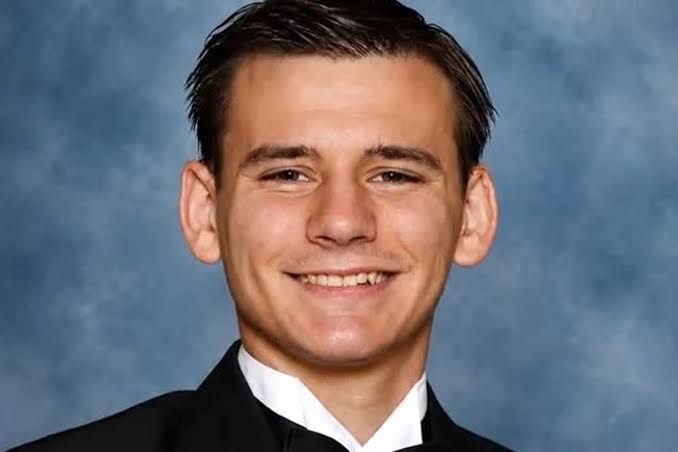
“IT’S FINE” — BUT HIS FAMILY SAYS IT WASN’T: David Crawford’s mother says she repeatedly tried to find out what was troubling her son, only to hear the same answer
“IT’S FINE” — BUT HIS FAMILY SAYS IT WASN’T: David Crawford’s mother says she repeatedly tried to find out what was troubling her son, only to hear the same answer.
The 18-year-old reportedly became increasingly isolated after an incident at school last year.
His family now believes rumors spread about him and that other students deliberately shunned him.
Only after his death, they say, did people begin coming forward with details about what David may have been enduring.
How much pain was hidden behind those two words
👉 Comment your thoughts below
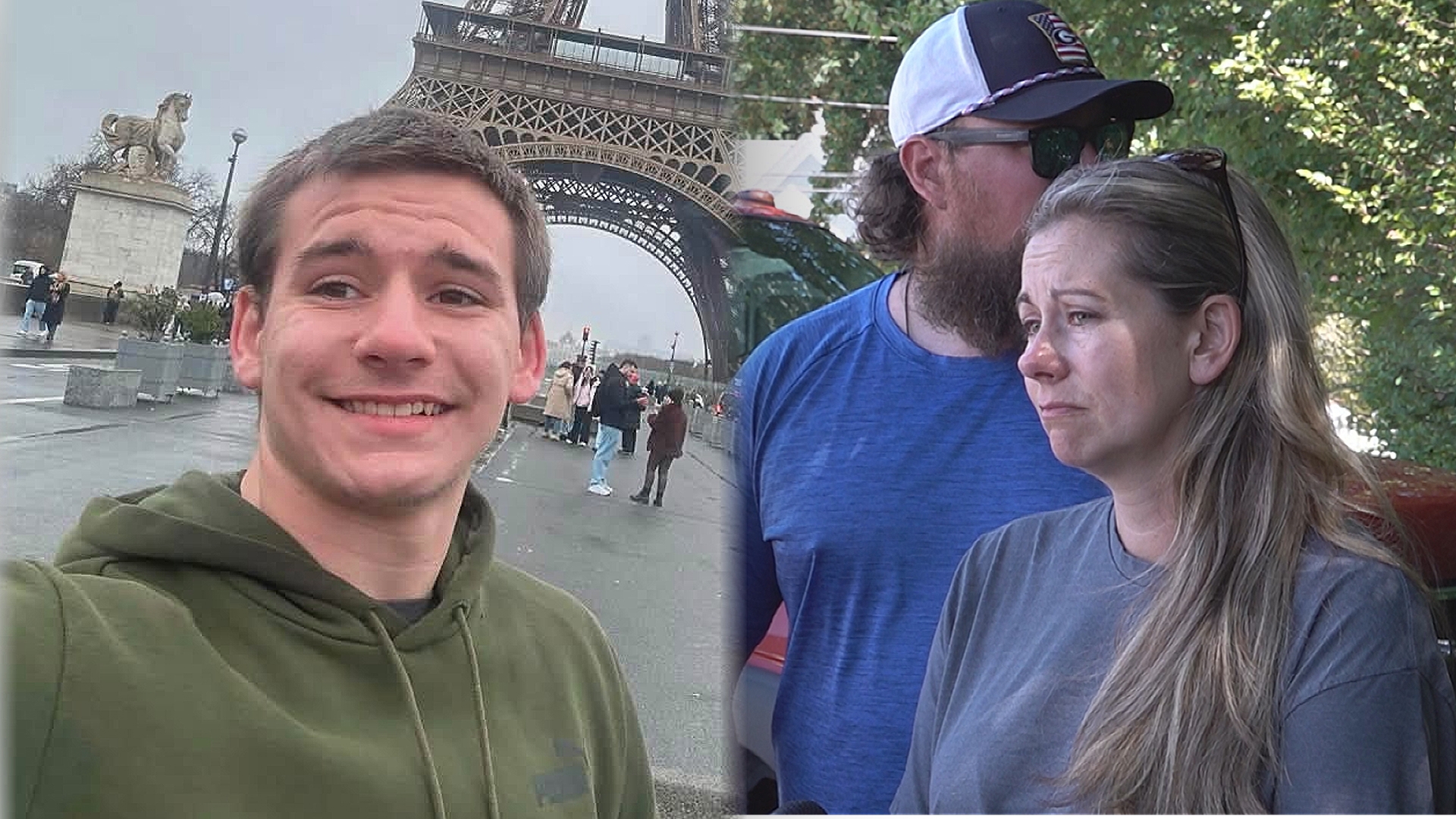
**“IT’S FINE” — BUT HIS FAMILY SAYS IT WASN’T**
David Crawford’s mother says she repeatedly tried to find out what was troubling her son, only to hear the same answer. The 18-year-old reportedly became increasingly isolated after an incident at school last year. His family now believes rumors spread about him and that other students deliberately shunned him. Only after his death, they say, did people begin coming forward with details about what David may have been enduring. How much pain was hidden behind those two words?
On August 4, 2026, just days before he was set to begin his senior year at Jackson High School in Butts County, Georgia, 18-year-old David Crawford was found dead on a walking trail near his home. According to his family, the cause was a self-inflicted gunshot wound. In the days that followed, his mother, Summer Crawford, offered a blunt and devastating assessment of what she believes drove her son to that point: “I do believe that my son was bullied to death.”
Yet the story her family has told is not only about bullying. It is also about the quiet, repeated barrier that stood between a mother and her child. When Summer noticed her son seeming down and asked what was wrong, the answers came back the same way nearly every time. “I don’t want to talk about it.” Or, more often, the two words that now haunt her: “It’s fine.”
Those two words, the family says, concealed months of growing isolation. According to Summer and David’s sister Cheyenne, an incident at school the previous year changed the social landscape around him. Rumors spread. Classmates began to shun him. The outgoing young man who once walked through town greeting people, who took pride in being named ROTC Cadet of the Year, who checked on friends when they were struggling, and who was known for his faith and kindness, began to pull inward. At home, the signs were subtle enough that the full picture remained hidden. He would appear low some days. His mother would try to open the door. He would close it with the same short replies.
“Some days he would seem down, and then I tried to talk to him… and he would just say, ‘I don’t want to talk about it,’ or ‘It’s fine,’” Summer has said. She has described herself as a parent who worked to keep communication open with all her children. In David’s case, that effort met a wall. The family did not learn the extent of what he was allegedly enduring until after he was gone. Only then, they say, did students and others begin coming forward with accounts of persistent harassment and social exclusion that David had largely kept to himself.
The gap between what a teenager experiences and what they are willing to share with the adults who love them is one of the most painful patterns in cases involving youth mental health. Parents can sense something is wrong. They can ask the right questions. They can create space. And still the answers can remain locked behind a teenager’s determination to handle it alone, or their fear that speaking will make things worse, or their belief that the problem is somehow their fault. In the Crawford family’s telling, that pattern played out over months. The isolation deepened. The reassurances continued. Then, on August 4, the silence became permanent.
David was remembered by those who knew him as more than the sum of his final struggles. He was an outstanding student and a valued member of the NJROTC program at Jackson High School. He loved history and debate. He listened to Johnny Cash. He worked out regularly and had held jobs at local spots. He was active at Heritage Baptist Church. Friends and family described him as genuine, truthful, and ready to show up for others—including people who had talked to him about their own despair. His sister Cheyenne said he was “there for anybody that needed him… there to the fullest every time anyone needed him.” The contrast between that public generosity and the private isolation his family now believes he endured is one of the elements that makes their account so difficult to absorb.

In the aftermath, the family has been careful with their words. They have identified people they believe were involved in the alleged harassment, but they have publicly urged others not to respond with threats, cyberbullying, or harassment of their own. “As Christians, we want to put out there that… we don’t want this to turn into another situation,” Cheyenne said. “We don’t want anyone hating or posting or cyberbullying or saying things or harassing anyone that is suspected.” Their focus, they have said, is on a thorough and fair investigation and on preventing other families from experiencing the same loss.
The Georgia Bureau of Investigation is assisting the Jackson Police Department. Investigators have David’s phone as part of the inquiry and are working to determine what led up to his death. Authorities have not released a detailed public accounting of the circumstances beyond what the family has shared. The investigation remains active. The family’s claim that bullying and social shunning played a significant role is clear and consistent. Whether and how that claim is substantiated will depend on the evidence investigators assemble.
What the family has emphasized most strongly is the cost of silence—both the silence David maintained at home and the silence of those who may have witnessed what was happening at school. “Everyone is speaking up now, and it does mean something,” Cheyenne has said. “But in the end, it can’t. No one spoke up when it was happening.” That distinction—between the support that arrives after a tragedy and the intervention that might have prevented it—sits at the center of their public message. They are urging students, teachers, and parents to act when they see someone being repeatedly targeted. “If you see this happening, if you see someone being picked on, being constantly harassed—say something,” Cheyenne said. “Just say something when it’s around.”
The school district and the City of Jackson have issued statements of condolence. Jackson High School and the Butts County School System described David’s death as a devastating loss and noted that counseling services were made available to students and staff. The city asked the community to come together in prayer for the Crawford family and to honor David’s memory through compassion, kindness, and unity. A GoFundMe established by David’s aunt, Kerrie Monti, has sought to help the family with funeral expenses. In her message on the page, Monti wrote that David “made a decision that tragically ended his life dealing with battles unseen and unknown,” and that the family was still in shock trying to process the pain. She described him as the sweetest, kindest young man, incredibly smart, a history buff who loved Jesus and was deeply loved in return. Visitation and funeral services were scheduled at Heritage Baptist Church in Locust Grove.
Summer Crawford has spoken about the forced transition into a life she never expected to live. “You’re forced to live a new life. This is our new life that we are learning how to navigate,” she said. “I don’t know how we will get through it other than God.” The words carry both the weight of the present and the echo of every unanswered question that now has no living recipient. What exactly did David experience in the months after the school incident? How much of the alleged shunning and rumor-spreading was known to adults at the school? What other factors, if any, weighed on him? And how many times did the simple phrase “It’s fine” stand between a mother who wanted to help and a son who could not, or would not, let her in?
Those questions do not have easy answers. Suicide is almost always the result of multiple intersecting pressures—mental health struggles, personal circumstances, social dynamics, and moments of acute despair. The family’s belief that peer harassment and isolation were decisive factors is one part of the story they are telling. Investigators are tasked with examining the full picture. In the meantime, the Crawfords are using their platform to insist that the next time a teenager is being targeted, someone speak up while there is still time.
The most painful detail in their account remains the most ordinary. A mother notices her child is low. She asks what is wrong. He tells her it is fine. She accepts the answer, or at least does not force the door open further, because that is often what parents are left with when a teenager chooses silence. The phrase is so common it can become almost invisible. In this case, the family believes it concealed a level of pain and isolation that ultimately proved fatal. Only after David was gone did the details begin to surface from others who had seen pieces of what he was carrying.
For anyone reading this who is struggling, or who knows a young person who seems to be withdrawing, help is available. The 988 Suicide & Crisis Lifeline can be reached by calling or texting 988, or by chatting at 988lifeline.org, 24 hours a day. Local school counselors and mental health resources also exist for students affected by this loss.
David Crawford will not walk into his senior year. He will not turn 19. The history debates, the workouts, the Johnny Cash songs, the greetings on the sidewalk, and the quiet check-ins he offered to friends in pain have all stopped. What remains is a family learning to live without him, an investigation still underway, and a set of questions that will not be easily resolved. At the center of those questions are two ordinary words a mother heard again and again—“It’s fine”—and the growing conviction, formed only after it was too late, that it was not fine at all.