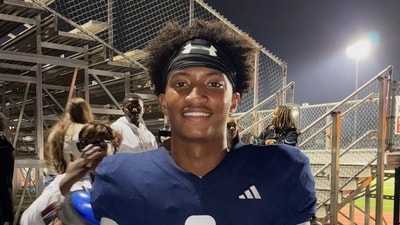
Federal review push: Nolan Wells’ parents join Congressional Black Caucus in new call for answers
Federal review push: Nolan Wells’ parents join Congressional Black Caucus in new call for answers
More than 1 month after 18-year-old Nolan Wells disappeared from Horn Island and was later found, his parents Elmore and Christine Wonsley are joining the Congressional Black Caucus in calling for an independent federal review of the case.
The move marks a major escalation in the family’s push for transparency, as questions surrounding Nolan’s disappearance and death continue to draw national attention.
Full details in the comments👇
The mysterious disappearance and tragic death of eighteen-year-old Nolan Wells on Horn Island, Mississippi, has reached a critical and defining turning point as his parents, Elmore Wonsley Sr. and Christine Wells-Wonsley, formally joined members of the Congressional Black Caucus to demand an independent federal review of the entire case. More than a month after the Southwest Mississippi Community College football player vanished during an Independence Day weekend gathering on the remote barrier island, his grieving family, legal representatives, and civil rights advocates continue to push for complete transparency. Pointing to what they describe as alarming procedural lapses, contradictory witness statements, and glaring inconsistencies surrounding his final hours, the family is taking their fight for answers directly to the highest levels of government in Washington, D.C.
The public call for federal intervention marks a massive escalation in an investigation that has captured national media attention, drawn widespread civil rights focus, and sparked intense debate across the country. Represented by nationally renowned civil rights attorney Benjamin Crump and local legal counsel, Nolan’s parents have repeatedly expressed deep skepticism regarding the initial findings and messaging put forth by local law enforcement agencies. They continue to question how a healthy, disciplined, six-foot-two-inch college athlete and highly proficient swimmer could vanish without a trace from a crowded island packed with holiday revelers, only to be found deceased two days later along the shoreline. By partnering with federal lawmakers, congressional leaders, and national civil rights organizations, the family seeks to ensure that every aspect of the search, the handling of digital evidence, the witness testimony, and the official timeline undergoes rigorous, unbiased, and comprehensive federal oversight.
To understand the profound grief and urgency driving this national appeal, one must look closely at the vibrant young life that was so abruptly cut short. Nolan Wells was an eighteen-year-old resident of Jackson County, Mississippi, who represented hope, promise, and exceptional promise to everyone who knew him. Standing tall with an athletic build, Nolan was a standout high school football player whose talent, dedication, and work ethic earned him a coveted roster spot at Southwest Mississippi Community College. Those close to him described Nolan as a polite, disciplined, and deeply respectful young man who maintained close bonds with his family, respected authority, and adhered closely to family rules regarding safety, communication, and accountability.
His mother, Christine Wells-Wonsley, and his father, Elmore Wonsley Sr., had raised Nolan with strong values, establishing clear boundaries and open lines of communication that the teen religiously maintained. His parents frequently noted that Nolan was not a rebellious teenager, nor was he someone who would engage in reckless behavior or disappear without informing his family. Moreover, Nolan was an accomplished athlete with superior physical conditioning and advanced swimming skills—a detail that would later prove central to his family’s refusal to accept simple explanations regarding his death in the waters off the Mississippi coast.
The terrifying ordeal began over the holiday weekend on Friday, July 3, and Saturday, July 4, 2026, when Nolan joined a group of acquaintances and former high school classmates for a day trip to Horn Island. Horn Island is an undeveloped, uninhabited barrier island situated approximately ten miles off the Mississippi Gulf Coast within the Gulf Islands National Seashore, a federally protected area managed by the National Park Service. Accessible only by private boat or chartered vessel, the island is a popular destination for local boaters, particularly during holiday weekends like the Fourth of July, when hundreds of beachgoers gather along its sandy shores to socialize, swim, and celebrate.
On July 4, the atmosphere on Horn Island was festive, with dozens of boats anchored near the shore and large crowds of young people gathering along the beach. Nolan arrived on the island aboard a boat operated by a group of peers. By all accounts from early that morning, Nolan was in high spirits, enjoying the sunshine, interacting with fellow partygoers, and participating in the holiday activities. However, as the afternoon wore on and the sun began to dip toward the horizon, the festive atmosphere turned into the beginning of an agonizing nightmare for the Wells-Wonsley family.
When the boat that had transported Nolan to Horn Island returned to the mainland marina in Jackson County later that afternoon, Nolan was conspicuously absent from the vessel. When his family realized that Nolan had not returned home and was not with the group, panic immediately set in. His parents immediately began reaching out to the individuals who had traveled to the island with their son, desperate for information regarding his whereabouts.
The initial explanations offered by the peers who had accompanied Nolan were troubling and inconsistent. Friends initially claimed that Nolan had consciously chosen to remain behind on the uninhabited island to spend time talking with a young woman he knew, promising that he would secure a ride back to the mainland with another boating group later in the evening. However, as family members and community volunteers began contacting other individuals who were present on the island that day, conflicting accounts quickly surfaced. Several witnesses on the island provided statements that directly contradicted the original narrative, claiming they saw Nolan looking distressed or uncomfortable, while others reported seeing him near different groups entirely.
What escalated the family’s fear from deep concern to sheer terror was the alarming discovery of Nolan’s personal belongings. Despite Nolan supposedly remaining behind on an isolated barrier island ten miles offshore, his cell phone and his personal car keys were not in his possession on the island. Instead, those critical items were located on the mainland, in the physical possession of one of the acquaintances he had traveled with on the boat.
For Christine Wells-Wonsley and Elmore Wonsley Sr., the separation of Nolan from his phone was the ultimate red flag. Nolan’s parents emphasized that their son was virtually attached to his mobile phone, using it constantly to check in with his mother, stay in touch with friends, and monitor his schedule. Furthermore, Nolan was well aware of the strict family protocol requiring him to stay connected with his parents, especially when traveling over water or attending large social gatherings. It was entirely out of character for Nolan to voluntarily hand over his phone and car keys to someone else while opting to stay stranded on an uninhabited barrier island without any means of communication or transportation.
The situation surrounding the digital evidence grew even more suspicious when Nolan’s mother utilized a location-tracking application to pinpoint the exact coordinates of her son’s device. The application led the family directly to the mainland home of one of the boat passengers. Upon recovering the phone, the family discovered that data logs, recent call records, text message threads, and social media activity appeared to have been wiped or deleted from the device prior to its return. For the family and their legal team, the deliberate tampering with or deletion of digital records on the missing teen’s phone strongly suggested a deliberate attempt to conceal conversations, movements, or events that took place on July 4.
Realizing that their son was in grave danger, Nolan’s parents alerted local emergency services, setting off a multi-agency search operation across the waters of the Mississippi Sound. The Jackson County Sheriff’s Office, the United States Coast Guard, the Mississippi Department of Marine Resources, the National Park Service, and the volunteer organization Search and Rescue Mississippi mobilized assets to search the land mass of Horn Island and the surrounding marine environment. Helicopters swept over the island’s dunes and marshlands, while rescue boats equipped with sonar and searchlights systematically scanned the shoreline and coastal currents.
The agonizing search stretched across forty-eight hours of overwhelming heat, humidity, and unbearable anxiety for the family, who maintained a continuous vigil near the mainland boat docks. Family members, community volunteers, and friends also launched independent search efforts, pleading on social media for anyone with boat access or surveillance footage along the coastal marinas to step forward with information.
The frantic search reached a heartbreaking conclusion on the morning of Monday, July 6, 2026. At approximately 6:30 a.m., a National Park Service ranger conducting a coastal sweep along the remote areas of Horn Island spotted a body resting along the shoreline on the western end of the island. Emergency personnel responded to the location and officially confirmed the tragic reality: the body was identified as eighteen-year-old Nolan Wells.
In the immediate aftermath of the devastating discovery, public messaging from local authorities drew sharp criticism from the family and community advocates. Early statements released by the Jackson County Sheriff’s Office suggested that drowning was suspected as the preliminary cause of death, noting that an initial visual examination of the body revealed no obvious external traumatic injuries, such as gunshot wounds or deep lacerations. Sheriff’s officials urged the public not to jump to conclusions, characterizing the incident as a tragic aquatic accident while confirming that a formal investigation remained open pending full toxicological and autopsy reports from the state medical examiner.
However, the assertion that Nolan’s death was a simple drowning ran entirely counter to the physical reality of who Nolan was and the suspicious circumstances surrounding his disappearance. His parents found it impossible to believe that a strong, athletic college football player and expert swimmer would simply drown in shallow coastal waters during daylight hours without anyone noticing or attempting a rescue. Furthermore, the location where his body was recovered raised logistical questions regarding water currents, wind patterns, and whether his body had been moved or washed ashore after the fact.
Seeking unvarnished answers and refusing to rely solely on local investigative procedures, Elmore Wonsley Sr. and Christine Wells-Wonsley retained the legal services of Ben Crump, a nationally prominent civil rights attorney known for representing families in high-profile cases involving mysterious deaths, systemic injustice, and institutional neglect. Attorney Crump immediately called for a independent, second autopsy to be performed by a private, board-certified forensic pathologist.
The findings of the independent autopsy commissioned by the family introduced a new layer of complexity and suspicion to the case. Unlike the preliminary statements suggesting a clear-cut drowning, the private forensic pathologist determined the cause and manner of death to be officially “undetermined.” The independent report highlighted unexplained tissue discoloration, localized swelling, and physical anomalies that required further forensic chemical analysis. The report also pointed out that the physical state of the body raised serious questions about how long Nolan had actually been in the water compared to how long he had been missing, casting doubt on the official timeline presented by local authorities.
At a emotional press conference following the release of the independent autopsy findings, Attorney Ben Crump flanked Nolan’s grieving parents as they publicly challenged the narrative put forth by local law enforcement. Crump criticized the Jackson County Sheriff’s Office for what he described as a rushed judgment to label the case a simple drowning before exhaustive forensic testing, digital reconstruction, and witness cross-examinations had been completed. Crump argued that local authorities appeared overly eager to close the file on a complex, highly suspicious death involving a young Black athlete, drawing parallels to historic patterns of inadequate investigations in the region.
The family’s legal team laid out a list of critical unanswered questions that local investigators had allegedly failed to address satisfactorily. They demanded to know why the individuals who brought Nolan to the island were not immediately detained or formally interrogated under oath when they returned without him. They questioned why the mainland house where Nolan’s wiped cell phone was discovered was not processed as a potential crime scene. They pressed for answers regarding who possessed the technical knowledge to erase the phone’s data logs, and why search warrants were not immediately executed on the personal phones, social media accounts, and digital devices of every individual who rode on that boat on July 4.
As the weeks dragged on into August 2026 without significant investigative updates or criminal charges from local prosecutors, the family realized that local channels of justice were failing to provide the thoroughness and accountability their son deserved. This realization prompted the strategic decision to elevate the case to the federal level, leveraging national political leadership to force a comprehensive review.
On August 13, 2026, a major breakthrough occurred in the family’s public campaign when Elmore Wonsley Sr. and Christine Wells-Wonsley formally joined leaders of the Congressional Black Caucus (CBC) during a high-profile press conference in Washington, D.C. Standing alongside influential federal lawmakers and civil rights champions, the parents issued a direct, formal request to the United States Department of Justice (DOJ) and the Federal Bureau of Investigation (FBI) to initiate an independent federal review into the disappearance, death, and handling of the investigation surrounding Nolan Wells.
Members of the Congressional Black Caucus expressed deep outrage over the circumstances surrounding Nolan’s death and the perceived apathy of local investigative bodies. Lawmakers pointed out that because Horn Island is part of the Gulf Islands National Seashore—a federally managed property under the jurisdiction of the Department of the Interior and the National Park Service—there exists a clear, unambiguous legal foundation for federal law enforcement agencies to exercise authority and conduct an independent investigation.
The involvement of the Congressional Black Caucus marks a major escalation in the national profile of the case, transforming a local Mississippi coastal mystery into a national federal civil rights inquiry. Congressional leaders pledged to use their legislative oversight powers to press the Department of Justice, the Civil Rights Division, and the FBI to deploy federal forensic experts, digital analysts, and cold case investigators to Jackson County. They demanded a complete re-examination of all physical evidence, the recovery of deleted digital data from cloud servers, and formal federal interviews with every witness present on Horn Island on July 4, 2026.
During the press conference, Christine Wells-Wonsley delivered a heartbreaking, powerful plea that moved onlookers and federal lawmakers to tears. She spoke passionately about the agonizing pain of putting her son on a college football trajectory, only to receive his body back in a casket under circumstances shrouded in secrets, lies, and systemic silence. She declared that her family would not be silenced, placated, or brushed aside by local officials hoping the story would fade from the news cycle. She vowed to remain on the front lines of the fight until every person who played a role in her son’s disappearance, the destruction of his digital records, or his tragic death is brought to full legal justice.
Elmore Wonsley Sr. echoed his wife’s sentiments, speaking directly to the young people who were on Horn Island that fateful day. He appealed to their consciences, urging anyone who saw something, heard something, or knows the truth about what happened on the boat or the beach to step forward and speak with federal authorities. He emphasized that fear, peer pressure, or misplaced loyalty should not stand in the way of truth, warning that remaining silent in the face of a young man’s death makes one complicit in a grave injustice.
The push for a federal review has also resonated deeply across college campuses, athletic programs, and grass-roots civil rights organizations throughout the American South. At Southwest Mississippi Community College, teammates, coaches, and faculty members have organized memorial rallies and wearing commemorative helmet decals to honor Nolan’s memory while demanding justice for his family. Student organizations across the region have launched online advocacy campaigns using digital hashtags to keep Nolan’s name at the forefront of national civil rights discussions.
Legal experts note that federal intervention in missing persons and suspicious death cases often brings critical investigative resources that local Sheriff’s offices simply do not possess. The FBI’s Operational Technology Division possesses advanced cyber-forensic capabilities that can frequently recover overwritten digital files, encrypted chat logs, and deleted location data from mobile phones, even after manual factory resets or data wipes have occurred. Furthermore, federal grand juries have broader subpoena powers across state lines, allowing investigators to compel testimony from witnesses who may have left Mississippi in the weeks following the incident.
As local officials in Jackson County maintain that their file remains open and will eventually be presented to a local grand jury for review, the shadow of federal scrutiny now hangs heavily over the case. The joint effort between the Wonsley family, Attorney Ben Crump, and the Congressional Black Caucus has ensured that Nolan Wells will not become another forgotten statistic.
The story of Nolan Wells is no longer just a tragic local news report from the Mississippi Gulf Coast; it has become a national symbol of a family’s relentless pursuit of truth against institutional inertia and systemic opacity. From the quiet athletic fields of Southwest Mississippi Community College to the sandy dunes of Horn Island, and now to the halls of the United States Congress in Washington, D.C., the demand for answers remains unwavering. As federal agencies weigh formal intervention, Elmore Wonsley Sr. and Christine Wells-Wonsley stand unified, fortified by faith, community support, and an unshakeable determination to honor their son’s memory by uncovering the full, unvarnished truth of what happened on Horn Island.