TRAIN HORROR: A UK train derailed after tracks were reportedly found “warped”, sparking a major emergency response and fears dozens of passengers could have been trapped. The line was shut down as crews rushed to the scene — and investigators are now examining the cause behind the dangerous failure that could have ended far worse…

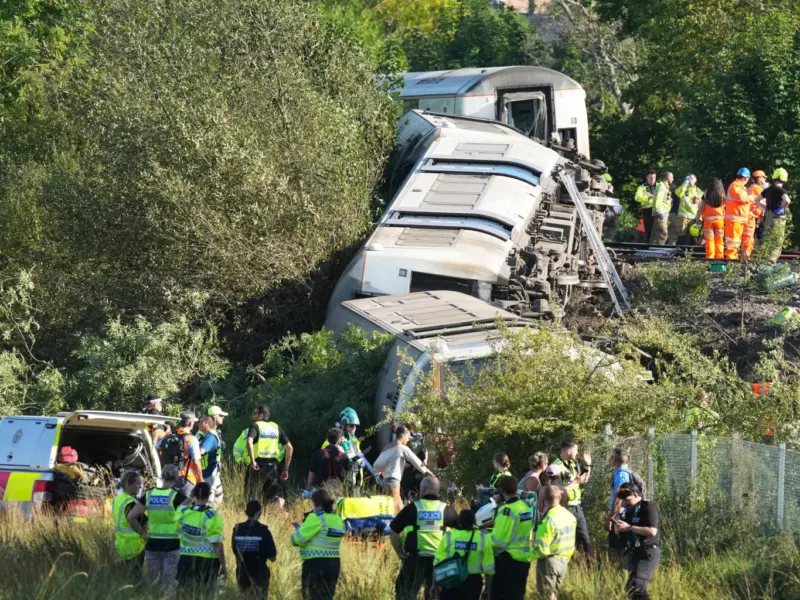
A passenger train derailed in dramatic fashion near Lewes railway station in East Sussex on the afternoon of Thursday, 13 August 2026, leaving up to 40 people feared trapped inside overturned carriages as emergency services flooded the scene. Three of the eight carriages of the Southern Railway service came off the rails and toppled onto their sides, with dramatic images showing passengers and responders standing atop the wreckage under the searing heat of a British summer heatwave. The incident, which occurred at approximately 3.54pm, closed all lines through the area, triggered a major multi-agency response, and left travellers across southern England facing severe disruption for the rest of the day.
The train, an eight-coach Southern service that had departed London Victoria at 2.24pm bound for Eastbourne, left the tracks just north of Lewes station, in the Landport Road area between Haywards Heath and Lewes. According to reports from the scene and official statements, the rear three carriages overturned. One carriage ended up completely on its side at the bottom of a small embankment, while two others lay tilted on the track itself. Social media images and eyewitness accounts captured people climbing onto the roofs of the carriages to escape, while others were led away along a dusty path toward a nearby housing estate.
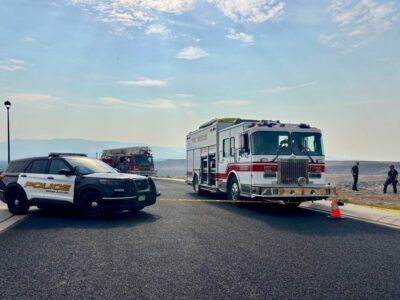
British Transport Police confirmed they were on scene following reports of the derailment at 3.54pm, responding alongside paramedics from South East Coast Ambulance Service and crews from East Sussex Fire and Rescue Service. Sussex Police also attended. Firefighters, police officers and ambulance teams, including specialist units and air ambulances, worked methodically to extricate those still inside. Early reports suggested up to 40 passengers remained trapped in the overturned sections, with one coach described as “completely inaccessible.” Ladders were placed against the sides of the carriages as rescuers worked.
Despite the alarming visuals of overturned stock and the scale of the emergency response, authorities quickly moved to reassure the public. A source at the Department for Transport told the BBC that the latest understanding was that there were “no serious injuries or fatalities.” A senior government source similarly confirmed to media outlets that there were no fatalities. Passengers were escorted from the train in the intense heat, and all those on board were eventually accounted for and evacuated. South East Coast Ambulance Service confirmed it had deployed multiple resources and specialist teams shortly before 4pm, working alongside partner agencies. Three helicopters were reported at the scene, waiting in a nearby field.
The cause of the derailment remains under investigation, but early indications point toward a track defect. ITV Meridian reported that the derailment was caused by a track defect as the southbound service approached just north of the Lewes station tunnel. The train driver is understood to have contacted control at 3.51pm to report the issue. Photographs circulating online appeared to show a significantly bowed or buckled section of track beyond the derailed carriages, with further abnormalities visible on one of the lines compared to the other. It is not yet clear whether the track deformation caused the train to leave the rails or was a consequence of the impact.
The timing of the incident is notable. Britain was in the grip of a significant heatwave, with temperatures in parts of southern England reaching the mid-to-high 30s Celsius and reports of the hottest day of the year so far elsewhere in the UK. Extreme heat is a well-known challenge for the railway network. Steel rails expand in high temperatures and can buckle if the expansion is constrained, creating dangerous deformities. Network Rail routinely imposes temporary speed restrictions and reduced timetables during hot weather precisely to mitigate the risk of track buckling and other heat-related failures. Some services on the day had already been operating under such restrictions or facing cancellations. Whether the extreme temperatures played a direct role in this specific incident will form a key part of the formal investigation.
Transport Secretary Heidi Alexander expressed deep concern shortly after the news broke. In a statement on X, she said she was “deeply concerned of reports of a derailment involving a Southern train in Lewes, Sussex,” adding that she was “grateful to emergency services who are on the scene supporting those impacted” and that the government was “working quickly with the rail industry and local partners to assist passengers.” Local MP James MacCleary described it as a “very serious and developing incident” and said he was in contact with the relevant authorities. The Rail Accident Investigation Branch (RAIB) announced it was deploying a team of inspectors to the site to begin gathering evidence.
Southern Railway and Network Rail moved swiftly to manage the fallout. All lines through Lewes were closed to allow emergency services to operate safely. Services between Brighton and Lewes, Haywards Heath and Lewes, and Seaford/Eastbourne and Lewes were unable to run. Stations at Cooksbridge and Plumpton were left without service. Major disruption was expected until at least 10pm, with Southern advising passengers: “Do not travel” in the affected area for the remainder of the day. Those who needed to travel were told to allow at least an extra 60 minutes for journeys, rising to 90 minutes for those heading to Gatwick Airport. Passengers already on trains that had been brought to a standstill were instructed to remain on board and await instructions from crew, as the railway environment can be hazardous, particularly where third-rail electrification remains live.
The response on the ground was intensive. BBC reporter Ben Motley, observing from a hill above Lewes, described seeing one carriage completely on its side at the bottom of the embankment and two further carriages on their sides on the track. He reported seeing people being brought away under a bridge toward waiting vehicles, with large numbers of ambulances and fire engines present and three helicopters in a field by the river. East Sussex Fire and Rescue confirmed it had been called at 3.55pm and urged the public to avoid the area while work continued. Passengers who had escaped or been helped off were treated for any injuries or shock at the scene in the oppressive heat.
This incident comes against a backdrop of heightened sensitivity around rail safety in the UK. Only months earlier, a collision between two East Midlands Railway passenger trains near Bedford on 19 June 2026 had killed the driver of one train and injured more than 160 people, many of them seriously. That crash, involving a rear-end collision after one train passed a red signal, led to intense scrutiny of signalling systems, driver systems and operational procedures. While the Lewes derailment appears different in nature — involving a single train leaving the tracks rather than a collision — it will inevitably reignite questions about infrastructure resilience, particularly under extreme weather conditions that are becoming more frequent.
Buckled rails have caused problems on the network before during heatwaves. In previous summers, lines have been closed or subject to severe speed restrictions after rails deformed. Modern continuous welded rail is designed with expansion joints and careful stressing to manage temperature changes, but extreme events can still overwhelm the system. Track maintenance teams monitor rail temperatures closely, and “critical rail temperature” thresholds trigger protective measures. The presence of visible bowing in images from the Lewes site will be a central focus for investigators examining whether pre-existing track condition, maintenance standards, or the intensity of the heat contributed to the failure.
For those on board, the experience was terrifying. Passengers described the sudden jolt and the realisation that carriages had left the rails and tipped. Some managed to climb out through windows or doors and stand on the upper side of the overturned stock while waiting for help. Others remained inside until rescuers could reach them. The fact that the derailment occurred in daylight and relatively close to a station and populated area likely aided the speed of the response. Had it happened in a more remote location or at night, the challenges of access and evacuation would have been considerably greater.
As evening approached, the immediate priority remained the safe recovery of any remaining passengers and the stabilisation of the site. Once everyone was clear, attention would turn to recovery of the rolling stock, detailed examination of the track, and the painstaking work of determining root cause. RAIB inspectors will examine the track geometry, the condition of the rails and sleepers, the train’s data recorders, the driver’s report, and weather and temperature data. Network Rail engineers will assess the extent of damage and the work required to restore the lines to safe operation. Reopening the route through Lewes, a key junction serving Brighton, Eastbourne, Seaford and connections toward London and Gatwick, is critical for the recovery of services across the Sussex network.
The human cost, while mercifully not including serious injury or death according to early official assessments, should not be understated. Being trapped inside an overturned carriage, even briefly, is a traumatic experience. Passengers who climbed onto the roof in high temperatures faced additional physical stress. Emergency responders worked in difficult conditions on unstable ground and around heavy metal stock. The psychological impact on those involved, as well as on the wider rail workforce and local community, will linger long after the tracks are repaired.
This derailment also highlights the vulnerability of critical infrastructure to climate extremes. Successive heatwaves have tested the resilience of Britain’s railways, roads and power networks. While temporary speed restrictions and reduced services are prudent safety measures, they come at a cost in reliability and passenger confidence. Investment in more heat-resistant track designs, better monitoring systems, and enhanced maintenance regimes will be essential as such weather events become more common. The investigation into the Lewes incident may produce recommendations that strengthen the network’s ability to withstand future extremes.
In the hours immediately following the crash, the focus remained on the scene itself. Emergency vehicles lined the approaches, helicopters stood ready, and responders moved carefully around the three overturned carriages. Southern Railway continued to update passengers via social media and journey planners, stressing the need to delay non-essential travel and to use alternative routes where possible. National Rail warnings underlined the scale of the disruption across routes linking Eastbourne, Seaford, Brighton, Haywards Heath and London Victoria.

By late afternoon and into the evening, the initial chaos had given way to a more organised recovery operation. Passengers who had been evacuated were assessed and supported. Those still on other trains delayed by the incident were kept informed. The sight of the train lying on its side, with people who moments earlier had been ordinary travellers now standing on its upper surface against a backdrop of emergency lights and activity, will remain one of the defining images of the day.
The Lewes derailment of 13 August 2026 serves as a stark reminder of the thin margin between routine travel and sudden crisis on the railway. While the absence of serious casualties is a profound relief, the overturned carriages, the reports of dozens potentially trapped, the buckled track, and the intense emergency response underscore the inherent risks of high-speed passenger rail and the critical importance of infrastructure integrity. As investigators begin their work and engineers prepare to restore the line, the full story of what caused a Southern train to leave the rails on a hot summer afternoon will gradually emerge. For now, the priority remains the welfare of those involved and the safe reopening of a vital transport artery in the south of England.
The incident has closed a chapter of ordinary Thursday afternoon travel for hundreds of passengers and opened a new one of scrutiny, recovery and reflection for the industry. Emergency services performed with the professionalism the public expects. Passengers showed resilience in difficult circumstances. And the railway, once again, confronts the challenge of learning from a near-miss that could so easily have been far worse.