I ONLY HAD 3 BEERS: A grandfather’s statement clashes with a 0.16 reading in the case file and a detail that was reported incorrectly
I ONLY HAD 3 BEERS: A grandfather’s statement clashes with a 0.16 reading in the case file and a detail that was reported incorrectly
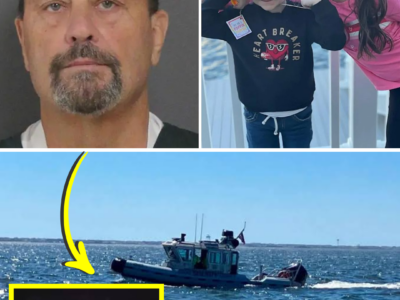
Stephen Schneider, 64, reportedly told authorities he had consumed only three beers before piloting a 30-foot boat.
However, subsequent test results recorded a blood alcohol level of 0.16. Caught between that statement and that figure are two children who never made it home.
Read on to discover what the toxicology report reveals about Mya and Siggy’s final night.
******************

**I ONLY HAD 3 BEERS: Grandfather’s Claim Collides with 0.16 BAC Reading in Fatal Barnegat Bay Case**
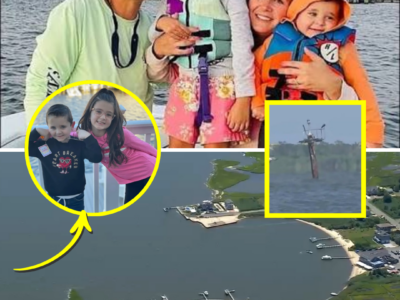
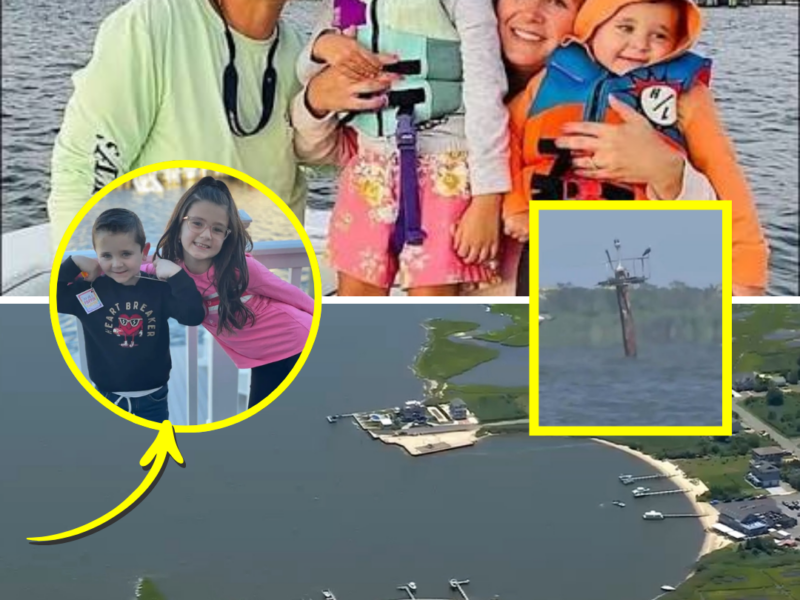
Stephen Schneider told investigators a straightforward account of his alcohol consumption on the evening of July 19, 2026. At MJ’s Restaurant Bar and Grill in Berkeley Township, during a family dinner that included his grandchildren, he said he drank two Guinness beers and one Miller Lite over roughly two hours. That was the total, he reported: three beers before he took the helm of his Tidewater center-console boat for the short trip across Barnegat Bay with 9-year-old Mya Bella Golabek and 7-year-old Sigmund Paul Golabek.
Toxicology results told a different story. A blood sample drawn from Schneider in the early hours of July 20—approximately three to four hours after the crash—registered a blood alcohol content of 0.16 percent. That figure is twice New Jersey’s legal limit of 0.08 percent for operating a vessel. The laboratory analysis, performed by DrugScan Labs, went further. Doctors reviewing the results concluded that Schneider was “unfit to operate” and that his alertness, sense of care and caution, perception, judgment, response time, and coordination were “markedly impaired by alcohol.”

The gap between the self-reported three beers and the measured 0.16 BAC sits at the center of the criminal case against the 64-year-old Bayville man. Schneider faces two counts of second-degree reckless vessel homicide, plus charges of operating a vessel under the influence and reckless operation of a vessel. Prosecutors have pointed to the toxicology findings as evidence of the degree of impairment present when the boat struck the illuminated channel marker and ejected the two children into the water.
Court documents and hearing statements establish the timeline of the testing. After the collision near channel marker No. 39, Schneider displayed visible signs of impairment at the scene, according to state troopers. He was taken to Community Medical Center in Toms River, the same facility where the children were pronounced dead. A registered nurse drew the blood sample under a search warrant authorized by a Superior Court judge. One account places the draw at approximately 12:32 a.m.; another references 12:46 a.m. The State Police received the formal DrugScan Labs report on August 13. Charges followed the next day.
At a detention hearing on August 19, Ocean County Assistant Prosecutor Kate Burke cited the 0.16 reading directly while arguing that Schneider should remain in custody. “The defendant consumed enough alcohol to reach a BAC of approximately 0.16, and then operated a vessel,” she said. “And the result was catastrophic.” The judge ordered conditional release pending trial, with restrictions that included a prohibition on operating boats or motor vehicles.
Alcohol absorption, distribution, and elimination vary by body weight, metabolism, food intake, the alcohol content of the specific beers, and the precise timing of drinks relative to the blood draw. Guinness is a stout with an alcohol by volume typically around 4.2 percent; Miller Lite is a light lager near 4.2 percent as well. Three standard drinks consumed over two hours would, for many adults, produce a lower peak BAC than 0.16 percent, especially several hours later when the body has begun clearing alcohol. The measured level has therefore prompted questions about whether the self-report understated the actual consumption, whether other factors elevated the reading, or whether the timing of the sample and any retrograde extrapolation will become points of contention at trial.

The affidavit of probable cause summarizes Schneider’s statement about the three beers and pairs it with the laboratory conclusions of marked impairment. Public copies of some documents redacted the exact BAC figure initially; the 0.16 percent value became public during the detention hearing. That sequence—self-report of modest drinking, followed by a high laboratory result—forms one of the sharper factual tensions in the case file.
Mya and Sigmund never made it home that night. Their request to ride with their grandparents after dinner placed them on the boat Schneider was operating. The toxicology report now stands as the scientific measure of the condition of the person at the helm when the vessel struck the marker. Schneider’s statement of “only three beers” and the 0.16 reading remain fixed points in the record. Between them lies the loss of two children and the criminal charges that followed. The full interpretation of the discrepancy—how three reported beers produced a BAC twice the legal limit hours after the crash—will be tested as the case proceeds through the courts.
The documented facts are consistent across reporting: Schneider claimed two Guinness and one Miller Lite over about two hours; blood drawn in the early morning hours showed 0.16 percent; DrugScan Labs concluded marked impairment across multiple cognitive and motor functions. Those elements define the clash between the grandfather’s account and the toxicology evidence that now anchors the prosecution’s case.