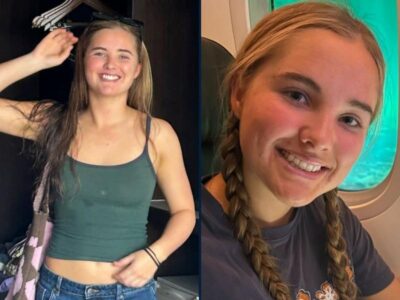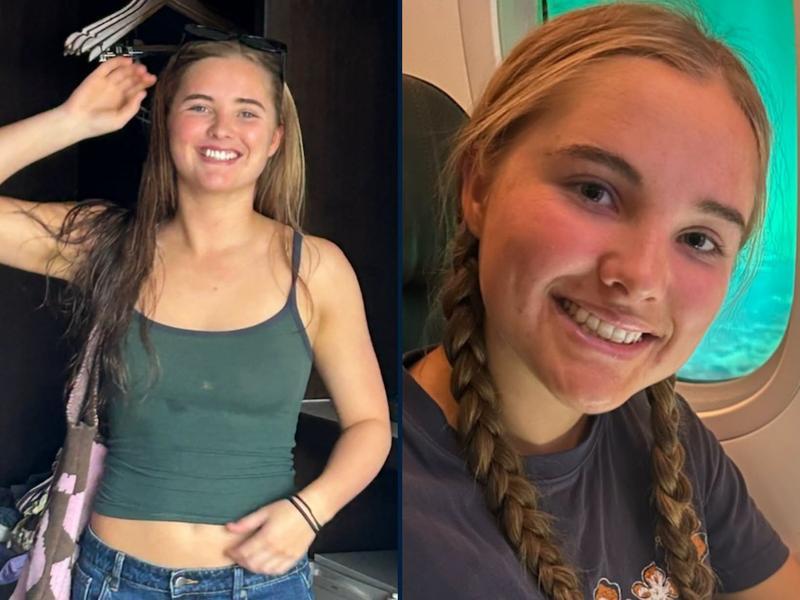
“She’s coming home.” — Then the tears of joy turned into heartbreak… Lily Hooper’s family were given a moment of overwhelming relief when they were mistakenly told the 18-year-old missing hiker had been found alive. Her father even said, “She’s coming home.” But that hope lasted only moments before the devastating truth emerged, turning a family’s tears of joy into unimaginable grief. The heartbreaking mistake that gave them hope — before taking it away again — is now at the centre of the story… 👇
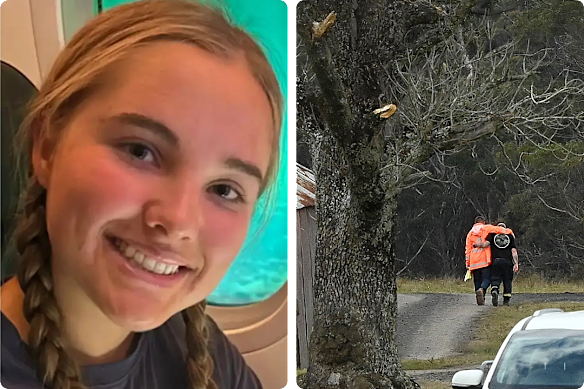
For eight long days the Hooper family had lived in a state of suspended hope. Their 18-year-old daughter Lily had left home on the morning of 12 August 2026 for a hike on the Bonnum Pic trail in Nattai National Park and had not returned. Searchers numbering nearly one thousand had combed the dense, rugged bushland of the New South Wales Southern Highlands. Helicopters had flown overhead. Defence Force personnel had joined police, SES volunteers, firefighters and rangers. Every day without news deepened the dread. Yet the family refused to surrender the possibility that Lily, an experienced and determined bushwalker, might still walk out of the scrub.
On the morning of Thursday, 20 August, that hope appeared, for a few luminous minutes, to be rewarded.
Around 11.30 a.m. an SES searcher located a body in thick vegetation a significant distance off the trail. The information was radioed back to the command post. In the dense terrain, communications were imperfect. What reached the family, the police hierarchy and, ultimately, the New South Wales Premier was an initial report that Lily had been found alive.
At the search base the reaction was immediate and overwhelming. Jim Hooper, Lily’s father, punched the air. Cameras captured the moment of pure relief. Family and friends embraced, tears streaming. Jim told those around him that they were going to get her now, that she might be going straight to hospital. He had brought her guitar and a packet of Tim Tams to the site “because it might lure her out of the bush.” Kirrily, Lily’s mother, had washed her hair and put on her good sneakers in anticipation of good news. There was a toast. “I was never going to give up,” Jim said. “She’s a beautiful girl and she’s coming home.”
In Sydney, Premier Chris Minns interrupted a parliamentary budget estimates hearing to share what he believed was wonderful news. “Lily Hooper has been found alive,” he told the committee. “Found in the bush with half a bottle of water with her.” Media outlets raced to report the miracle. For a brief window the story of the missing teenager appeared to have a happy ending.
Within eight to twenty minutes the picture changed. A more accurate account came through from the search crew. Lily was deceased. The Premier returned to the committee with words that still echo: “I’ve got some terrible news… Lily’s body has been found. She’s been found deceased.” At the command post the family, still celebrating, were pulled aside and told the truth. The tears of joy turned, in real time and under the eyes of cameras and supporters, into the deepest grief.
The eight days that led to that moment
Lily Hooper left the family home in Oakdale, in Sydney’s south-west, at about 8 a.m. on Wednesday, 12 August. She told her parents she was heading for the Bonnum Pic trail, a challenging 16-kilometre route through dense scrub, rock scrambling and limited phone coverage. She was an experienced hiker who had previously completed a three-day trek of Mount Kosciuszko. Throughout the morning she remained in contact with her family. By nightfall the messages had stopped. When she had not returned by 10 p.m. the alarm was raised. Police found her Hyundai parked on Wanganderry Road near the trailhead.
The search that followed was one of the largest recent operations in the Southern Highlands. Almost one thousand people took part. SES remote-area teams navigated steep drops and complex cliff lines. Police mounted units and motorbikes covered ground. Helicopters and drones scanned from above. In the final stages nearly one hundred Australian Defence Force personnel joined the effort. Jim Hooper refused to stay away. On the fourth day he called a radio station, voice breaking, urging listeners to “throw love and energy” because “we’ve got to go and find her… she’s got to be in there somewhere.”
The family issued public statements of gratitude to the professional teams while asking well-meaning members of the public to stay clear of the dangerous terrain. Local community groups offered support. A fundraiser organised by the Rotary Club of Wollondilly North began raising money that would eventually approach thirty thousand dollars. Yet every day without a sign of Lily intensified the private terror.
How the false report reached the family
The discovery on Thursday morning was made by an SES volunteer in thick, dense terrain. Handheld radios struggled with the conditions. Later accounts pointed to a code-word system sometimes used by emergency services — references to water bottles intended to protect families who might be monitoring open channels. The initial information that reached the command post, and then the family, indicated that Lily had been found alive. That report travelled quickly up the chain of command and ultimately to the Premier.
NSW Police Commissioner Mal Lanyon later described the error as “born of elation.” He apologised unreservedly for any additional trauma caused to the family. Premier Minns issued a profound personal apology, saying he was devastated that anything he said might have added to the family’s heartbreak after they had already “gone through hell.” An investigation into the inter-agency miscommunication was launched.
Jim Hooper’s response to the error was striking for its lack of bitterness. Asked whether he was angry at police, the commissioner or the Premier, he answered: “No, not at all. I’m not in any way angry at the police or the police commissioner or the premier.” He and the family expressed gratitude that the searchers had never given up.
The young woman at the centre of the story
Those who knew Lily described a free spirit who loved the outdoors with an almost fearless intensity. She trained for years in Muay Thai and Brazilian jiu-jitsu and was months from her blue belt. Instructors remembered a talented, tough athlete who was also simply lovely — someone everyone liked. She worked as a guide for Sydney Harbour BridgeClimb and lit up every group with her smile and enthusiasm. Colleagues spoke of her compassion, motivation and positive impact on everyone she met. She dreamed of adventure and of being known for something larger than herself.
Her father later said: “She just loved the outdoors. She just had so many skills that, you know, we tried to install in her. Yeah, she was just a clever kid who wasn’t afraid to take anything on. That was her free spirit.” He spoke of feeling blessed that the family had her for the time they did, even as he acknowledged the depth of the loss. He hoped her example would encourage other young women to get outside and live fully. He asked Premier Minns to consider flying the flag at half-mast as a tribute to a young woman he described as an advocate for young women.
A community’s response
In the days after the recovery of Lily’s body the community of Oakdale and the wider Wollondilly region gathered. At Willis Park hundreds of people came for a candlelight vigil. Candles, purple balloons, fairy lights and flowers filled the memorial space. Mayor Matt Gould kept the memorial open throughout the weekend, inviting anyone who wished to leave a light or simply spend a quiet moment there. Red Cross volunteers stood ready to support those who needed to talk. Buildings were lit purple. Flags flew at half-mast. Local sporting clubs planned black armbands. The Rotary fundraiser continued to grow.
Strangers who had never met Lily still felt compelled to come. They left notes, flowers and silent respect. For a family still processing the sudden end of the search and the additional pain of the false report, those anonymous acts of presence carried unexpected weight. The knowledge that people who never knew their daughter still felt moved to show up offered a different kind of comfort — the comfort of knowing that Lily’s short life had reached further than they could have imagined.
The silence that remains
A post-mortem examination was ordered to confirm identity and determine the cause of death. A report will go to the coroner covering the time, place and circumstances of Lily’s death as well as the search and the communications issues. Those answers will come in due course. They will not bring Lily home.
In the space of a week the Hooper family moved from everyday parental concern, through days of public hope and private terror, through a brief, radiant false dawn, into a grief that will mark them forever. Jim Hooper’s words on the day the body was found capture both the depth of the loss and a refusal to let bitterness define it: the sadness that she is gone, and the blessing that she was here at all.
“She’s coming home,” he had said in those first minutes of mistaken hope. The tears that followed were no longer tears of joy. They were the tears of a father who had held on for eight days and then, for a few heartbreaking minutes, believed the universe had given his daughter back — only to learn that the silence of the bush had claimed her after all.
The candles at Willis Park continued to burn. The purple lights remained on the civic buildings. The community kept coming. And in the quiet of Oakdale a family began the long work of living with an absence that can never be filled, carrying the memory of a free-spirited young woman who loved the outdoors, trained hard, smiled easily, and left behind a silence that will never fully leave those who loved her.