A LETTER, A SHOCKING DECISION: Father of the two children asks for Stephen Schneider’s release! After losing Mya and Sigmund, the children’s father still sent a letter asking the court to grant Schneider bail. The 64-year-old man was subsequently released pending trial. The contents of the letter delivered one of the case’s most unexpected twists.

**A LETTER, A SHOCKING DECISION: Father of the two children asks for Stephen Schneider’s release**
After losing Mya and Sigmund, the children’s father still sent a letter asking the court to grant Schneider bail. The 64-year-old man was subsequently released pending trial. The contents of that letter delivered one of the case’s most unexpected twists.
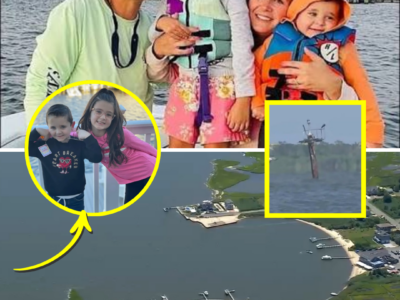
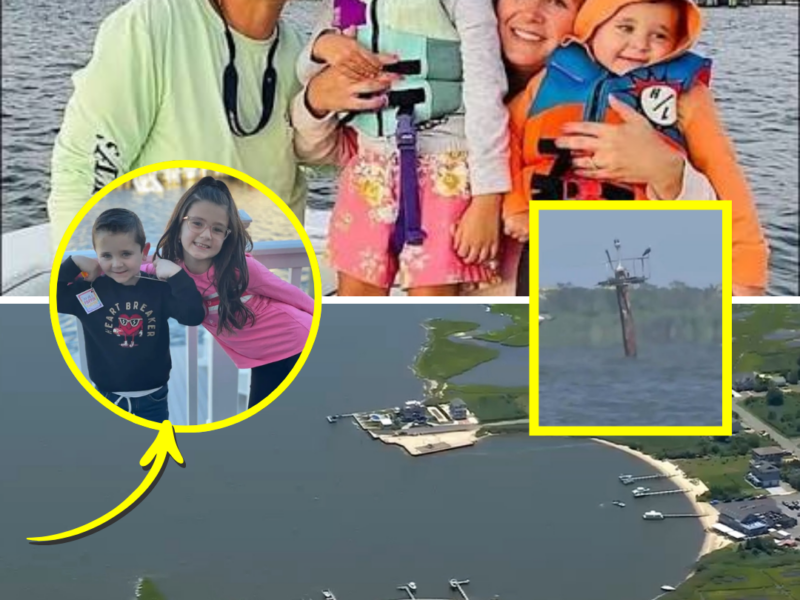
On the night of July 19, 2026, Sigmund Golabek and his wife Jennifer lost their only two children. Nine-year-old Mya Bella Golabek and seven-year-old Sigmund “Siggy” Paul Golabek were thrown from their grandfather’s boat after it struck an illuminated channel marker on Barnegat Bay. Both children were wearing life jackets and seated at the bow. Their grandfather, Stephen Schneider, and grandmother, Laurie Schneider, pulled the unresponsive siblings from the dark water. CPR was performed. The children were rushed to Community Medical Center in Toms River and pronounced dead.
Less than a month later, on August 14, Schneider was arrested and charged with two counts of second-degree reckless vessel homicide, operating a vessel under the influence, and reckless operation of a vessel. Toxicology results showed his blood alcohol content at approximately 0.16 percent—twice the legal limit—after he admitted drinking three beers in the two hours before the crash. Prosecutors described the outcome as catastrophic. Schneider was held in the Ocean County Jail.
Five days after the arrest, on August 19, Superior Court Judge Wendel E. Daniels convened a detention hearing. Ocean County Assistant Prosecutor Kate Burke argued forcefully that Schneider should remain locked up until trial. She cited the doubled legal limit, the degree of impairment, and the irreversible loss of two young lives. The prosecution framed the case as one in which public safety and the gravity of the offense demanded continued detention.
Then the defense presented letters from the victims’ own parents. Defense attorney William P. Cunningham told the court that Schneider’s daughter and son-in-law—Jennifer and Sigmund Golabek, the mother and father of Mya and Siggy—had written moving letters asking the judge to release him. Cunningham emphasized that these were not distant relatives or casual supporters. These were the parents who had just buried their only children. “They are the victims and they are begging the court to release him,” the attorney said. “They are still grieving, judge. And they need him out and he’s not a threat to anybody.”
Cunningham read portions of the letter written by Sigmund Golabek, the children’s father and Schneider’s son-in-law. The words stood in stark contrast to the prosecution’s description of a reckless operator whose impairment had ended two young lives.
“He’s been there for our family in ways that words cannot fully express. Our family is better because of him,” the letter stated. “He’s a wonderful father-in-law, a loving grandfather and a man with a generous heart. I’m grateful for the way he loved my children, the role he played in their lives and for the example he set for them.”
In another portion shared in court, the father expressed gratitude “for the example he set for them in the time they were blessed to have together.”

The letter did not minimize the tragedy or dispute the facts of the crash. It did not ask the court to dismiss the charges or declare Schneider blameless. Instead, it portrayed the 64-year-old as a man who had been a consistent, loving presence in the children’s lives—someone the surviving parents still needed as they navigated unimaginable grief. The request for release was framed as a family necessity rather than a legal technicality.
Judge Daniels weighed the competing arguments. On one side stood the toxicology report, the deaths of two children, and the prosecutor’s insistence that the impairment and outcome justified detention. On the other stood Schneider’s complete lack of criminal history, his long ties to the community, and the explicit, written plea from the parents of the deceased children. The judge ultimately found that the state had not met the clear-and-convincing standard required to keep Schneider jailed pending trial. He granted conditional release.
The conditions were strict. Schneider is prohibited from operating any vessel or motor vehicle until he completes a court-ordered substance-abuse assessment. He must comply with all other pretrial monitoring requirements. The case remains active; he faces up to 20 years in state prison if convicted on the homicide counts. The charges themselves were untouched by the letters. Only the question of pretrial liberty was decided in Schneider’s favor.
The decision stunned many who followed the case. In the public imagination, the parents of children killed in an alcohol-related crash are expected to demand the harshest possible consequences. Here, the opposite occurred. The father who shared a first name with his son, who had created special handshakes and shared quiet traditions with Siggy, and who had watched his daughter Mya grow into an active, creative child, chose to ask a judge to free the man whose boat had carried both children into the water. The mother’s support joined that request. Together, the parents’ letters became the emotional and practical fulcrum of the detention hearing.
Court observers and reporting noted that the letters carried unusual weight precisely because of who wrote them. Judges routinely receive character references from family members of defendants. Far rarer are letters from the immediate family of the victims asking for the defendant’s release. Cunningham underscored this distinction, telling the court that the victims themselves were pleading for Schneider to come home. The judge’s ruling reflected that reality. He cited the absence of a criminal record and the parents’ request as central reasons for rejecting the prosecution’s call for continued detention.
The broader context of the case remains unchanged. Investigators had waited nearly a month after the July 19 crash for the DrugScan Labs toxicology report that confirmed marked impairment. Only after receiving those results on August 13 did prosecutors approve the formal charges that led to Schneider’s arrest the following day. The scientific evidence of a 0.16 BAC and the laboratory conclusion that Schneider was unfit to operate a vessel form the backbone of the state’s case. Schneider’s own statements—that he consumed three beers, that he saw the channel marker only at the last second, that radar and night-vision equipment were activated—remain part of the record. The children’s seating at the bow, the functioning light on Marker No. 39, and the rapid sequence of ejection, recovery, and failed resuscitation continue to shape the factual narrative.
Yet the detention hearing introduced a human dimension that pure forensics could not capture. Sigmund Golabek’s letter acknowledged the grandfather’s love and the positive role he had played. It suggested that the surviving family still saw value in Schneider’s presence during their mourning. Defense counsel described the crash as having “cut to the root of his family,” arguing that further incarceration at this stage would compound the damage rather than serve justice or public safety. The judge accepted enough of that framing to order release under conditions designed to protect the community while the case proceeds.
Schneider, a retired worker with no prior record, now awaits trial from home rather than from a jail cell. He has been ordered not to drink or operate boats or cars pending evaluation. His next court date is expected in mid-September. Prosecutors will continue to prepare a case centered on impairment and the resulting deaths. The defense will likely challenge aspects of the toxicology timeline, lighting conditions, and the precise degree of recklessness required for conviction. Through it all, the father’s letter remains part of the official record—a document that captured one of the case’s most unexpected turns.
For the Golabek family the loss is permanent. Mya and Siggy shared what their obituaries called an unbreakable sibling bond. They were best friends who laughed, adventured, and created memories side by side. Their parents must now live without them. That the same parents chose to ask a court to free their children’s grandfather speaks to the complicated nature of grief, loyalty, and family obligation in the aftermath of preventable tragedy. It does not erase the charges or the toxicology findings. It does not rewrite the night of July 19. It does, however, explain why a 64-year-old man charged with reckless vessel homicide in the deaths of his own grandchildren was allowed to leave the Ocean County Jail on August 19.
The letter from Sigmund Golabek delivered a rare and powerful message inside the courtroom: even after the most devastating loss a parent can suffer, the surviving family still saw the defendant as someone they needed. Judge Daniels listened. The release order followed. In a case already marked by a nearly 30-day investigative delay and the stark science of a doubled legal limit, the father’s written plea became the element that turned the detention decision. It stands as one of the most unexpected and human twists in a tragedy that has left an entire community searching for meaning.