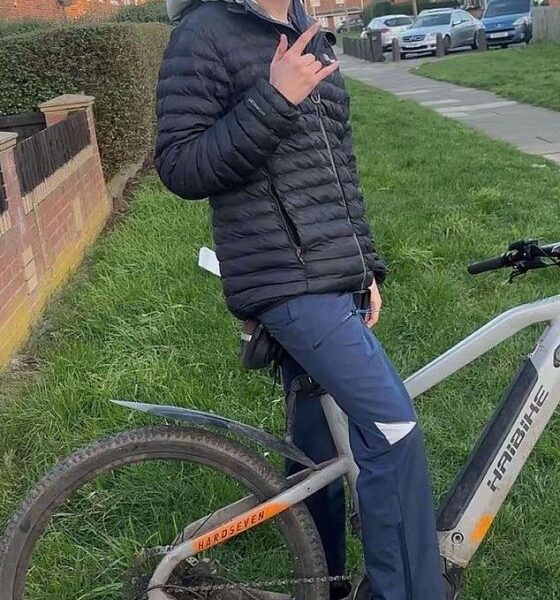
10 seconds that changed everything… Police had reportedly called off a pursuit involving five alleged joyriders using cloned plates — just 10 seconds before their car collided with a police vehicle, killing two officers and five others. The pursuit had ended. Officers were no longer chasing them. Then, moments later, the devastating crash happened. Now investigators are examining what happened in those final 10 seconds — and why the decision to stop the pursuit came just before the fatal collision… 👇
Police officers aborted a high-speed pursuit of a Volkswagen Passat believed to be using cloned number plates just ten seconds before the vehicle smashed head-on into another police car on the A66, killing seven people including two constables.
The catastrophic collision occurred at approximately 3.39am on Saturday 22 August 2026 near South Bank, Middlesbrough. The Passat was travelling the wrong way along the dual carriageway when it struck a marked Cleveland Police armed-response vehicle that was travelling in the correct direction. All five occupants of the Passat and both officers were pronounced dead at the scene.

The Independent Office for Police Conduct (IOPC) has confirmed that officers had been chasing the Passat for just under seven minutes after its plates activated an automatic number-plate recognition (ANPR) camera. The vehicle had been linked to a number of suspicious incidents. When the Passat joined the A66 and began driving against the flow of traffic, the pursuing officers called off the chase. Approximately ten seconds later, the car ploughed into a different police vehicle that had been in the area to assist with the search. That second car had not been part of the high-speed pursuit.
The two officers who died were PC Matthew Blades and PC Tom Clough. The five young men in the Passat were named as Michael Robert Cahill, 23, Theo Rae, 17, Cole Worthy, 17, Jacob Matusiak, 23, and Makai Saddington, 18.
The final minutes
In the early hours of Saturday, Cleveland Police officers spotted the suspicious Passat and initiated a pursuit that wound through residential streets in Middlesbrough. Ring-doorbell footage later captured the vehicle racing down Lime Road in Teesville at around 3.36am, police cars close behind with blue lights flashing and sirens sounding.
Residents were jolted awake by the noise. Ellie Westerman, 24, described the scene: “The car must have been travelling at between 80 and 100 mph down our narrow street. The noise woke me and I shot out of bed, you could feel the vibration in the house as the car went past and the police vehicles followed with their lights and sirens going. It was frightening that cars were being driven at that speed through a residential area and it’s tragic people have ended up dying.”
Another resident said the screech of tyres was so loud it woke him, estimating the pursued car had taken the corner into their road at tremendous speed. Local man Neil Hutchinson, 47, recalled police cars “tearing down the street at half past three with lights flashing and their sirens going. You could tell from the noise that they were travelling at high speed.”
When the Passat entered the A66 the wrong way, officers made the decision to abort. The IOPC stated that the pursuing officers continued travelling on the correct side of the carriageway. Just ten seconds later, the Passat collided with the armed-response vehicle carrying PC Blades and PC Clough. That vehicle had been positioned in the area to help locate the cloned-plate car.
The speed of the final sequence — pursuit aborted, ten seconds of separation, then impact — has become one of the most scrutinised elements of the tragedy. It underscores the razor-thin margins in which police pursuit decisions are made and the devastating consequences that can follow even when officers attempt to de-escalate.
The officers and the public response
PC Matthew Blades and PC Tom Clough have been widely remembered as dedicated officers who left home to serve their community and never returned. Tributes from their families and from Cleveland Police have emphasised their professionalism, courage and the profound personal loss felt by those closest to them. A GoFundMe appeal launched by the Cleveland Police Federation to support the bereaved families rapidly raised hundreds of thousands of pounds, reflecting the depth of public sympathy.
Prime Minister Andy Burnham expressed his devastation at the deaths of two officers and five members of the public, offering thoughts to the families and urging people to avoid speculation while the investigation continues. Cleveland Chief Constable Victoria Fuller described the officers as brave and the day as incredibly sad for the force and the wider community.
The five in the Passat and the online trail
Family and friends of the five young men have begun to share private grief amid intense public attention. Makai Saddington’s aunt, Sharon Morgan, wrote of the pain of losing a nephew “so young, so loved, and so full of life,” describing a space in the family’s hearts that can never be filled. She asked for thoughts and prayers especially for his mother, Alisha Morgan.
Tributes to the others painted pictures of close friendships and everyday connections. A friend of Jacob Matusiak spoke of him as “another child to me” who had been a massive part of her children’s lives. Friends of Theo Rae and Cole Worthy described the shock of sudden loss and the difficulty of supporting grieving relatives. A tribute to Michael Cahill recalled speaking to him only the night before and urging him to stay safe.
At the same time, social-media material linked to some of those involved has circulated widely. Clips appearing to show high-speed driving, police pursuits, and young men posing in cars while wearing black balaclavas have fuelled discussion about a broader trend of filming dangerous driving for online attention. One video associated with Saddington showed an Audi being driven through a housing estate at speed with a police car in pursuit before peeling off onto a grassy field. Another depicted a green Nissan being driven and then set alight.
The A66 crash occurred only days after a similar wrong-way collision on the M9 in Ireland in which five teenagers died. That parallel has intensified concern about the influence of social-media “joyride” content and the risks of young people treating high-speed chases as entertainment.
Investigation and unanswered questions
The IOPC is examining the full circumstances of the incident, including the decision to begin the pursuit, the tactics used during the seven minutes of chasing, the moment the pursuit was called off, and the presence of the second police vehicle on the A66. Cleveland Police have confirmed that the car struck by the Passat was travelling in the correct direction and contained the two officers who died.
Questions remain about the intelligence that flagged the Passat, the precise nature of the “suspicious incidents” to which it had been linked, and whether the cloned plates indicated a wider pattern of vehicle crime. The investigation will also consider the broader challenge of policing high-risk pursuits in urban and semi-urban environments where residential streets, dual carriageways and the possibility of wrong-way driving create complex and rapidly changing risks.
For residents of Lime Road and the surrounding area, the memory of the high-speed pass through their streets in the middle of the night remains vivid. The vibration in the houses, the screech of tyres, the flashing lights and the knowledge that seven people would be dead within minutes have left a lasting mark on the community.
A tragedy measured in seconds
The A66 crash is defined by its brutal compression of time. A seven-minute pursuit. A decision to abort. Ten seconds of separation. Then impact. In that narrow window, two police officers who were simply assisting a search lost their lives, and five young men in a car with cloned plates died in the collision they caused by driving the wrong way at speed.
The human cost is measured in the families left behind: two sets of relatives mourning officers who went to work and never came home, and five other families grappling with the sudden deaths of sons, nephews and friends. It is measured in the tributes that speak of humour, devotion, everyday check-ins and the ordinary bonds of community that have been severed. And it is measured in the wider questions the crash forces into the open — about pursuit policy, about cloned plates and vehicle crime, about the glamorisation of dangerous driving on social media, and about the thin line between a chase that ends safely and one that ends in irreversible loss.
As investigators continue their work and the community begins the long process of mourning, the central fact remains stark. Police officers halted their pursuit of five people in a car with cloned plates just ten seconds before that car struck another police vehicle and killed everyone involved. Seven lives ended on a dual carriageway near Middlesbrough in the early hours of a Saturday morning. The full story of how those ten seconds unfolded, and what they mean for future policing and public safety, is still being pieced together.