BOAT CRASHES INTO MARKER: Stephen Schneider’s final moments before collision under scrutiny
BOAT CRASHES INTO MARKER: Stephen Schneider’s final moments before collision under scrutiny
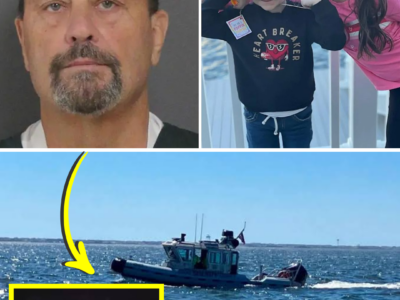
Stephen Schneider was piloting a 30-foot boat on Barnegat Bay when it slammed into a fixed channel marker.
Mya, 9, and Sigmund, 7, were reportedly seated at the bow and were thrown into the water immediately following the impact.
With a recorded blood alcohol content (BAC) of 0.16%, prosecutors are focusing on Schneider’s ability to operate the vessel in the dark.
Investigators are reconstructing every detail regarding the boat’s course and the final seconds leading up to the crash.
BOAT CRASHES INTO MARKER: Stephen Schneider’s final moments before collision under scrutiny
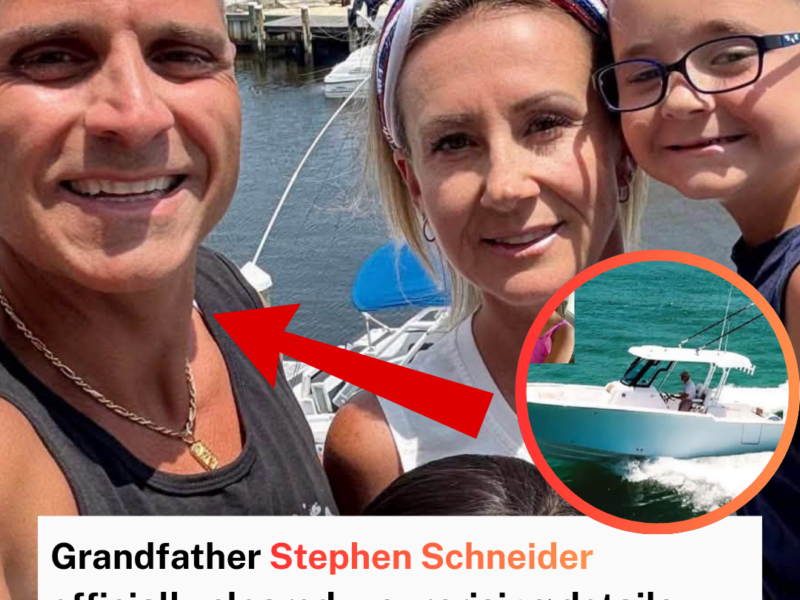
Stephen Schneider was piloting a Tidewater Custom 280 center-console boat on Barnegat Bay when it slammed into a fixed channel marker. Mya Bella Golabek, 9, and her brother Sigmund Paul Golabek, 7, were seated at the bow in life jackets and were thrown into the water immediately after the impact. With a recorded blood alcohol content of 0.16 percent—twice New Jersey’s legal limit—prosecutors have focused on Schneider’s ability to operate the vessel in the dark. Investigators continue reconstructing the boat’s course and the final seconds leading up to the July 19, 2026, crash that claimed the children’s lives.
The collision occurred shortly after 9 p.m. near the Bayville section of Berkeley Township in Ocean County. Schneider, then 63 or 64, of Bayville, was at the helm of the roughly 28- to 30-foot vessel. Aboard with him were his wife, Laurie Schneider, 64, and the two grandchildren from Lacey Township. The family had just finished dinner at MJ’s Restaurant Bar and Grill in Berkeley. The children’s parents had arrived by a separate boat; after the meal, Mya and Sigmund chose to ride home with their grandparents, a short distance away.
According to the affidavit of probable cause, Schneider was traveling at approximately 20 mph when the starboard bow struck Intracoastal Waterway day marker No. 39, a single-stanchion illuminated navigational aid. He later told investigators he saw the marker “at the last second.” The force of the impact ejected both children into the dark water of Barnegat Bay. Schneider and his wife searched for them. He located Sigmund first, then Mya; both were face-down and unresponsive. CPR began immediately. Emergency responders, including New Jersey State Police Marine Bureau personnel from the Point Pleasant Station and the U.S. Coast Guard, arrived after a 911 call placed around 9:09 p.m. The children were transported to Community Medical Center in Toms River with CPR in progress and were pronounced dead.
Released 911 recordings captured the grandmother’s frantic description of the scene: one child already on the boat while her husband remained in the water trying to recover the other. She referenced the nearby channel marker as responders sought to pinpoint their location.
Schneider told detectives he had consumed two Guinness beers and one Miller Lite over roughly two hours at the restaurant before the voyage. A court-ordered blood sample drawn at 12:46 a.m.—several hours after the crash—registered a BAC of 0.16 percent. Toxicology analysis by DrugScan Labs concluded that Schneider was unfit to operate a vessel. Doctors determined his alertness, sense of care and caution, perception, judgment, response time, and coordination were “markedly impaired by alcohol.” State troopers observed signs of impairment at the scene.
Schneider maintained that both the boat’s radar and an infrared/low-light night navigation camera were activated. He said he had spent his life on the water, lived nearby, and had traveled the route many times. Authorities and local officials stated that Marker 39’s lights were functioning that night. Defense attorneys have indicated they will scrutinize whether the marker was illuminated at the precise moment of impact and will independently review the toxicology results.
On August 14, 2026, Schneider voluntarily surrendered at the Berkeley Township Police Department. He was charged with two counts of second-degree reckless vessel homicide (also referred to as death by vessel), operating a vessel under the influence, and reckless operation of a vessel. If convicted on the homicide counts, he faces up to 20 years in state prison. He was held at the Ocean County Jail until a detention hearing on August 19.
At that hearing, Ocean County Assistant Prosecutor Kate Burke argued against release, emphasizing the BAC level and the catastrophic outcome. “The defendant consumed enough alcohol to reach a BAC of approximately 0.16 and then operated a vessel, and the result was catastrophic,” she told Superior Court Judge Wendel E. Daniels. Defense attorney William P. Cunningham countered that Schneider had essentially no criminal record—one remote controlled-dangerous-substance matter from 39 years earlier that resulted in pretrial intervention—and that the children’s parents, Jennifer and Sigmund Golabek, had submitted letters urging the court to free him. Cunningham read portions of the son-in-law’s letter describing Schneider as a loving grandfather and a positive presence in the children’s lives. The judge ordered conditional release, prohibiting Schneider from operating a boat or motor vehicle pending further assessment and requiring monitoring. A subsequent court appearance was scheduled for mid-September.
Investigators from the New Jersey State Police and the Ocean County Prosecutor’s Office have been methodically reconstructing the final moments. Key elements under examination include the vessel’s exact speed and heading, the functioning of onboard navigation equipment, visibility conditions after dark, the children’s seating positions at the bow, and the physics of the impact that threw them overboard despite life jackets. Schneider’s statements about seeing the marker only at the last second, combined with the measured impairment, form the core of the prosecution’s focus on his ability to navigate safely at night. The affidavit notes that the marker is a standard illuminated aid intended to guide boaters through the waterway.
The tragedy unfolded against a grim backdrop of multiple fatal boating incidents involving channel markers on Barnegat Bay and nearby waters during the 2026 summer season. Earlier that year, a Memorial Day weekend crash killed 28-year-old Gunnar Pearson after a boat struck a marker; his mother later faced related charges. In late July, another collision with a marker killed a 26-year-old man and injured others. State Police and local officials have repeatedly stressed the dangers of impaired operation, the importance of proper navigation at night, and the solid steel construction of these markers, which can inflict catastrophic damage even at moderate speeds. Officials have noted that some markers are lighted while others rely on reflective materials or charting, and that GPS alone is not infallible.
Community reaction in Berkeley Township and surrounding Ocean County towns has been one of profound shock and mourning. The siblings were remembered in obituaries as best friends who shared laughter, adventures, and an unbreakable bond. Local residents described a tight-knit area left disheartened. First responders who performed CPR and recovered the children were acknowledged for the lasting emotional impact of the event. Support for the extended family emerged quickly in the days after the crash.
Legal observers note that reckless vessel homicide cases turn heavily on evidence of impairment, operator experience, equipment use, and environmental factors. Schneider’s lifelong familiarity with the waters and claimed activation of radar and night-vision aids will be weighed against the toxicology findings and the short distance of the trip after dinner. Prosecutors have highlighted the degree of impairment shown by the 0.16 BAC reading. The defense has signaled challenges to the lighting of the marker and independent analysis of the blood evidence, while emphasizing Schneider’s lack of a significant prior record and the family’s desire for his presence during their grief.

As the case proceeds, investigators continue to compile data from the scene, vessel systems, witness accounts, and forensic testing. The final seconds—when a familiar route in familiar waters ended with a sudden impact against a fixed navigational aid—remain under intense scrutiny. Those seconds, prosecutors argue, must be understood in light of Schneider’s measured level of intoxication and the demands of operating a powerboat after dark on Barnegat Bay. The two young lives lost, the family’s shattered evening, and the broader pattern of marker collisions this summer have made the reconstruction of that brief stretch of waterway a matter of both criminal accountability and public safety concern.
Schneider remains free under conditions pending trial. The children he sought to bring home that night—Mya and Sigmund—were pronounced dead at the hospital after their grandfather and grandmother pulled them from the water. The investigation into the course of the Tidewater and the precise sequence of events in the darkness continues, with every detail of speed, visibility, equipment, and impairment subject to examination in the months ahead.