THE CALL THAT CHANGED THE FAMILY FOREVER: A phone call turned an ordinary evening into a nightmare!
THE CALL THAT CHANGED THE FAMILY FOREVER: A Phone Call Turned an Ordinary Evening into a Nightmare
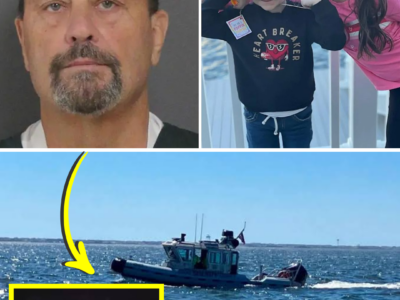
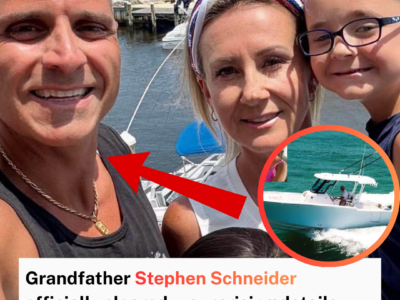
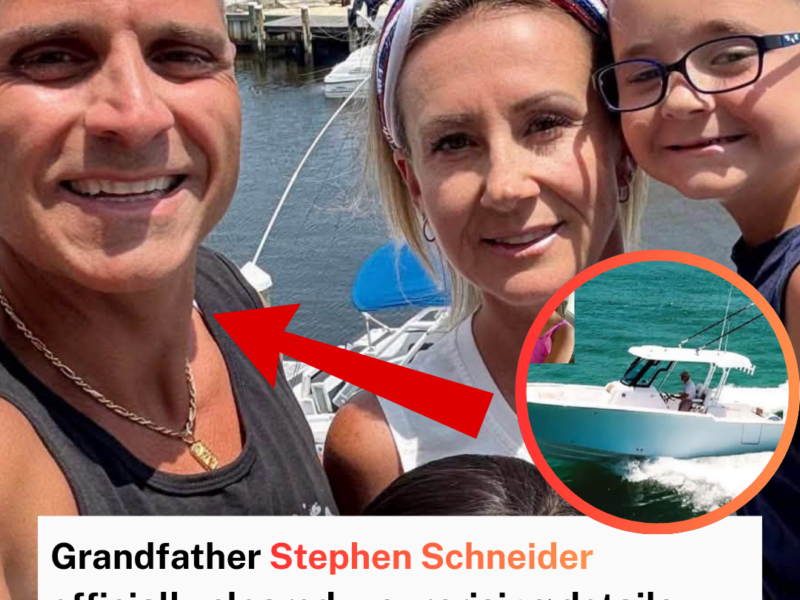
The night of July 19, 2026, began like so many other ordinary family evenings along the Jersey Shore. In the Bayville section of Berkeley Township, the Schneider and Golabek families gathered for dinner at MJ’s Restaurant Bar and Grill on Bay Boulevard. It was a relaxed Sunday outing on the water—grandparents Stephen and Laurie Schneider arriving in their 28- to 30-foot Tidewater Custom 280 center-console boat, the children’s parents, Sigmund and Jennifer Golabek, arriving separately with their two children. Nine-year-old Mya Bella Golabek and her seven-year-old brother, Sigmund Paul “Siggy” Golabek, of Lacey Township, were the bright center of the gathering. After the meal, the children asked to ride home with their grandparents, whose house was nearby. Life jackets on, the siblings took seats at the bow. Stephen Schneider took the helm. Laurie sat nearby. What should have been a short, familiar nighttime trip across Barnegat Bay became the last moments the family would ever share together.

Shortly after 9 p.m., the boat struck Intracoastal Waterway day marker No. 39. The impact ejected both children into the dark water. Schneider later told investigators he was traveling about 20 mph and saw the marker only “at the last second.” Both the vessel’s radar and an infrared/low-light night navigation camera were reportedly active. In the chaotic seconds that followed, Stephen and Laurie Schneider began searching the water. They found Sigmund first, then Mya. Both children were face-down and unresponsive. CPR began immediately.
At approximately 9:09 p.m., the emergency call went out. Newly released 911 recordings capture the raw terror of those first minutes. The caller was Laurie Schneider, the children’s grandmother. Her voice conveyed the unfolding horror: “We have one on the boat and my husband’s in the water trying to get the other child out.” When the dispatcher asked if the children were unconscious, she answered, “Yes, yes they are!” In another portion of the call she tried to pinpoint their location: “Stephen, are we near channel marker 39? I think my husband’s in the water trying to get one of the other kids out!” State troopers from the Marine Bureau and U.S. Coast Guard units responded. First responders arrived to a scene of desperate effort. Firefighters entered the water. One child’s life jacket floated nearby. The children were brought ashore and rushed to Community Medical Center in Toms River. They were pronounced dead.
For Jennifer Golabek, the mother of Mya and Sigmund, the ordinary evening ended with a devastating piece of news that would change her life forever. The precise sequence of notifications—whether a direct call from the scene, from hospital staff, or from family members who had already learned the worst—has not been publicly detailed in every particular. What is clear is that the information reached her in the critical window after the crash, while emergency crews were still working and the children were being transported. In an instant, the mother who had watched her children board their grandparents’ boat after a pleasant family dinner learned that Mya, 9, and Sigmund, 7, would not be coming home.
Those minutes immediately following the collision have become the most haunting part of this family’s story. On the water, two grandparents fought to recover the children they loved. In the darkness of Barnegat Bay, with only the lights of the channel marker and the glow of the boat’s instruments for reference, they pulled unresponsive bodies from the water and began the fight for life that ultimately failed. On land, first responders raced to the scene and then to the hospital. Somewhere in that same narrow span of time, the news traveled to Jennifer and Sigmund Golabek. The transition from a normal evening of family conversation and shared food to the irreversible knowledge that their only two children were gone is almost impossible to comprehend from the outside. For those inside it, the memory of that notification—the words spoken, the silence that followed, the sudden collapse of the future they had imagined—remains a permanent fracture.
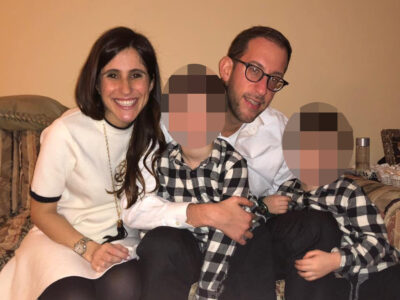
Mya and Siggy were remembered by their family as more than siblings; they were best friends who shared laughter, adventures, and countless memories. Obituaries spoke of an “unbreakable bond” and described how the pair continued their journey together “hand in hand.” Jennifer and Sigmund Golabek lost their only children in a single catastrophic event. The grandparents who had taken them on what was meant to be a short ride home were left with the knowledge that the evening had ended in the children’s deaths. The entire extended family—grandparents, great-grandparents, aunts, uncles, and cousins—was drawn into a grief that remains collective and profound.

In the weeks that followed, the legal case against Stephen Schneider took shape. He told investigators he had consumed two Guinness beers and one Miller Lite over about two hours at the restaurant. A blood sample later showed a blood-alcohol concentration of 0.16 percent—twice the legal limit. Toxicology conclusions stated that his alertness, judgment, response time, and coordination were markedly impaired. He was charged with two counts of reckless vessel homicide, operating a vessel under the influence, and reckless operation of a vessel. At a detention hearing in mid-August, prosecutors argued he should remain in custody, citing the high BAC and the catastrophic result. Schneider’s attorney noted his lack of criminal record and, significantly, letters of support from the children’s parents themselves, who asked that their grandfather be released pending trial. The judge granted conditional release.
That parental support underscores the complicated emotional terrain the family must navigate. Jennifer Golabek and her husband lost their children. They also saw the grandfather who had been operating the boat face criminal charges. Their decision to advocate for his release while the case proceeds reflects a private calculus of love, loss, and family ties that outsiders can only begin to understand. It does not erase the legal questions about impairment and recklessness. It does, however, humanize the tragedy beyond the courtroom narrative of BAC readings and channel markers.
The 911 recordings have given the public a partial window into the minutes after the impact. Laurie Schneider’s voice on the call captures the frantic effort to locate the children, the confirmation that they were unconscious, and the struggle to orient responders to the correct channel marker. Those audio fragments stand as a permanent record of the chaos that followed the collision. For the family, the recordings are both evidence and an almost unbearable reminder of how quickly an ordinary evening became a nightmare.
Investigators have examined the positions of the children at the bow, the speed of the vessel, the status of the marker’s illumination, the electronic navigation aids that were active, and the timeline of alcohol consumption. Each of those elements will be tested in the legal process. Yet none of them can restore the two children whose absence defines the family’s new reality. The phone call—or the sequence of communications—that delivered the news to Jennifer Golabek marked the end of one life and the beginning of another: a life structured around irreversible loss.
In the days after the crash, the community of Lacey, Berkeley, and the wider Ocean County waterfront responded with an outpouring of grief. Visitation and funeral services were held. Friends and neighbors shared memories of two energetic, closely bonded siblings. The investigation continued. Charges were eventually filed. Release conditions were set. Through it all, the core human fact remained unchanged: on a summer Sunday evening that began with a family dinner, two children left the restaurant with their grandparents and never returned home.

The minutes after the impact—the search in the water, the 911 call, the race to the hospital, and the notification that reached Jennifer Golabek—form the emotional epicenter of the story. They are the moments when ordinary time stopped and a permanent before-and-after was created. For the Golabek and Schneider families, those minutes will never fully recede. They are the call that changed everything, the news that ended one chapter of family life and began a far darker one. The legal case will move forward on evidence of impairment, navigation, and responsibility. The family’s grief moves on its own timeline, measured not in court dates but in the empty spaces where Mya and Sigmund should still be.