BREAKING: Investigators are currently piecing together digital clues surrounding the A66 tragedy. Alongside police statements and in-vehicle footage, detectives are examining the broader circumstances involving the individuals and vehicles concerned. What happened before the Passat appeared on the A66 could prove crucial. 👇
BREAKING: Investigators Piece Together Digital Clues in A66 Tragedy – What Happened Before the Passat Reached the Dual Carriageway
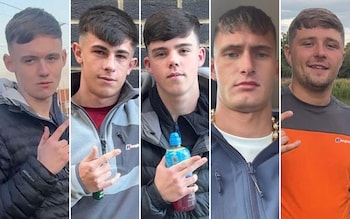
Detectives and independent investigators are methodically reconstructing the sequence of events that led to the fatal collision on the A66 near Middlesbrough in the early hours of Saturday, 22 August 2026. Seven people died when a Volkswagen Passat travelling the wrong way down the dual carriageway struck a marked Cleveland Police armed response vehicle carrying PC Matthew Blades, 37, and PC Tom Clough, 38. The five occupants of the Passat – Michael Robert Cahill, 23; Jacob Matusiak, 23; Makai Saddington, 18; Theo Rae, 17; and Cole Robert Worthy, 17 – also lost their lives at the scene. 
While public attention has focused on the collision itself and the subsequent tributes, investigators emphasise that the critical answers may lie in the hours and minutes that preceded the Passat’s appearance on the A66. Alongside police statements, in-vehicle footage and automatic number-plate recognition (ANPR) data, detectives are examining a wider pattern of activity involving vehicles, individuals and digital traces that could explain how the night escalated into tragedy.
The Immediate Timeline
According to the Independent Office for Police Conduct (IOPC), which is conducting an independent investigation following a mandatory referral from Cleveland Police, officers received intelligence linking a Volkswagen Passat to “numerous incidents.” The vehicle was believed to be displaying cloned registration plates. Those plates activated an ANPR camera, prompting further attention.
An armed response vehicle began a pursuit that analysis of in-car footage shows lasted just under seven minutes. When the Passat entered the A66 at South Bank against the flow of traffic, the pursuing officers aborted the chase and continued on the correct side of the carriageway. Approximately ten seconds later, at 03:39 BST, the Passat collided with the vehicle occupied by PCs Blades and Clough. The two officers were not part of the original pursuit; they had been deployed to the area to assist in searching for the suspect vehicle.
Security and doorbell camera footage has already provided independent corroboration of part of the sequence. Images captured on Lime Road in Middlesbrough at approximately 03:36 BST – roughly three minutes before the crash – appear to show a car being driven at speed and followed by multiple police vehicles. Analysis of that footage and other residential CCTV has allowed investigators to begin mapping the route the Passat took through residential streets in the final stages of the pursuit.
Earlier Activity and the Second Vehicle
Cleveland Police have stated that in the hours before the crash they received several reports of two vehicles being driven dangerously in the Middlesbrough area. One was believed to be a Volvo XC60 that was seen ramming properties. The second was the Volkswagen Passat later involved in the collision; officers believe it was associated with the same activity. Both vehicles were operating with cloned number plates, yet both were detected by ANPR technology. The Volvo was subsequently recovered in Middlesbrough.
This dual-vehicle picture is significant. It suggests the events of the early morning were not an isolated high-speed chase but the culmination of a wider episode of dangerous and potentially criminal behaviour. Investigators are examining whether the ramming of properties formed part of a targeted incident, a dispute, or another form of organised activity. The fact that cloned plates were used on both cars points to a deliberate attempt to avoid identification – a detail that has strengthened the police assessment that the incident was linked to serious criminal activity.
Digital and Technical Evidence
The IOPC has confirmed that it has obtained initial accounts from the officers involved in the pursuit, the full incident log, and in-car footage from the police vehicles. Work continues to secure additional material. In-car video is expected to provide precise timings, speeds, communications between officers, and the exact moment the decision was made to abort the pursuit. The incident log will record the intelligence that first brought the Passat to officers’ attention and the sequence of commands issued during the chase.
ANPR data forms another crucial strand. The activation of cameras by the cloned plates not only triggered the initial interest in the vehicle but also creates a digital trail of its movements. Combined with CCTV from residential streets, commercial premises and the road network, this material allows investigators to reconstruct where the Passat travelled in the period leading up to the pursuit.
Beyond official systems, digital clues from social media and personal devices are also under examination. TikTok accounts linked to some of those who died in the Passat had previously posted videos appearing to show high-speed driving, pursuits and other risky behaviour. One account associated with Makai Saddington contained footage, later deleted, that appeared to depict a car being driven on footpaths and parkland while being followed by police, as well as other clips showing extreme speeds. While these videos pre-date the fatal night, they form part of the broader context investigators are considering when assessing patterns of behaviour.
Mobile phone data, if recovered and analysed under appropriate legal authorities, may further illuminate communications between individuals in the hours before the crash and any coordination between the two vehicles reported to police.
Arrests and the Organised Crime Dimension
Cleveland Police have described the investigation as focusing on “serious criminal activity that resulted in this fatal incident.” In the days following the crash, twelve people – nine men and three women aged between 19 and 61 – were arrested across Teesside on suspicion of offences including possession of a firearm and participation in an organised crime group. Subsequent updates indicated the number of arrests continued to rise, with assistance from the National Crime Agency and the North East Regional Organised Crime Unit.
These arrests suggest detectives believe the events of 22 August did not occur in isolation. The combination of cloned plates, multiple vehicles, reports of property being rammed, and the subsequent discovery of potential organised crime links has transformed the inquiry from a pure road-traffic investigation into a wider criminal probe. What happened before the Passat reached the A66 – the preceding incidents, the relationship between the two vehicles, and any wider network – is therefore central to understanding both the immediate cause of the collision and any underlying criminal enterprise.
Why the Pre-A66 Period Matters
The decision to abort the pursuit once the Passat entered the dual carriageway the wrong way was made in accordance with standard risk assessment. Pursuing officers remained on the correct side of the road. The vehicle carrying PCs Blades and Clough was in the area for a legitimate operational purpose: assisting the search after the ANPR activation. The approximately ten-second gap between the end of the pursuit and the collision is one of the most scrutinised intervals in the entire sequence.
Yet the fuller picture requires understanding how the Passat came to be in that position at that moment. Was it fleeing specific earlier incidents? Was there coordination with the Volvo XC60? Did the cloned plates form part of a longer-term tactic used by a wider group? Digital evidence – ANPR hits, CCTV timelines, in-car video, phone data and social-media material – is being assembled to answer these questions.
The IOPC has stressed that its investigation is independent and ongoing. Cleveland Police continue to support the bereaved families of all seven people who died and to provide welfare support for their own officers. Family Liaison Officers remain engaged with the relatives of both the police officers and the young men who died in the Passat.
A Complex Investigation Still Unfolding
As of the latest updates, investigators are continuing to gather and analyse material. The recovery of the Volvo, the examination of both vehicles’ histories, the mapping of the seven-minute pursuit route through residential streets, and the correlation of digital timestamps from multiple sources all form part of a painstaking process.
What is already clear is that the crash on the A66 was not a random encounter. It was the endpoint of a sequence that began with reports of dangerous driving and property damage, involved the deliberate use of cloned plates, triggered ANPR systems, led to a formal pursuit, and ended in a head-on collision seconds after that pursuit was called off. The digital clues now being examined – from official police systems to residential CCTV and online material – are expected to reveal more about the individuals, the vehicles and the decisions made in the critical period before the Passat appeared on the dual carriageway.
For the families of PC Matthew Blades and PC Tom Clough, and for the families of the five young men who died alongside them, those answers will form an essential part of understanding how seven lives were lost in a few catastrophic seconds on the A66. The investigation continues.