“DON’T WORRY ABOUT ME”: Pamela Cisneros’s father used to take her to monthly mental health appointments following a serious crisis in 2019
“DON’T WORRY ABOUT ME”: Pamela Cisneros’s father used to take her to monthly mental health appointments following a serious crisis in 2019.
But by April of this year, Pamela said she could handle her treatment on her own and told her father not to worry.
He believed his daughter had truly stabilized.
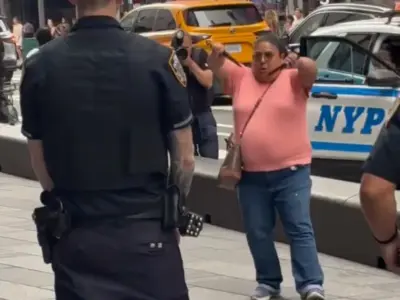
A few months later, Pamela Cisneros appeared in Times Square armed with two knives, resulting in the death of Erin Piacenti and injuries to another man.
Her family is now trying to piece together the period between when Pamela said “don’t worry about me” and the day everything fell apart.
And the records from her final course of treatment may hold a detail the family never knew…
**************
Behind every sudden public tragedy lies a quiet, agonizing erosion of support systems, family vigilance, and medical oversight. For Pamela Cisneros, the path toward the catastrophic events in Times Square was marked by years of silent struggle, punctuated by a turning point that her family now looks back on with profound heartbreak and disbelief.
For a considerable duration, Pamela’s life was closely monitored by those who loved her, most notably her father, Mario Cisneros. Following a severe psychological crisis in 2019—which included a harrowing incident where she leaped onto subway tracks—her family intervened intensely. Mario took on the steady responsibility of accompanying his daughter to her monthly mental health appointments, ensuring she received clinical evaluation and regular medication injections to keep her stable. To her relatives, this structured routine provided a fragile sense of security, a buffer against the deep-seated psychiatric vulnerabilities that had shadowed her for decades.
Yet, mental illness often breeds a deceptive desire for independence. By April of this year, that fragile routine began to fracture. When Mario prepared to take her to a scheduled clinical visit, Pamela refused the ride. With an outward display of calm assurance, she told her father not to worry about her, insisting that she felt capable of handling her treatment and managing her medications on her own. In subsequent conversations, she expressed a weary frustration with depending on pharmaceuticals just to feel normal, signaling a deep internal resistance to her ongoing medical dependency. Wanting desperately to believe in his daughter’s recovery, Mario trusted her words. He believed she had turned a corner, weathered the worst of her psychological storms, and regained control over her life.
That trust masked a terrifying reality. In the months following that April conversation, the communication between Pamela and her support network began to thin. While family members occasionally crossed paths with her—such as her brother Patrick Peralta, who saw her briefly at a relative’s birthday gathering early last month—other invitations were quietly brushed aside. When she skipped family gatherings in the final week before the attack, she offered reassurance over the phone, telling her mother she was fine. No one in the family suspected that behind those brief assurances, her psychological stability was entirely unravelling.
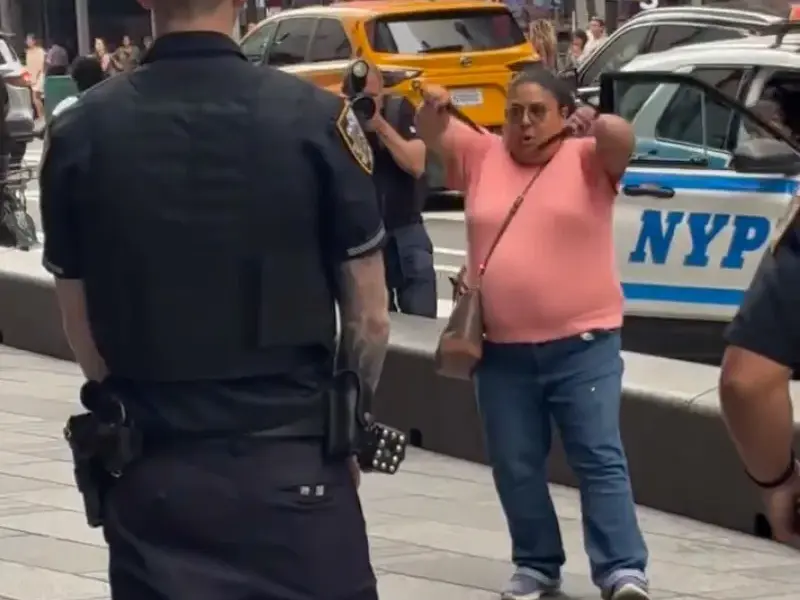
The tragic culmination of that invisible descent occurred on Monday afternoon, August 31, 2026, in the crowded pedestrian corridors of Times Square. Armed with two butcher knives concealed in a red Target bag, Pamela launched an unprovoked and violent assault that claimed the life of 32-year-old Erin Piacenti, a Bank of America vice president and recent bride, while critically injuring a 68-year-old tourist from Rhode Island. The rampage ended moments later in an exchange of gunfire with responding NYPD officers after a tense four-minute standoff where Pamela defiantly refused to drop her weapons.
In the wake of the bloodshed, her grieving family has been left to grapple with an agonizing void, trying desperately to piece together the timeline between the day Pamela told her father not to worry and the afternoon everything collapsed. Investigators, legal experts, and relatives are now scrutinizing the medical records from her final course of treatment, searching for any missed warning signs, unfulfilled prescriptions, or clinical shifts that might reveal why her fragile stability gave way so catastrophically. For the Cisneros family, as well as the loved ones of Erin Piacenti, those final medical files represent a heartbreaking puzzle—one that holds answers to a tragedy that might have been prevented had the safety net not been allowed to fray.
The investigation into the digital footprint and final days of Pamela Cisneros revealed unsettling clues that preceded her violent rampage in Times Square. Months prior to the attack, Cisneros shared a series of erratic and dark ruminations on her public Facebook profile, rambling extensively about religious themes, global conflict, and the nature of human suffering. In one particularly disturbing post, she wrote about a world experiencing the diminished love of people to the point of “stabbing others for no reason,” alongside fragmented warnings about spiritual warfare and internal voices directing individuals toward violence. Investigators and cyber-forensic analysts examining these writings noted how her deteriorating mental state had increasingly manifested in public declarations of paranoia and obsession.
Her family, meanwhile, has continued to express deep anguish and a profound sense of helplessness regarding how warning signs were missed in the weeks leading up to August 31, 2026. Her father, Mario Cisneros, who spent years shouldering the burden of driving her to monthly psychiatric appointments following her harrowing 2019 crisis, has openly voiced his sorrow and confusion. Speaking through tearful interviews, Mario pleaded for forgiveness from the victims’ families, emphasizing that his daughter was a human being gripped by a severe illness rather than a monster, while admitting he was entirely blind to the catastrophic turn her mind had taken after she convinced him in April that she could manage her medical treatment independently.
Legal and psychological experts reviewing the case note that Cisneros’s background—including a master’s degree in psychology—contrasted sharply with the profound cognitive disconnect that characterized her final years. Her brother, Patrick Peralta, shared that while she had worked intermittently in legal offices and maintained periods of apparent stability, her underlying psychiatric vulnerabilities remained a ticking clock. The realization that she skipped family gatherings in the final week of August while offering hollow reassurances over the telephone has left her relatives searching for answers within medical and municipal systems that failed to catch her fall. As the New York City Police Department’s Force Investigation Division continues its internal review and body-worn camera footage is processed for public release, the tragedy remains a harrowing case study in the lethal consequences of unaddressed mental health deterioration.
Timeline:
The shadows of midtown Manhattan lengthened dramatically on a Monday afternoon when an ordinary commute turned into an unimaginable nightmare, claiming the lives of an innocent banking executive and a troubled woman whose psychological unravelling culminated in sudden public violence.
At approximately 4:24 p.m. on August 31, 2026, the heart of New York City became the stage for a tragedy that unfolded in a matter of seconds. Pamela Cisneros, a 49-year-old resident of Queens, traversed the densely crowded pedestrian expanse near West 41st Street and Seventh Avenue carrying a red Target bag. Within that bag lay two large butcher knives, weapons she would soon deploy in a random and unprovoked rampage. Her first target was a 68-year-old tourist from Rhode Island who had just emerged from the subway alongside his wife while visiting their son in Brooklyn. Standing innocently near the intersection waiting to cross the street, the man was suddenly lunged at and stabbed in the abdomen.
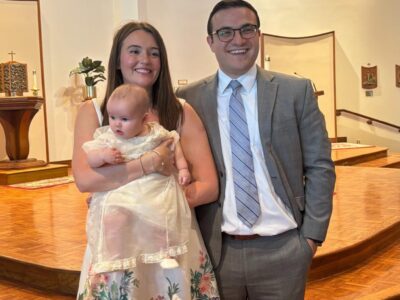
Barely twenty seconds elapsed before Cisneros turned her aggression toward Erin Piacenti. Piacenti, a 32-year-old vice president in the business selection and conflicts division at Bank of America, was walking just outside her workplace in broad daylight. A brilliant legal mind who had graduated from the University of Pennsylvania in 2016 and earned her degree from Fordham Law School in 2021, Piacenti had built a vibrant life defined by professional achievement and personal milestones. Just the previous September, she and her husband Frank—a fellow Fordham Law graduate from her same class—purchased their first home in Chester, New Jersey, celebrating their second wedding anniversary shortly thereafter. Struck down unexpectedly in the epicenter of global commerce, Piacenti sustained a severe puncture wound to her abdomen and was rushed to Bellevue Hospital, where she tragically succumbed to her injuries. The 68-year-old male victim, though critically shaken, survived the assault and was later listed in stable condition at the hospital.
Following the stabbings, Cisneros fled several blocks toward a nearby police substation, where responding law enforcement officers quickly intercepted her. Captured vividly on body-worn cameras and civilian footage, a tense four-minute standoff ensued. Officers repeatedly commanded Cisneros to drop the twin butcher knives, but she remained completely defiant. Rejecting all pleas for surrender, she chillingly shouted to the authorities, “I’m not dropping anything. I would rather kill both of you,” and reiterated, “I will kill you”. As she advanced aggressively toward the officers waving the weapons, deployment of Tasers proved entirely ineffective because she pushed or pulled the probes away and continued her advance. Forced to neutralize an imminent lethal threat, two officers discharged their service firearms. Cisneros was struck, transported to Bellevue Hospital, and formally pronounced dead.
In the wake of the bloodshed, investigations by the New York City Police Department and the Office of the New York State Attorney General began untangling the background of the attacker. NYPD Commissioner Jessica Tisch confirmed that while Cisneros possessed no formal criminal record, she carried a heavily documented history of mental health struggles, characterized by multiple prior police interactions stemming from emotional disturbances. Friends, family, and public records revealed that Cisneros’s life had fractured significantly over the preceding years, compounded by a contentious divorce finalized in Florida and longstanding battles with psychological stability.
The repercussions of the tragedy reverberated deeply across corporate, academic, and civic institutions. Matthew Koder, Bank of America’s President of Global Corporate and Investment Banking, addressed employees in an internal memo distributed to Reuters, mourning Piacenti as an invaluable teammate, cherished friend, and dedicated professional who had enriched the firm during her 18 months there. Fordham Law School issued statements expressing profound heartbreak over the loss of a distinguished alumna. Community leaders, including New York City Mayor Zohran Mamdani, commended the swift intervention of police officers while acknowledging the sorrowful loss of life, emphasizing that the incident underscored the critical, unmet gaps within public mental health safety nets.
The horrifying sequence in Times Square ultimately left behind a devastated family, a grieving corporate community, and enduring questions regarding how acute, unmanaged psychiatric crises can manifest so catastrophically in public spaces. Erin Piacenti is remembered not by the sudden violence that ended her journey, but as a devoted wife, homeowner, brilliant lawyer, and cherished colleague whose promising life was extinguished far too soon on a Monday afternoon.