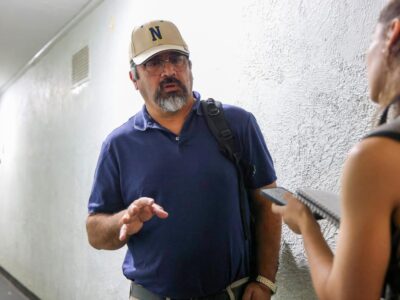
She had been trying to put her life back together: Pamela Cisneros had endured a divorce, separation from her children, and years of psychological treatment

Shattered Resilience: The Unfathomable Collapse of Pamela Cisneros
The neon glow of Times Square reflects a perpetual motion of ambition, tourism, and fleeting glances, but on a fateful afternoon, the Crossroads of the World became the backdrop for a tragedy that defied comprehension. For 49-year-old Pamela Cisneros, the public violent rampage that ended in her own death at the hands of police was a shocking deviation from a life story defined by grit, survival, and a hard-fought reclamation of normalcy. To the public, she became the perpetrator of an unprovoked attack that claimed the life of Erin Piacenti, a 32-year-old Bank of America vice president and new mother. Yet to her family, the headlines told the story of a stranger bearing Pamela’s face—a stark contradiction to the resilient woman they loved and thought they had successfully guided back from the psychological abyss.
The Architecture of a Hard-Won Recovery
Long before the chaos of that afternoon, Pamela Cisneros’s existence was characterized by quiet endurance. Life had dealt her a series of severe emotional and structural blows: a painful divorce, the heart-wrenching separation from her children, and a subsequent multi-year battle with profound psychological distress that required intensive treatment. For many, such an accumulation of trauma fractures the spirit permanently.
Yet, those closest to her emphasized her steadfast refusal to succumb to despair. Pamela channeled her pain into self-improvement, diving into academia with a fierce determination. She pursued and successfully earned a master’s degree in psychology—a poignant irony given her later struggles—proving to herself and her community that her trauma would not write the final chapter of her intellectual and personal capabilities. Moving to Queens, she established a routine, seeking to weave the frayed edges of her existence back into a functional, dignified life. She worked, she managed her household, and she cultivated stability. There was a prolonged, hopeful period when her family truly believed the crisis had passed. They watched her emerge into the light, apparently equipped with the tools to manage her mind and reclaim her place in the world.
The Unraveling and the Unthinkable
The human mind remains a fragile ecosystem, and psychological rehabilitation is rarely a linear trajectory of permanent cure; rather, it is often a fragile truce. Sometime prior to the late-summer incident, the invisible scaffolding supporting Pamela’s psychological stability began to buckle.
Details emerging from law enforcement and close circles indicate a deep-seated resurgence of acute mental health breakdown. Historical records noted prior interventions, suggesting that the specters of her past trauma had not been fully exorcised, but rather lay dormant beneath the surface of her functional routine. When the relapse struck, it apparently did so with a catastrophic intensity that completely divorced her from reality.
On that afternoon, authorities report that Pamela pulled two knives from her bag in the heart of Manhattan, launching a random, unprovoked assault that cut short the bright future of Erin Piacenti—who had just returned to work from maternity leave—and severely injured an elderly bystander. Advancing on police officers at a Times Square substation with weapons raised and shouting fatalistic warnings, Pamela’s life ended in a hail of police gunfire.
A Dual Grief
The aftermath left two distinct families—and a wider public—grappling with hollow grief. In Chester, New Jersey, and the broader New York financial community, loved ones mourn Erin Piacenti, an accomplished executive and cherished mother whose life was extinguished in a senseless act of violence.
Concurrently, Pamela’s family faces a profoundly complex mourning process. They are left to reconcile the dedicated mother, student, and survivor they knew with the violent image captured in police reports and news broadcasts. To them, the final act of her life did not erase the decades of courage it took to rebuild herself, but it underscored the tragic vulnerability of untreated or resurging mental illness. Pamela Cisneros spent years trying to put her life back together, proving that resilience is a formidable human trait—even when, in the end, the invisible weights of the human mind ultimately proved too heavy to bear.
Chronicle of a Tragedy: The Timeline of Pamela Cisneros and the Times Square Rampage
Understanding the tragedy that unfolded in Times Square requires examining the timeline that stretches far beyond the fatal minutes of that late-summer afternoon. This chronology maps out the hidden warning signs, the psychological struggles, and the precise sequence of events that transformed Pamela Cisneros’s hard-won recovery into an unthinkable catastrophe.
Phase 1: The Years of Reconstruction (2018 – Early 2026)
2018 – 2019 (Initial Interventions): According to records from the New York Police Department (NYPD), this period marked the earliest documented instances of Pamela’s psychological instability, prompting police intervention and welfare checks. Although she possessed no prior criminal record, the profound emotional trauma of a painful divorce and separation from her children left deep, untreated scars.
The Academic Turnaround: Defying her personal demons, Pamela channeled her energy into higher education. She persevered through academic hurdles and successfully earned a master’s degree in psychology—a poignant irony given her later decline. For her family, this represented a golden era of recovery. Moving to Queens, she established a functional, quiet routine, striving to rebuild her life piece by piece.
Early 2026 (Digital Warning Signs): Behind her peaceful facade, Pamela’s psychological state began to unravel once more. On her personal Facebook account, she began posting erratic, disjointed thoughts touching on religious themes, doomsday anxieties, and the corruption of humanity. Most chillingly, she left cryptic notes alluding to the phenomenon of “voices urging people to kill or commit suicide” and how easily one could slip into attacking others without cause. These alarming red flags went unnoticed and unreported to mental health professionals.
Phase 2: The Fateful Afternoon in Times Square (Monday, August 31, 2026)
4:24 PM (The Spark): The NYPD 911 dispatchers begin receiving frantic calls from witnesses near 7th Avenue and 42nd Street. Pamela Cisneros (49) emerges into the dense crowds of central Manhattan, retrieving two large kitchen-style knives from her bag.
First Attack (Near the 41st Street Subway Exit): Her first target is a 68-year-old male tourist walking with his wife after exiting the subway. Without warning, Pamela lunges forward, driving a knife deep into the elderly man’s abdomen and leaving him bleeding heavily on the pavement.
Second Attack (Seconds Later, Near 42nd Street): Continuing north along 7th Avenue, Pamela strikes again less than 30 seconds later. She targets Erin Piacenti, a 32-year-old Bank of America vice president and new mother who had recently returned from maternity leave. A single, fatal stab wound to the torso extinguishes Piacenti’s life.
The Four-Minute Confrontation: Bystanders raise the alarm, and NYPD patrol officers arrive at the scene within minutes, initiating a tense, four-minute standoff. Officers repeatedly command Pamela to drop her weapons.
Phase 3: The Fatal Conclusion and Aftermath
The Final Defiance: Refusing to yield, Pamela exhibits the extreme agitation of a completely detached mind. According to NYPD Commissioner Jessica Tisch, Pamela yells out to the responding officers, “I’m not dropping anything. I’d rather kill both of you,” while repeatedly threatening police lives.
The Fatal Intervention: Officers deploy a Taser, which proves completely ineffective against her heightened state of agitation. Facing an immediate, lethal threat to civilians and law enforcement, two officers discharge their service weapons. Pamela Cisneros is pronounced dead at the scene, ending her 49-year life in a devastating spiral.
The Shockwave:
The injured elderly tourist undergoes successful emergency surgery at Bellevue Hospital and is listed in stable condition.
Erin Piacenti’s death leaves her husband, infant child, and the corporate community in New Jersey reeling from an unprovoked act of urban violence.
Pamela’s family is left grappling with profound grief, forced to reconcile the dedicated mother and scholar they cherished with the violent perpetrator captured on news cameras—raising haunting questions about systemic failures in mental healthcare.