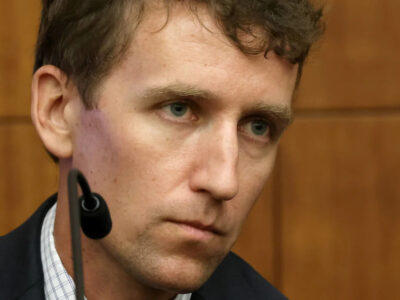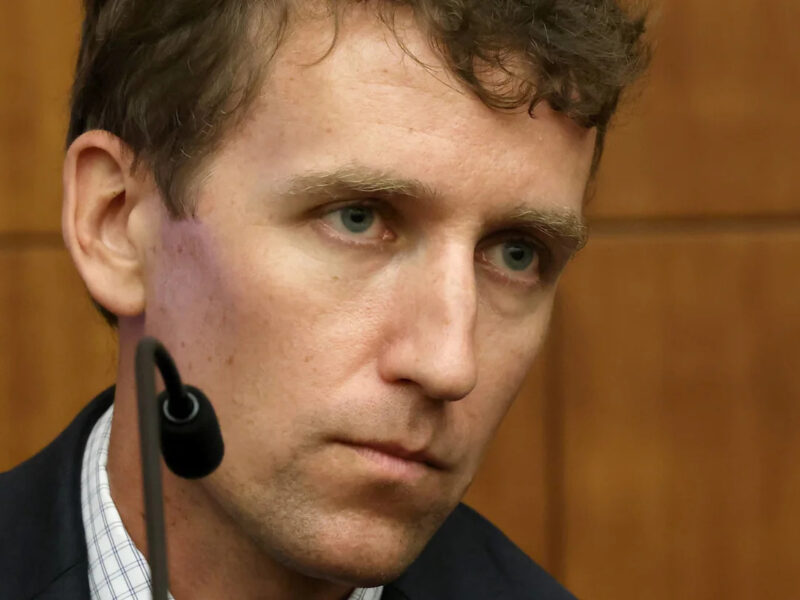
💔 After Lindsay Clancy’s mistrial, her attorney is pushing back on conspiracy theories involving her husband, Patrick Clancy. The attorney’s comments come as public attention remains focused on the case and on claims that have circulated outside the courtroom. With the trial ending without a verdict, the legal proceedings are not the same as a finding of guilt or innocence. As the case moves into its next phase, the attorney’s response adds another significant detail to a story that remains far from settled…
The Postpartum Psychosis Crisis: Deconstructing the Lindsay Clancy Legal Battle, Medical Failures, and the Digital Witch Hunt
PLYMOUTH, Massachusetts — The American legal system has long prided itself on its ability to deliberate complex moral dilemmas through structured argumentation, rigorous forensic evidence, and impartial juries. Yet, when the sanctuary of the courtroom intersects with the raw, chaotic terror of severe mental illness, justice becomes an agonizingly difficult pursuit. No contemporary legal battle has exposed this fragile boundary quite like the trial of Lindsay Clancy—the former Massachusetts labor and delivery nurse who faced first-degree murder charges after strangling her three young children during an acute psychotic break.
When the high-stakes trial in Plymouth Superior Court ultimately culminated in a dramatic mistrial after an 11-1 deadlocked jury failed to reach a unanimous verdict, it did not provide resolution. Instead, it tore open deep societal wounds. The case became a national lightning rod, forcing the public, the medical establishment, and the judicial system to confront uncomfortable truths about the catastrophic realities of postpartum psychosis, the over-medication of vulnerable psychiatric patients, and the toxic digital ecosystem of internet sleuths who transform human tragedies into online conspiracy theories.
This comprehensive investigation examines the harrowing timeline of the Duxbury tragedy, the fierce scientific battle over criminal responsibility, the legal mechanics that led to a deadlocked jury, and the alarming rise of social media harassment directed at the surviving father.
The House on Pleasant Street: Anatomy of a Breaking Point
To understand how a life of apparent domestic bliss devolved into unimaginable horror, one must examine the quiet suburban town of Duxbury, Massachusetts, in January 2023. To all outward appearances, Lindsay and Patrick Clancy lived an enviable life. Married in 2016, they were a devoted couple blessed with three children: five-year-old Cora, three-year-old Dawson, and eight-month-old infant Callan. Friends and neighbors described them as loving, attentive parents deeply embedded in their community.
However, beneath the polished surface of professional and familial success, Lindsay Clancy was quietly fighting for her sanity. Following the birth of her third child, Callan, Lindsay began experiencing severe, debilitating mental health complications. What initially appeared to be standard postpartum fatigue rapidly escalated into profound postpartum depression, crippling anxiety, and a terrifying descent into postpartum psychosis—a rare, emergency psychiatric condition characterized by hallucinations, delusions, and a complete detachment from reality.
Medical records and court testimonies later revealed a frantic, desperate effort by Lindsay and her husband to seek professional psychiatric intervention. In the months leading up to the tragedy, Lindsay consulted numerous mental health professionals, visited specialized psychiatric facilities, and was prescribed an aggressive cocktail of antidepressant and anti-anxiety medications. Rather than stabilizing her condition, the frequent alterations, dosage increases, and rapid medication withdrawals allegedly plunged her into a chemically induced nightmare. Witnesses later testified that Lindsay experienced terrifying auditory hallucinations, expressing persistent fears that her mind was breaking and that she was losing control.
On the afternoon of January 24, 2023, the fragile safety net gave way completely. Utilizing a brief window of opportunity, Lindsay sent her husband, Patrick, out of the house on errands to pick up takeout and specialized medications. Left alone with the three young children, Lindsay used exercise bands to strangle Cora, Dawson, and Callan. Following the killings, in a desperate, self-inflicted attempt to end her own life, she slashed her own wrists and throat, and threw herself from a second-story window of the family home.
When Patrick returned shortly afterward, he discovered an unspeakable nightmare. His frantic, agonizing 911 call—marked by desperate cries for help and sheer disbelief—became one of the most haunting pieces of audio evidence introduced during the trial. While emergency responders managed to save Lindsay’s life, leaving her paralyzed from the waist down and subsequently confined to secure medical and psychiatric facilities, the three children were gone, leaving a shattered father and a stunned nation searching for answers.
The Courtroom Clash: Criminal Accountability vs. Medical Insanity
When the criminal case finally reached the Plymouth Superior Court, the trial transformed into a profound philosophical battle over the definition of criminal responsibility. The prosecution and the defense presented two irreconcilable interpretations of Lindsay Clancy’s mental state during those fatal hours.
The Prosecution’s Case: Deliberate Action and Cognition
The Commonwealth argued that Lindsay was fully conscious of her actions, capable of distinguishing right from wrong, and acting with calculated malice. Prosecutors maintained that Lindsay systematically orchestrated the circumstances—sending her husband away, isolating the children, and executing the strangulations with deliberate premeditation. They pointed to her professional background as a neonatal nurse, asserting that she understood the physiological consequences of her actions and that her behavior immediately before and after the crime demonstrated goal-oriented cognition rather than a complete detachment from reality. For the state, it was a brutal, multi-count first-degree murder case that demanded legal accountability.
The Defense’s Case: The Blindness of Psychosis
Conversely, defense attorney Kevin Reddington anchored his entire strategy on a plea of lack of criminal responsibility due to severe mental disease. The defense did not dispute that Lindsay killed her children; instead, they argued that she was utterly incapable of controlling her behavior because she was suffering from an acute episode of postpartum psychosis driven by medical negligence and a broken psychiatric care system.
To substantiate this claim, the defense marshaled an array of psychiatric experts, including renowned forensic psychiatrist Dr. Phillip Resnick. Dr. Resnick testified unequivocally that Lindsay was “frankly psychotic” at the time of the crime, driven by command hallucinations and an overmedicated, chemically unstable brain that rendered her entirely detached from reality. Reddington also trained his sights on the broader medical establishment, arguing that healthcare providers failed to properly diagnose, monitor, and treat Lindsay’s catastrophic medication adjustments in the weeks prior.
The 11-1 Deadlock and the Dramatic Mistrial
After weeks of harrowing testimony, graphic forensic evidence, emotional witness accounts, and approximately 38 hours of intense deliberations spanning seven days, the jury of nine women and three men reached an insurmountable wall.
Repeatedly sending notes to Judge William Sullivan indicating they were hopelessly deadlocked, the jury revealed a stark ideological split. According to post-trial remarks by defense counsel, the panel was divided 11 to 1 in favor of a verdict, but could not achieve the unanimity required under Massachusetts law. Recognizing that further deliberation would be futile and potentially coercive, Judge Sullivan officially declared a mistrial.
The announcement sent shockwaves through the courtroom. In a last-minute scramble, Kevin Reddington attempted to petition for an emergency stay to challenge the deadlock, arguing that a single juror was acting unreasonably and refusing to apply the standard of reasonable doubt to the evidence. When the petition was denied, the legal chapter temporarily closed with a legal stalemate.
District Attorney Timothy Cruz acknowledged the deep public emotions tied to the case, stating that prosecutors would carefully evaluate their next steps regarding whether to mount a retrial. Meanwhile, a status conference was scheduled, keeping the legal cloud hanging over the defendants and the community. Beyond the criminal proceedings, a pending civil medical malpractice lawsuit filed by both Lindsay and Patrick against her healthcare providers remains on the horizon, aiming to hold medical professionals accountable for alleged psychiatric negligence.
The Dark Side of True Crime: Internet Sleuths and Conspiracy Theories
While the legal teams battled over psychiatric definitions and jury instructions, an entirely different kind of trial was unfolding across TikTok, Instagram, Reddit, and YouTube. The case became a focal point for the modern true-crime subculture, where self-proclaimed internet detectives launched “side investigations,” combed through public records, and generated a staggering array of baseless conspiracy theories.
The most virulent and disturbing of these online narratives targeted Patrick Clancy. Defying the established forensic evidence, the harrowing 911 audio, and the exhaustive testimony presented in court, viral conspiracy theorists propagated wild claims suggesting that Patrick was actually the mastermind behind the murders—alleging that he framed his mentally fragile wife or covered up a botched domestic dispute. These online commentators scrutinized Patrick’s physical demeanor in public, dissected minor inconsistencies in his witness testimony under cross-examination, and weaponized his grief for clickbait engagement.
Following the declaration of the mistrial, Kevin Reddington felt compelled to address the absurd digital chatter directly when questioned by reporters. Defending the integrity of the father and pushing back against the toxic online ecosystem, Reddington pointed directly to the emotional reality of the case.
“I think Patrick, you heard the 911 call, I think you can judge his credibility by that 911 call,” Reddington told the press. “I don’t know what is in Patrick’s mind. He testified, and the jury was able to evaluate it.”
When pressed by a reporter about internet trolls labeling Patrick a murderer, Reddington offered a sharp, three-word clarification: “Not by me.”
Reddington also contextualized the immense pressure Patrick faced while taking the witness stand during a high-stakes murder trial. “People get nervous when they testify. They say things and they get confused. It’s not easy to be on that witness stand,” the defense attorney explained, expressing astonishment at how online algorithms enable armchair sleuths to manufacture fiction out of real human devastation.
David Meier, attorney for Patrick Clancy, issued a poignant statement following the mistrial that underscored the permanent shadow hanging over his client:
“The loss of Patrick’s children is something from which he will never recover and from which there will never be closure.”
Conclusion: A Society Reflected in Tragedy
The Lindsay Clancy trial stands as an uncomfortable mirror reflecting the fractures of modern society. On one hand, it exposes the critical gaps in maternal mental healthcare, forcing a reluctant medical establishment and judicial system to grapple with the terrifying reality of postpartum psychosis. On the other hand, it lays bare the ethical decay of the digital age, where human tragedy is routinely commodified, and grieving survivors are subjected to the cruel cross-examination of online mobs.
As the legal system weighs whether to subject the community, the attorneys, and the families to a grueling retrial, the core tragedy remains unchanged. Three innocent children lost their lives, a mother remains institutionalized under psychiatric care, and a father navigates a landscape of irreversible grief. No courtroom verdict, and no viral internet theory, can alter the profound sorrow left in the wake of that January night in Duxbury.