A server might recall details that Stephen Schneider does not: the final hours at MJ’s Restaurant are shaping up to be a crucial piece of the puzzle
A server might recall details that Stephen Schneider does not: the final hours at MJ’s Restaurant are shaping up to be a crucial piece of the puzzle.
Stephen Schneider has given the police his own account of how much beer he consumed.
But he was not the only person at the restaurant.
Servers, bartenders, and table companions can provide a timeline completely independent of his testimony.
With the 0.16% figure now on the record, the witnesses from that evening could hold the key to verifying everything Stephen Schneider has said.
*******************

Stephen C. Schneider has given police a clear account of his alcohol consumption on the evening of July 19, 2026. Over roughly two hours at MJ’s Restaurant Bar & Grill in Bayville, he said, he drank two bottles of Guinness and one Miller Lite. That statement was made in the aftermath of a boat collision that killed his two young grandchildren. A blood sample drawn under warrant hours later returned a concentration of approximately 0.16 percent — twice the legal limit in New Jersey. Laboratory experts concluded that his judgment, perception, response time, and coordination were markedly impaired.
The conflict between the three-beer claim and the laboratory result has made the dinner itself a focal point of the investigation. Schneider was not alone at the restaurant. Servers took his orders. Bartenders prepared the drinks. Family members sat at the same table. Each of those people is in a position to supply a timeline and a set of observations that do not depend on Schneider’s memory. With the 0.16 percent figure now on the record, their independent accounts may prove essential to determining whether his description of the evening holds.
The Limits of a Single Perspective
A person’s recollection of their own drinking is subject to ordinary failures of memory, the effects of alcohol itself, and the understandable tendency to minimize consumption after a catastrophic event. Schneider’s account is precise — specific brands, a specific total, a specific time window — but precision does not guarantee accuracy. The presence of other people who watched the same events from different vantage points creates the possibility of external verification.
A server who carried bottles to the table may remember how many times they returned with beer. A bartender who opened or poured the drinks may recall the volume prepared for that party. Family members who shared the meal may remember what sat in front of Schneider and how his demeanor changed, or did not change, over the course of the evening. None of these observers has the same incentives or the same gaps that can affect a self-report. Their collective perspective can either reinforce Schneider’s version or expose gaps in it.
The Structure of Independent Evidence
Several categories of witness and record can contribute to a timeline that stands apart from Schneider’s testimony.
Service staff. The employees who interacted directly with the table are the most immediate independent sources. The server who took the order knows what was requested. The bartender who prepared the drinks knows what left the bar. The person who set the final bottle on the table knows what was delivered in the closing phase of the meal. These workers can be asked about the number of beers, the brands, the frequency of service, and Schneider’s apparent condition as the group prepared to leave. Because the dinner was followed by a fatal collision and a high-profile investigation, staff have reason to reconstruct the evening with care.
Family members at the table. Schneider’s wife, daughter, and son-in-law were present for the full duration of the meal. They observed the same two-hour window from seats only a few feet away. Their recollections of what Schneider ordered, what he consumed, and how he appeared form a continuous observational record from people who knew his normal behavior. Consistency or inconsistency among their accounts, and between their accounts and Schneider’s, carries particular weight.
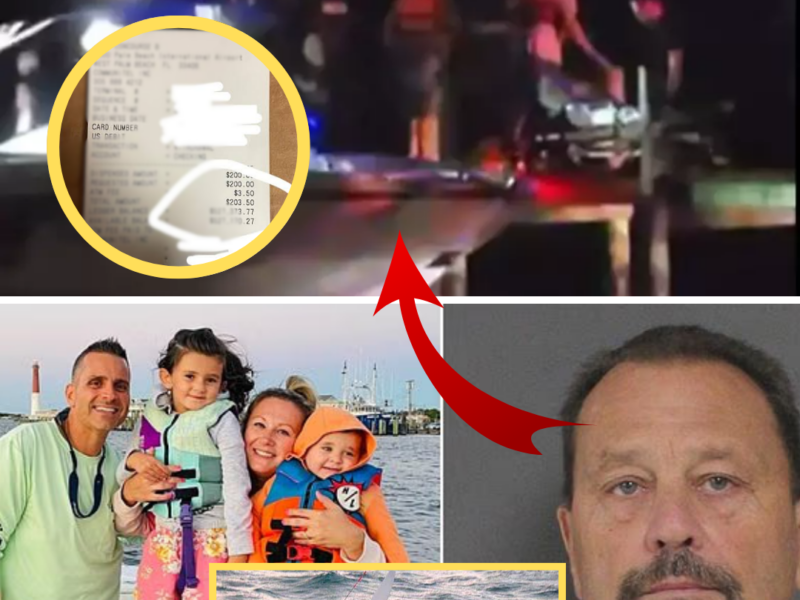
Documentary and electronic records. Point-of-sale systems log items and, in many cases, times. Receipts and order tickets can show what was charged to the table or to Schneider. If the system retains reliable timestamps, the sequence of orders can be reconstructed without relying on anyone’s memory of intervals. Surveillance cameras, if they covered the dining room, bar, or exits, can add a visual layer that records the arrival of drinks and the moment of departure.
Other potential observers. In a busy restaurant, nearby patrons, bussers, hosts, or managers may have formed secondary impressions. While less detailed than the accounts of those who served or sat at the table, such observations can still supply fragments that help fill the timeline.
Why the Final Hours Carry Special Weight

The closing portion of the dinner is especially significant. By the time the group finished eating and prepared to leave, any alcohol Schneider had consumed was already circulating in his system. Observations made during those final minutes — the last drinks delivered, the settling of the check, the walk from the table toward the dock — are observations of his condition at the point when impairment, if present at the level suggested by the 0.16 percent BAC, would have been active.
A server who closed the check or delivered the final round was among the last restaurant employees to interact with him before he boarded the boat. Family members who walked with him to the vessel were among the last people to see his coordination and speech before he took the helm. Their impressions sit close in time to the period of operation that ended with the collision.
The Scientific Context
The 0.16 percent result already stands at a substantial distance from the three-beer claim. For a typical adult male, three standard beers over two hours, followed by additional hours of metabolism before the blood draw, would not ordinarily produce a concentration of that magnitude. The discrepancy is the reason an independent timeline matters. If staff and family accounts, supported by records, confirm only three beers, investigators must still explain the BAC. If those same sources indicate a higher volume of alcohol, the three-beer statement is shown to be incomplete and the impairment evidence is strengthened.
Legal Framework
Schneider faces two counts of reckless vessel homicide, operating a vessel under the influence, and reckless operation of a vessel. Prosecutors have treated the 0.16 percent BAC as central evidence of the degree of impairment under which he operated the boat with two children aboard. Schneider’s pre-test account of three beers remains the primary competing narrative. Testimony and records from people who were present at the restaurant supply one of the most direct methods of testing that narrative against external evidence.
The children’s parents have supported Schneider’s pretrial release, describing him as a loving grandfather. That support forms part of the human context of the case. It does not eliminate the need to examine whether his description of the evening is consistent with what others saw and what the restaurant recorded.
Building a Timeline That Does Not Depend on the Defendant
The practical task for investigators is to assemble a sequence of the dinner that can stand on its own. When were the first drinks ordered? How many beers were delivered in total? What brands appeared on the tickets or in staff memory? When was the last alcoholic beverage placed on the table? When did the check close? When did Schneider leave the building? When did the boat depart? Each of these points can be constrained by a combination of staff testimony, family recollection, electronic records, and any available video.
Once that independent sequence exists, it can be laid beside Schneider’s account. Points of alignment strengthen the credibility of his statement. Points of divergence require explanation. The 0.16 percent figure remains the scientific benchmark against which both the self-report and the external timeline are ultimately evaluated.
The Value of Ordinary Observation
Most restaurant shifts produce no lasting evidentiary record. This one did. Because a fatal collision and a contested blood-alcohol result followed the dinner, the ordinary acts of taking an order, carrying a bottle, and watching a customer leave have become potential links in a chain of proof. A server who remembers details that Schneider does not — an extra round, a change in demeanor, a longer interval at the table — may supply a fact that the self-report omits. A server whose memory aligns closely with the three-beer claim may supply corroboration that the self-report alone cannot claim.
In either case, the witness provides something Schneider cannot: a perspective that does not originate with the person whose impairment is at issue.
A Puzzle That Multiple People Can Help Solve
Stephen Schneider has given his account of how much beer he consumed. The blood test has given a number. Between them stand the people who worked at the restaurant and the people who sat at the table. Their observations, the records of service, and any visual data from the evening together form a means of testing the accuracy of the account given to police.
The final hours at MJ’s Restaurant are no longer simply the backdrop to a boat trip. They are a period that can be reconstructed from multiple independent angles. With the 0.16 percent figure on the record, those angles have become essential. The witnesses from that evening — starting with the staff who brought the drinks and the family who shared the meal — may hold the practical key to determining whether Schneider’s description of the evening survives contact with the evidence or whether the laboratory result is better explained by a different volume of alcohol. In a case defined by the deaths of two children and a sharp conflict between a self-report and a scientific measurement, that determination remains one of the central tasks of the investigation.