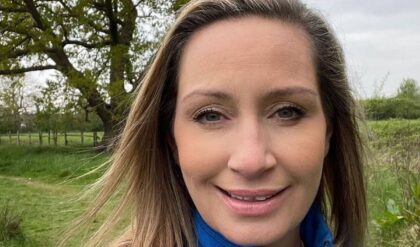
The disappearance of Nancy Guthrie, the 84-year-old mother of NBC’s “Today” show co-anchor Savannah Guthrie, has shocked the public in early 2026. What began as a routine missing person report quickly escalated into a high-profile investigation treated as a potential abduction or worse. The case highlights vulnerabilities in home security—even in affluent areas—and how modern forensic techniques like DNA evidence can dramatically shift investigations.
Nancy Guthrie, born January 27, 1942, resided in a luxurious home in the Catalina Foothills area north of Tucson, Arizona. This upscale neighborhood features properties often valued well into the seven figures, with the Guthrie residence reportedly in the $1 million range. Despite the affluence, investigators noted a striking absence: no security cameras were installed on the entire property. In an era where affordable smart cameras, doorbell systems like Ring, and comprehensive surveillance setups are commonplace—even standard in many high-end homes—this omission raised immediate questions.
The Disappearance and Initial Response
Nancy Guthrie was last seen at her home near East Skyline Drive and North Campbell Avenue on the evening of January 31, 2026, around 9:30 p.m. She failed to appear for church the following morning, Sunday, February 1. Concerned family members checked her residence around noon and found her missing. They promptly reported it to the Pima County Sheriff’s Office.
By February 2, authorities escalated the case. Pima County Sheriff Chris Nanos held a press conference declaring the home a “crime scene.” Aspects of the scene were described as “concerning” and “horrific” in some reports, though specifics remained limited to protect the investigation. Officials believed Nancy Guthrie did not leave voluntarily—she was likely taken “against her will.” The sheriff emphasized this was not a simple missing elderly person case but one involving potential foul play, possibly abduction or kidnapping.
Search efforts intensified rapidly. Deputies deployed search dogs, drones, and ground teams across the Tucson area and surrounding neighborhoods. A SAFE Alert (similar to an Amber Alert but for vulnerable adults) was issued statewide, describing her as a white female, 5’4″, 150 pounds, with brown hair and blue eyes. Public appeals for information flooded media outlets, amplified by Savannah Guthrie’s national profile.
The absence of security cameras compounded the mystery. In many modern home invasions or abductions, footage provides critical leads: timestamps, suspect descriptions, vehicle details, or even license plates. Here, investigators had no visual record of who approached the property, entered, or left with Nancy Guthrie—if that was what occurred. Neighbors reported no unusual activity that night, and without cameras, the timeline relied solely on witness statements and physical evidence at the scene.
This detail sparked broader discussions online and in media: Why would an 84-year-old living alone in a valuable home forgo basic security? Factors could include privacy preferences, unfamiliarity with technology, cost concerns (despite the home’s value), or simply never prioritizing it. In Arizona’s retirement communities and affluent suburbs, many seniors opt for gated access or community patrols over personal cameras. Yet experts note that in 2026, with rising property crimes and elder-targeted scams/abductions, such systems are increasingly recommended by law enforcement and insurers.
The Turning Point: DNA on the Doorknob
As the search continued into February 2–3, 2026, forensic teams processed the crime scene meticulously. One key item emerged: DNA evidence recovered from the doorknob (or door handle) of the residence.
Touch DNA—trace amounts transferred through skin contact—has revolutionized cold cases and active investigations. In recent years, advancements in genetic genealogy and sensitive PCR amplification allow labs to profile even minute samples left on surfaces like doorknobs, which people grip briefly without realizing.
Investigators collected swabs from high-touch areas, including entry points. The DNA profile obtained from the doorknob did not match known individuals in the household or frequent visitors. When uploaded to databases (CODIS for criminal profiles, or combined with genealogical sites), it yielded a match or strong lead that “reversed the case.”
Details remain guarded, but sources indicate the DNA pointed to a suspect or suspects previously not on investigators’ radar. This shifted the narrative from a random abduction to one potentially involving someone known to Nancy Guthrie, or a perpetrator linked through prior offenses. In some scenarios, touch DNA has exonerated initial suspects or identified overlooked individuals who touched the door during a forced entry or interaction.
The “reversal” likely means early theories (e.g., a stranger home invasion) gave way to a more targeted lead. Perhaps the DNA matched a relative, acquaintance, caregiver, or someone with a criminal history who had recent contact. Alternatively, it connected to a broader pattern of crimes in the area. Whatever the specifics, this single piece of evidence transformed a wide-net search into a focused pursuit.
Why This Matters in 2026
This case underscores evolving trends in crime and forensics:
-
Home Security Gaps: Even million-dollar homes can be vulnerable without cameras, alarms, or motion lights. In 2026, AI-powered systems integrate with smartphones for real-time alerts, yet adoption lags among seniors.
Elder Vulnerability: Arizona has a large retiree population. Scammers and predators target isolated elderly individuals. Abductions for ransom, exploitation, or worse occur, though rare.
Forensic Power of Touch DNA: Doorknobs, light switches, and steering wheels yield profiles. Labs process samples faster, and databases expand. In 2025–2026, genetic genealogy solved numerous cold cases; here, it acted swiftly in a fresh investigation.
Media and Public Impact: Savannah Guthrie’s celebrity amplified coverage. National outlets like CNN, USA Today, and NBC followed closely, pressuring authorities while raising awareness.
As of early February 3, 2026, Nancy Guthrie remains missing. The investigation continues with homicide detectives involved as a precaution. The Pima County Sheriff’s Office urges tips via anonymous lines.
This developing story reminds us that security is personal, and evidence—even a doorknob trace—can change everything.
News

A STRANGE DETAIL IN THE FRONT SEAT: According to several reports cited by local media, some images from the scene show a small item lying near Declan Berry’s driver’s seat — this seemingly minor detail is drawing attention to the final moments before the accident
Two teenagers in car that crashed into river identified by police The body of Eden Bunn, 16, has been recovered from the River Nene near Wisbech but searches are continuing for 18-year-old Declan Berry. The car crashed into the River…
Breaking News: Police are offering a reward for information leading to Julian Ingram’s arrest, but a RUMORUS SPREADING about just ONE ADDRESS reveals what he fears
Shooting victims to be laid to rest as police offer reward for information leading to arrest of Julian Ingram Authorities believe the fugitive is still alive. Three victims of Julian Ingram’s alleged shooting spree in NSW will be laid to rest this…

THE CHAIR BY THE RIVER: Nicola Bulley’s phone was found neatly placed on a chair while a work call continued in silence — a chilling detail that has left many wondering why the device was left there
Retracing Nicola Bulley’s last known movements: Video tracks missing mother’s journey along river to bench where her phone was found after she vanished without a trace This video retraces the last known journey of missing mother-of-two Nicola Bulley who mysteriously vanished…
A WALKER SAID THE AREA WAS “EERILY QUIET” One local told reporters they passed the path shortly after 9:25 a.m.
A WALKER SAID THE AREA WAS “EERILY QUIET” One local told reporters they passed the path shortly after 9:25 a.m. They remembered seeing the dog… but no one else nearby. Investigators later described that stretch of riverbank as isolated and…

THE DOG WAS FOUND FIRST A woman walking near River Wyre around 9:33 a.m. noticed Nicola’s dog running loose
THE DOG WAS FOUND FIRST A woman walking near River Wyre around 9:33 a.m. noticed Nicola’s dog running loose. The harness was still attached… but strangely not clipped to the lead. Nearby, Nicola’s phone remained on the bench — still…

THE PHONE AT 9:20 AM: Nicola Bulley’s phone was found still connected to a work meeting on a bench beside River Wyre — but the mother of two had vanished minutes earlier, leaving investigators puzzled about what could happen in such a short moment
Nicola Bulley: Chilling reality of TikTok sleuthing laid bare as family reveal true extent of torment Ahead of a new BBC documentary about Nicola Bulley, the Mirror takes a look at the chilling reality of the amateur TikTok sleuths whose…
End of content
No more pages to load