“I ONLY HAD THREE BEERS”: Grandpa’s chilling claim collides with a BAC nearly twice the legal limit after a boat crash killed his two grandchildren
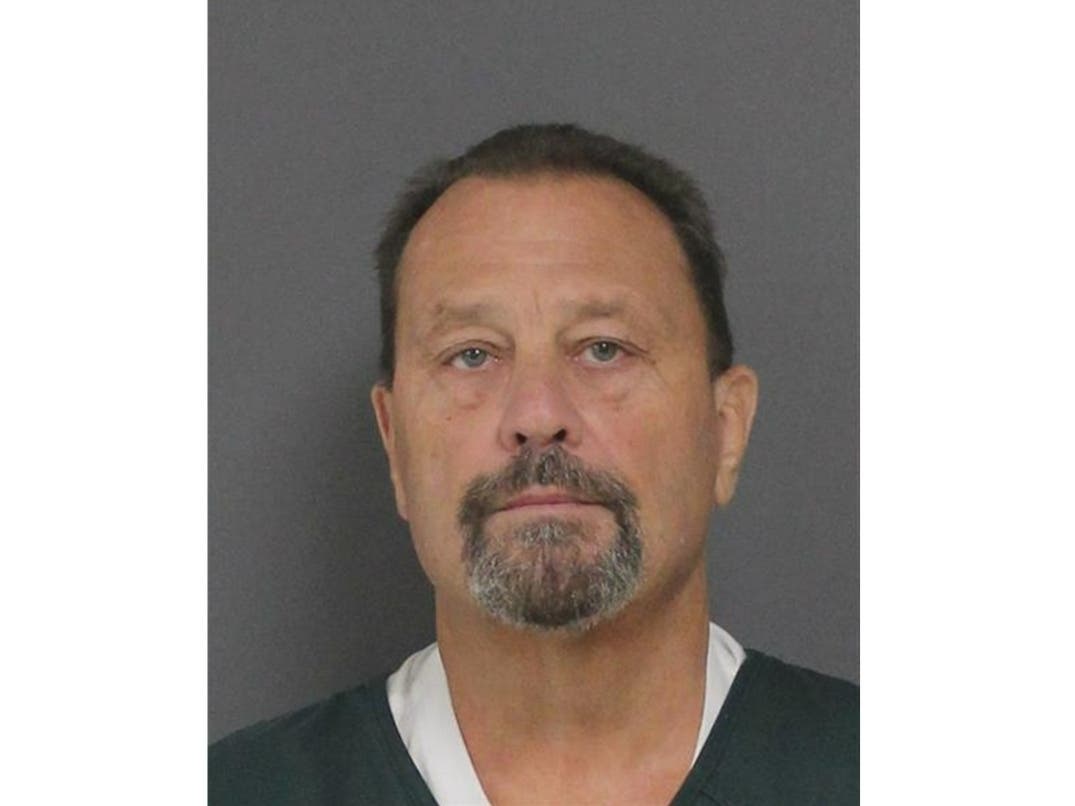
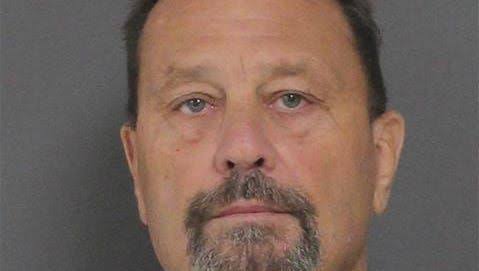
Just hours before the tragedy, 64-year-old Stephen Schneider sat down to dinner with his family at MJ’s Restaurant Bar & Grill, a waterfront spot in Bayville, New Jersey. The evening of July 19, 2026, began like so many other summer nights on Barnegat Bay—family, food, and the easy rhythm of boats coming and going from the docks. Then Schneider took his 9-year-old granddaughter Mya Bella Golabek and 7-year-old grandson Sigmund “Siggy” Paul Golabek aboard his 28- to 30-foot Tidewater Custom 280 center-console boat and headed into the darkness.
Schneider later told investigators he had consumed only three beers: two Guinnesses and one Miller Lite over roughly two hours. Prosecutors say his blood alcohol concentration was measured at 0.16 percent—twice New Jersey’s legal limit of 0.08 percent for operating a vessel. The boat slammed into an illuminated Intracoastal Waterway channel marker, throwing both children into the water. Even more heartbreaking, the children had been wearing life jackets. And in a shocking twist that has deepened the family’s already unimaginable grief, their father has asked the court to release the grandfather accused in their deaths.
What began as an ordinary family outing ended in one of the most wrenching tragedies of the New Jersey Shore’s summer season. The collision occurred shortly after 9 p.m. near Berkeley Township. According to the affidavit of probable cause and statements from New Jersey State Police, Schneider was operating the vessel at approximately 20 mph when he struck Intracoastal Waterway Channel Marker No. 39, a single-stanchion illuminated navigational aid. The impact ejected Mya and Sigmund from their seats at the front of the boat. Schneider and his wife, Laurie, 64, searched the dark water and found the children face-down and unresponsive. They pulled them aboard and began CPR. First responders transported the siblings to Community Medical Center in Toms River, where they were pronounced dead.
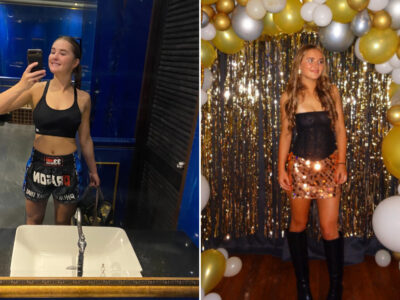
Mya, born April 6, 2017, was remembered by her family as a sweet, fun-loving girl with a competitive spirit who shone in softball and basketball. She loved swimming, beach days, crabbing, drawing, and crafts. Sigmund, born November 29, 2018, and known affectionately as Siggy, was described as a sweet, sometimes shy but adventurous boy with a vivid imagination who loved basketball, baseball, swimming, and the special handshake he shared with his sister. Their joint obituaries captured the depth of their bond: “A sibling bond is a love that lasts forever. Mya and Siggy were not only brother and sister, but best friends who shared laughter, adventures, and countless memories. Now they continue their journey together, hand in hand, carrying their love beyond this world and leaving behind a beautiful reminder of the unbreakable bond they shared.”
The family had gathered that evening at MJ’s. Schneider and his wife arrived on their Tidewater boat. The children’s parents, Jennifer and Sigmund Golabek of Lacey Township, arrived separately by boat with Mya and Siggy. After dinner, the children said they wanted to return to their grandparents’ nearby waterfront home rather than travel with their parents. The adults agreed. The kids, already wearing life jackets, settled into the bow of Schneider’s boat for the short trip home across a familiar stretch of Barnegat Bay.
Schneider told detectives he had navigated the route many times over a lifetime spent on the water. He said both the boat’s radar and an infrared/low-light night navigation camera were activated. Yet he reported seeing the marker “at the last second” before the starboard bow struck it. State Police and local officials have indicated the marker’s lights were functioning properly at the time of the crash, though defense attorneys have noted that investigators continued to examine the aid’s condition.
Blood was drawn from Schneider under a search warrant at approximately 12:46 a.m.—roughly three and a half hours after the collision—after troopers observed signs of impairment. Toxicology testing by DrugScan Labs later concluded that Schneider’s blood alcohol content was 0.16 percent. Doctors associated with the lab determined he was unfit to operate a motor vehicle or vessel and that his alertness, sense of care and caution, perception, judgment, response time, and coordination were “markedly impaired by alcohol.”
Schneider was arrested on Friday, August 14, 2026, and charged with two counts of second-degree reckless vessel homicide (also referred to as death by vessel), operating a vessel under the influence, and reckless operation of a vessel. If convicted on the homicide counts, he faces up to 20 years in state prison. He was held at the Ocean County Jail pending a detention hearing.
That hearing took place on Wednesday, August 19, before Superior Court Judge Wendel E. Daniels. Ocean County Assistant Prosecutor Kate Burke argued forcefully against release. “The defendant consumed enough alcohol to reach a BAC of approximately 0.16, and then operated a vessel,” she told the court. “And the result was catastrophic.” Burke emphasized that the blood-alcohol reading demonstrated the degree of impairment under which Schneider chose to operate the vessel, resulting in the deaths of two children.
Defense attorney William P. Cunningham countered that Schneider had no meaningful criminal history—only a decades-old controlled-dangerous-substance matter from his twenties that was resolved through a pretrial intervention program. Cunningham stressed that the children’s own parents had written letters supporting their grandfather’s release. One letter from the children’s father, Sigmund Golabek, described Schneider as “a wonderful father-in-law, loving grandfather and a man with a generous heart.” The father wrote that he was “grateful for the way he loved my children, the role he played in their lives and for the example he set for them.”
Cunningham told the judge that if released, Schneider “will probably never be on a boat again” and “will never be ingesting alcohol again.” The attorney also noted that the crash was not intentional and that questions remained about the precise condition of the channel marker. Judge Daniels granted conditional release. Schneider was ordered released under Level 3 monitoring, which requires regular check-ins with the court. He is temporarily prohibited from operating a boat or motor vehicle while he completes a court-ordered assessment. His next court appearance was scheduled for September 15 before Superior Court Judge Guy P. Ryan.
The decision has left the public grappling with competing realities. On one side stands the scientific evidence of significant impairment and the irreversible loss of two young lives. On the other stands a family torn between grief and loyalty, choosing to keep their circle intact even as one of its members faces serious criminal charges stemming from the deaths of its youngest members.
Barnegat Bay and the broader Ocean County waterways have seen a difficult stretch of fatalities this summer, with multiple serious incidents underscoring the risks of nighttime navigation, speed, and impairment on crowded recreational waters. Channel markers are designed precisely to prevent the kind of collision that occurred on July 19. That an experienced boater who claimed familiarity with the route, who had modern navigational aids activated, and who was traveling at a moderate speed still struck a lit marker has raised hard questions about how alcohol affects even routine judgment on the water.
New Jersey law treats operating a vessel under the influence with the same seriousness as driving under the influence on the road. The legal limit is 0.08 percent. At 0.16 percent, a person’s reaction time, visual acuity, decision-making, and ability to process multiple stimuli are substantially compromised. Toxicology experts routinely note that such levels produce marked impairment even in individuals who believe themselves functional. Schneider’s statement that he had “only three beers” is a claim familiar to investigators in both road and water cases—people often underestimate consumption, especially over the course of a meal and conversation, or fail to account for individual factors such as body weight, food intake, and the time elapsed since the last drink.
Yet the family’s response complicates any simple narrative of condemnation. The parents of Mya and Sigmund lost their only two children in a single night. Their decision to advocate for Schneider’s release pending trial reflects a profound and private calculation: that the man who raised their mother, who shared countless hours with their children on the water and elsewhere, and who now lives with the knowledge that his actions contributed to their deaths should not face pretrial incarceration on top of that burden. The father’s letter, in particular, humanizes the defendant in a way court records rarely do. It does not erase the blood-alcohol evidence or the two empty seats at future family tables. It simply insists that the full picture of a life and a relationship must be considered.
The children themselves remain the emotional center of the story. Community members, teammates from Mya’s softball team, and neighbors poured out support after the crash. Donations were directed to Popcorn Park Zoo in Siggy’s memory and to the Lacey Storm Softball 10U team in Mya’s. A visitation and funeral liturgy were held at Riggs Funeral Home in Forked River on July 24. The outpouring of grief reflected how widely the siblings were known and loved in Lacey Township and the surrounding Shore communities.
As the criminal case proceeds, several factual and legal questions will be tested. Defense counsel may challenge the exact timing and interpretation of the blood draw, the functioning of the channel marker’s light, the adequacy of the boat’s navigational equipment, and the precise contribution of alcohol versus other factors such as darkness, speed, or momentary distraction. Prosecutors will likely emphasize the toxicology conclusions, Schneider’s own admissions about alcohol consumption, and the catastrophic outcome that followed a decision to operate a vessel after drinking. The charges of reckless vessel homicide require proof that Schneider operated the boat recklessly and that the recklessness caused the deaths. Operating under the influence is a separate but related count that hinges on the BAC and observed impairment.
Beyond the courtroom, the case has already become a cautionary tale for recreational boaters. Summer evenings on Barnegat Bay are filled with families doing exactly what the Schneiders and Golabeks set out to do—sharing a meal, enjoying the water, and letting children experience the freedom of the bay. The difference between an ordinary night and a permanent tragedy can turn on a few beers, a moment of delayed recognition, and the unforgiving physics of a boat meeting a fixed object at speed. Life jackets, while essential and worn by both children that night, cannot always overcome the forces of impact and immersion in dark water, particularly for young passengers seated forward.
Stephen Schneider is now free pending trial under court-ordered restrictions. He faces the possibility of years in prison if convicted. More immediately, he faces a lifetime of living with the knowledge of what happened on July 19. His daughter and son-in-law have chosen, at least for the pretrial phase, to stand with him. That choice does not diminish the horror of the children’s deaths. It simply acknowledges that the same family that lost two beloved children also includes the man now accused of causing those deaths through impaired operation of a vessel.
The full story of that night—how three beers became a 0.16 BAC, how a familiar route became a fatal trajectory, how life jackets failed to save two children, and how a grieving father asked a judge to free his children’s grandfather—will continue to unfold in court and in the private grief of those left behind. For now, the public record stands in stark contrast: a grandfather’s claim of modest drinking set against laboratory evidence of significant impairment, and a family’s plea for compassion set against the irreversible loss of Mya and Sigmund Golabek.
In the end, the collision on Barnegat Bay was not only between a boat and a channel marker. It was between ordinary summer pleasures and the unforgiving consequences of impaired judgment, between a family’s love and the legal system’s demand for accountability, and between the fleeting claim of “only three beers” and the permanent silence of two young lives cut short.