The story of Michael Jackson acquiring the rights to Eminem’s music catalog remains one of the most talked-about moments in music industry lore—a collision of two titans, the King of Pop and the Rap God, wrapped in speculation, half-truths, and a hefty dose of intrigue. The headline-grabbing claim is that Jackson bought Eminem’s music rights as a bold act of revenge after Eminem mocked him in the 2004 track “Just Lose It.” But was it really a personal vendetta, a shrewd power move, or something more mundane? Let’s peel back the layers of this saga to uncover what really happened, why it shocked the industry, and what it reveals about both legends.
The Spark: Eminem’s “Just Lose It”
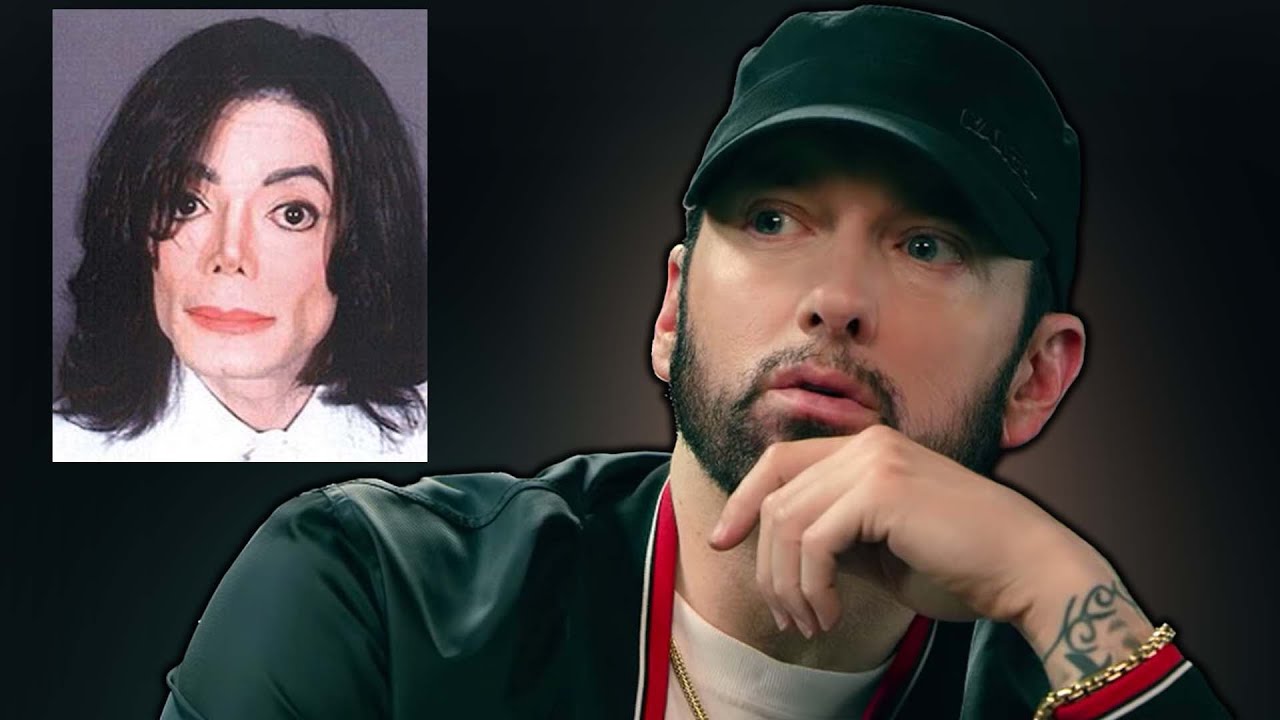
The saga begins in October 2004 with Eminem’s release of “Just Lose It,” the lead single from his album Encore. The song and its video were classic Eminem—provocative, irreverent, and packed with pop culture jabs. Among the targets was Michael Jackson, then embroiled in a high-profile child molestation trial (charges filed in 2003, trial starting in 2005). Eminem’s lyrics included lines like, “Come here, little kiddie, on my lap / Guess who’s back with a brand new rap? / And I don’t mean rap as in a new case of child molestation accusation,” paired with a video showing him dressed as Jackson, complete with a detachable nose (a nod to plastic surgery rumors) and a hair-on-fire scene (referencing Jackson’s 1984 Pepsi commercial accident). Kids bouncing on a bed added a final, unsubtle dig at the allegations.
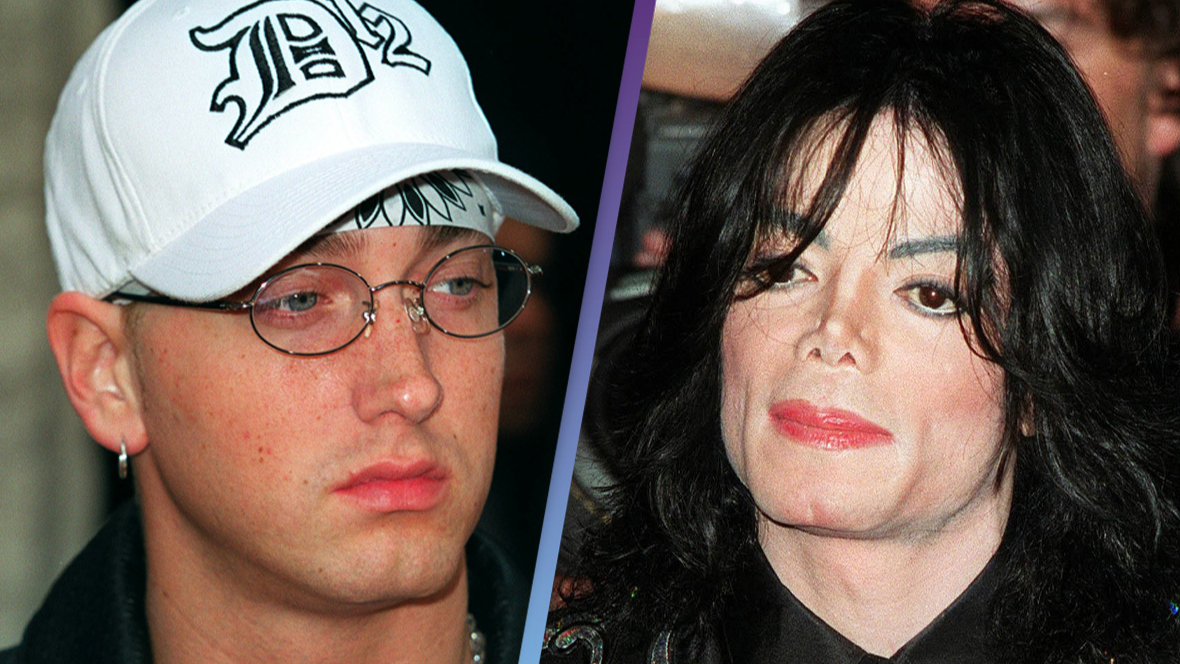
Jackson, a global icon known for his gentle demeanor, was livid. A week after the video dropped, he called into Steve Harvey’s Los Angeles radio show on October 27, 2004, saying, “I’ve admired Eminem as an artist, and was shocked by this. The video was inappropriate and disrespectful to me, my children, my family, and the community at large.” He doubled down in another interview: “I am very angry at Eminem’s depiction of me… It’s outrageous and disrespectful.” His estate threatened legal action, and BET pulled the video after complaints, though MTV and others kept it in rotation. Eminem’s response? A curt, “I apologize for that,” which did little to soothe the tension.
The Move: Sony/ATV Buys Famous Music

Fast forward to May 31, 2007. Sony/ATV Music Publishing, a joint venture co-owned by Michael Jackson (50%) and Sony, purchased Famous Music from Viacom for $370 million. Famous Music held the rights to over 125,000 songs, including Eminem’s pre-2006 catalog—hits like “The Real Slim Shady,” “Without Me,” and, yes, “Just Lose It.” Overnight, Jackson, through his stake in Sony/ATV, became a partial owner of Eminem’s back catalog. The deal also snagged rights to works by Shakira, Beck, Björk, and film scores, but Eminem’s inclusion was the lightning rod that set tongues wagging.
The industry was stunned. Jackson, already a catalog-buying legend after outbidding Paul McCartney for The Beatles’ songs in 1985 for $47.5 million, had pulled off another blockbuster move. At the time, rumors swirled that he was cash-strapped, having sold 25% of Sony/ATV back to Sony in 2006 amid financial woes. Yet here he was, part of a $370 million deal that put him in control of his antagonizer’s music. Fans and insiders alike wondered: Was this revenge served cold, three years after “Just Lose It”? A power play to flex his business muscle? Or something else entirely?
Revenge or Business as Usual?
The revenge narrative took hold fast. Social media posts (like those on X from 2021-2023) fueled the myth: “Michael didn’t comment—he just bought Eminem’s whole catalog and got paid every time he performed.” The story painted Jackson as a silent assassin, using his wealth to turn the tables on Eminem without uttering a word. It’s a juicy tale—Eminem, the brash provocateur, humbled by the King of Pop’s checkbook, forced to pay royalties to the man he’d mocked.
But the truth is less cinematic. Sony/ATV’s purchase of Famous Music was a corporate acquisition, not a solo Jackson vendetta. Jackson owned half the company, true, but there’s no evidence he spearheaded the deal or targeted Eminem specifically. The acquisition was a strategic grab of a massive song portfolio, driven by Sony/ATV CEO Martin Bandier, who called it “a world-class asset filled with evergreen songs.” Eminem’s catalog was just one piece of a much larger puzzle. Jackson’s public statements—like his 2007 comment, “This is a milestone event for Sony/ATV… I am pleased to add Famous Music to our collection”—focused on the business win, not personal grudges.
Financially, it made sense. Eminem was a top earner, and his songs generated steady revenue. Jackson, a savvy investor despite his debts, had a history of lucrative catalog buys. The Beatles deal alone ballooned in value from $47.5 million to hundreds of millions by the 2000s. Famous Music was another smart bet, not a petty jab. Plus, three years had passed since “Just Lose It”—an eternity in pop culture beefs. Jackson, who rarely engaged in public feuds, seemed unlikely to nurse a grudge that long, especially without altering Eminem’s lyrics or blocking performances, which he could’ve influenced as a rights holder.
The Industry Reaction
The shock wasn’t about revenge—it was about the optics and scale. Jackson owning Eminem’s music flipped the script on their dynamic. Eminem, untouchable at his mid-2000s peak, suddenly had his past work tied to the man he’d dissed. For an industry used to Eminem’s lyrical victories (think Moby, Mariah Carey), this was a rare L delivered off the mic. Meanwhile, Jackson’s financial clout, even amid rumors of bankruptcy, reminded everyone of his enduring influence. The $370 million price tag—equivalent to over $515 million in 2025 dollars—underscored Sony/ATV’s dominance, vaulting it past rivals like Universal Music Publishing.
Insiders were less surprised by the “why” than the “how.” Jackson’s money troubles were public—debts reportedly hit $500 million by 2009—yet Sony/ATV’s war chest kept him in the game. The deal also raised eyebrows because Eminem, famously protective of his art, now had to live with Jackson (and Sony) profiting from his work. By 2016, seven years after Jackson’s death in 2009, Eminem reportedly regained his publishing rights, ending the arrangement. Sony later bought out Jackson’s estate’s 50% stake in 2016 for $750 million, cementing its control.
The Deeper Truth
So, what really went on? It wasn’t revenge—at least not provably. No leaked memos or insider accounts tie the Famous Music buy to “Just Lose It.” It wasn’t a pure power move either; Jackson didn’t flex his ownership beyond collecting royalties. The unexpected twist? It was likely just business—a lucrative, impersonal transaction that coincidentally ensnared Eminem. The real brilliance was Jackson’s catalog empire, built over decades, which turned a corporate deal into a personal triumph in the public eye.
This changes how we see both legends. Jackson wasn’t the vengeful puppetmaster fans imagined, but a businessman whose moves outlasted his scandals. Eminem, for all his bravado, couldn’t escape the system he’d mocked—his art became another’s asset. The shock wasn’t the motive; it was the reminder that in music, money often trumps mic skills. Behind the scenes, it was less about sending a message and more about securing a legacy—one that, by 2025, still fascinates and divides fans of both icons. What do you think—did MJ plan this, or did fate just hand him the last laugh?
News
I KILLED THE MAN 😳📞 New details from the 911 call in the James Handy case are now emerging after police say his girlfriend’s son made a chilling confession 👀 👇 But it’s the 9 seconds of audio immediately before those words that people are desperately trying to hear
James Handy stabbed to death by girlfriend’s son; Shocking 911 call details revealed: ‘I killed the man of sin’ Hollywood actor James Handy, popularly known for playing Jimmy, the Bartender in ‘Top Gun: Maverick‘, died after being stabbed at his…
“SHE’S CRAZY…”: BREAKING NEWS: Actor James Handy from ‘Top Gun: Maverick’ murdered by his girlfriend’s son. The 911 call was chilling, but what everyone is most interested in are his last words, spoken in a weak voice of just 3 WORDS, causing heartbreak for his family and baffling the police
‘Top Gun: Maverick’ actor James Handy murdered by girlfriend’s son as chilling 911 call revealed James Handy, an actor with appearances in “Jumanji,” “Top Gun: Maverick” and “Taps” was brutally murdered by his girlfriend’s son, police said. Authorities raced to…

“YOU ALWAYS MAKE ME HURT YOU…” These seven words, allegedly written in a court filing, are currently at the heart of the Meridian Thomas Woodson tragedy, BUT IN THE REASONED REASON FOR THEIR DIVORCE, THE NAME OF ANOTHER MAN IS MENTIONED
Glam beautician shot dead by ex-husband in murder-suicide during bitter custody battle over their kids A young beautician was gunned down by her ex-husband in an apparent murder-suicide amid a bitter custody battle over their young children, according to police. Meridian…
💔 “YOU ALWAYS MAKE ME HURT YOU…” These seven words, allegedly written in a court filing, are now at the heart of the Meridian Thomas Woodson tragedy — and the final piece of paper revealing the video truth about their marriage has silenced everyone
Jefferson Parish Sheriff’s Office investigating murder-suicide in Elmwood The Jefferson Parish Sheriff’s Office is investigating a murder-suicide in Elmwood. Play Video The murder happened at an apartment complex in Elmwood in the 5100 block of Citrus Boulevard around 10 a.m….
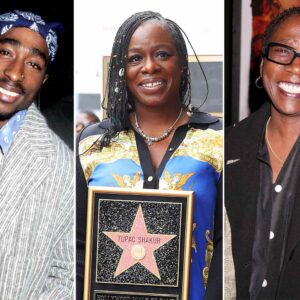
THE LAST THING TUPAC WAS SEEN WEARING BEFORE THE SHOOTING HAS PEOPLE LOOKING CLOSER… 😳💍 Years later, fans believe one piece of jewelry may be tied to one of the biggest mysteries in hip-hop history 👀👇
Years later, fans believe one piece of jewelry may be tied to one of the biggest mysteries in hip-hop history 👀👇 On the evening of September 7, 1996, Tupac Shakur stepped into the passenger seat of a black BMW 750iL…
TUPAC WAS ONLY 25… AND HIS LAST 15 MINUTES STILL FEEL LIKE A MOVIE SCENE 💔👀 A Tyson fight, a red light, a white Cadillac… but it’s one image from inside the car that people can’t stop thinking about 😳👇
TUPAC WAS ONLY 25… AND HIS LAST 15 MINUTES STILL FEEL LIKE A MOVIE SCENE 💔👀 A Tyson fight, a red light, a white Cadillac… but it’s one image from inside the car that people can’t stop thinking about 😳👇…
End of content
No more pages to load