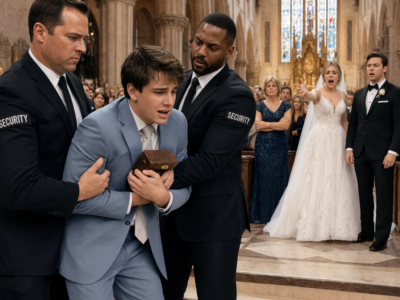
My husband told everyone that I had died in surgery. Three months later, I attended a board meeting, and he sold my company to his mistress
The day I “died,” I was still breathing.
My name is Victoria Carter, 41 years old, founder and CEO of Carter Biotech – a nearly $480 million biotechnology company in New York. On March 11, 2025, I walked into the operating room to have a benign brain tumor removed. The surgery was scheduled to last six hours. Before being anesthetized, I joked with my husband, Daniel: “If I wake up and you haven’t bought me flowers, don’t expect to be forgiven.” He laughed, held my hand tightly, and kissed my forehead. “I’ll be here.” That was the last thing I heard.
When I opened my eyes, I was no longer in Manhattan General Hospital but in a small hospital nearly seventy miles away. I had no phone, no handbag, no wedding ring. The strangest thing was the identification bracelet on my wrist bearing a completely unfamiliar name: Victoria Clark. I immediately told the nurse there had been a mistake, but no one believed me. According to the system, Victoria Carter died at 7:42 p.m.
I thought it was just an administrative error until the third day. A nurse left her iPad in the ward, and when I opened the news, I saw my own face in a black frame. The headlines ran across the pages: “Biotech CEO Victoria Carter Dies Following Unexpected Surgical Complications.” Below was a picture of Daniel standing before dozens of reporters, his eyes red and swollen. He choked out that he had just lost the most wonderful woman in his life.
I didn’t cry. I just sat there motionless, wondering, if I were still here…who would have been buried?
Three weeks later, the hospital discovered that two patients named Victoria had had their records swapped during a transfer. The one who died wasn’t me, but by then it was too late. The death certificate had been issued. My funeral had taken place. All company shares and personal assets were transferred to the sole legal heir: my husband.
My lawyer advised me to appear immediately to cancel the entire process, but I refused. I wanted to know what the man who had just cried in front of the media would do when he believed his wife would never return. And three months later… I wish I hadn’t known the answer.
Daniel sold 51% of his controlling stake in Carter Biotech to Olivia Grant, the company’s Marketing Director – a woman he always claimed was just a colleague. Two weeks later, Olivia moved into the penthouse that used to be our home. A month later, they were photographed on vacation in Miami. On our fifteenth wedding anniversary, Daniel proposed to her with the same wedding ring he had worn on our wedding day.
I didn’t call him. I didn’t show up. I didn’t say a word. I quietly gathered all the documents with my lawyer—every email, every transfer transaction, and every insurance payout Daniel had received after my death.
On the morning of June 24, 2025, the board of directors held its final meeting to sign the company sale agreement. I wore my beige suit, put on the watch my father had given me, and walked into Carter Biotech headquarters for the first time in three months.
The receptionist dropped her coffee cup upon seeing me. The young woman stammered, “Ma’am… ma’am… I thought…” I smiled. “I know. I just read my own obituary.”
The meeting room door opened just as Daniel was signing the final page of the contract. He looked up, saw me, and immediately dropped his pen. Olivia jumped up, recoiled a few steps, and the entire board fell silent as if they had seen a ghost. I pulled out the CEO chair, calmly sat down, and looked directly at my husband.
“Sorry for being late. It seems this meeting… can’t continue without someone alive.”
👇👇 Part 2 in the first comment.
*******************
THE RETURN OF THE LIVING
ACT I — THE FALSE REQUIEM
The autumn winds of 2025 did not merely blow through New York City; they lunged through the concrete canyons of Manhattan, carrying a sharp, biting chill that rattled the heavy, triple-glazed glass panes of the Carter Biotech headquarters. From the fifty-floor penthouse suite overlooking the misty expanse of High Line Park, the city appeared as a distant, gray grid of rushing yellow cabs and huddled pedestrians. Inside the building’s sleek, minimalist corridors of polished steel and white marble, the silence was heavy and suffocating. Victoria Carter, the brilliant thirty-six-year-old CEO who had transformed a modest experimental laboratory into a multi-billion-dollar titan of genetic therapeutics, was dead. Or rather, that was the official, unyielding verdict of the municipal records, the probate courts, and the weeping headlines of every major financial publication across the country.
The tragedy had begun three months earlier at Manhattan Presbyterian Hospital, a historic institution known for its elite clientele and cutting-edge medical wings. Victoria had been admitted for a highly complex but ultimately routine spinal micro-surgery to correct a chronic disc herniation resulting from her years of relentless, late-night laboratory research. The surgery itself was a clinical success, but the recovery wing that night was a scene of unforeseen, chaotic triage. A multi-car pileup on the West Side Highway had flooded the emergency rooms, throwing the administrative staff into a state of frantic, sleep-deprived panic.
In the administrative storm, an exhausted night-shift nurse made a catastrophic, clerical error. She accidentally switched Victoria’s patient identification chart and biometric barcode with that of an elderly, terminal patient in the adjacent room who had just succumbed to sudden, massive cardiac arrest. By the time the shift changed and a junior resident flagged a minor discrepancy in the digital log, the cold, administrative machinery of death had already been set into motion.
When Daniel Carter, Victoria’s husband of seven years, arrived at the hospital, the stage was set for a dark, defining choice. Daniel was a handsome, charismatic man of thirty-eight, but beneath his expensive, custom-tailored suits lay a deep, festering ocean of resentment. For nearly a decade, he had lived in Victoria’s shadow, constantly introduced at galas and board meetings as “the husband of the CEO,” a secondary figure in the empire she had built with her own intellect and sweat.
When the hospital administration, terrified of a massive malpractice lawsuit, presented Daniel with the death certificate and the switched records, he did not demand to see the body. He did not scream for a second opinion, nor did he rage against the doctors. Instead, a chilling, calculated stillness descended upon him. He saw the administrative error not as a tragedy to be corrected, but as a golden, once-in-a-lifetime exit strategy.
Claiming to be too emotionally devastated to bear the sight of his wife’s body, Daniel signed the cremation consent forms within an hour. He bypassed the traditional viewing protocols, citing a fabricated verbal wish of Victoria’s to be cremated immediately without a public viewing. Within twenty-four hours, the body of the unknown terminal patient was reduced to ash, effectively incinerating any physical trace of the hospital’s identity mix-up before the administrative error could be discovered.
On the other side of the hospital, in a private, high-security recovery suite, Victoria finally opened her eyes. The heavy fog of post-operative sedatives and anesthesia clung to her mind like a thick wool blanket. When she tried to sit up, a sharp pain shot down her spine, but what truly froze her blood was the expression on the faces of the two people standing at the foot of her bed: Arthur Pendelton, her trusted family attorney of fifteen years, and Marcus Vance, a sharp, unsmiling veteran investigator from the state’s leading insurance fraud division.
“Victoria,” Arthur said, his voice trembling as he held a digital tablet. “You need to look at this. And you need to remain completely silent.”
With a trembling hand, Victoria looked at the screen. There, displayed in bold, clinical font, was her own death certificate, stamped and filed with the City of New York. But what truly shattered her spirit was the second document Arthur pulled up: a pending, expedited claim for her ten-million-dollar personal life insurance policy, signed by Daniel Carter less than six hours after her supposed death.
“The hospital discovered the error three hours ago,” Marcus Vance explained, his voice flat and analytical. “They are terrified. They were about to contact your husband to confess the mix-up, but I intervened. I’ve been tracking your husband’s private finances for six months on an unrelated tip, Victoria. If you step forward right now, he will claim this was all a tragic, panic-induced mistake by a grieving husband. But if you stay dead… we will see exactly how far he is willing to go.”
Victoria stared at the white ceiling of the hospital room, her heart hammering against her ribs. She was a scientist, a woman who analyzed the world through the cold, unyielding lens of genetic sequences and logical outcomes. She knew that human nature, when left unobserved in the dark, would always seek its true state.
“Let him run,” Victoria whispered, her voice cracking with a cold, terrifying determination. “Let’s see what my husband does when he believes I am never coming back.”
ACT II — THE SURVEILLANCE OF A GHOST
For the next ninety days, Victoria Carter lived as a ghost in the very city she had helped shape. She moved into a small, anonymous loft in an old industrial building in DUMBO, Brooklyn, under her grandmother’s maiden name, Elizabeth Cole. The loft was cold, smelling of old timber and river salt, a stark contrast to her multi-million-dollar brownstone in Gramercy Park. She spent her days wrapped in a heavy woolen coat, sitting before a wall of high-definition monitors set up by Marcus Vance, watching her own life be systematically dismantled and sold to the highest bidder.
Through the hidden cameras and digital wiretaps Vance had secretly installed, the true scale of the betrayal unfolded. Daniel did not spend his days in mourning. Within forty-eight hours of filing the insurance claim, he had already invited Olivia Grant—Carter Biotech’s thirty-four-year-old Vice President of Public Relations—into the Gramercy Park brownstone.
Olivia was a woman of fierce, calculated beauty and absolute corporate ambition. She had spent years playing the role of Victoria’s loyal, trusted friend, standing by her side at charity galas while secretly sleeping with her husband in five-star hotels across Europe during Victoria’s business trips.
From her monitors, Victoria watched as Olivia walked through her home, touching her antique furniture, drinking her vintage wines, and running her manicured fingers over Victoria’s wardrobe.
“It’s finally ours, Daniel,” Olivia’s voice echoed through the hidden microphones, her laugh sharp and triumphant. “No more hiding in the shadows. No more playing the loyal little assistant. Once the insurance money clears and we finalize the sale of the company, we can leave this gray city behind.”
Daniel’s face, captured in high-definition on Victoria’s screens, held no trace of the grief he had projected to the media. He looked relaxed, younger, and utterly unburdened. “We just have to be patient, Olivia. The board is still hesitant about the merger, but with Victoria’s voting shares in my hand, they have no choice. The Swiss conglomerate, Vanguard Health, is offering six hundred million for her genetic patents. Once that contract is signed, we are free.”
Victoria sat in the cold loft, watching her husband pour champagne into the crystal glasses she had inherited from her mother. The physical pain of her spinal recovery was nothing compared to the cold, structural fury that was slowly hardening within her chest. She watched as Daniel systematically emptied her safe, putting her mother’s antique diamond necklace into a black velvet pouch to present to Olivia.
She watched as he filed lawsuit after lawsuit against the hospital, demanding an additional twenty-million-dollar payout for “emotional distress” caused by the clerical error that he had actively helped cover up by rushing the cremation.
Every day, Marcus Vance would bring her new files: offshore accounts newly opened in the Cayman Islands, private jet charters booked for a permanent relocation to a villa in Saint-Tropez, and forged corporate board resolutions designed to strip Victoria’s loyal researchers of their stock options before the merger.
“They are moving fast, Victoria,” Vance said, placing a fresh stack of bank drafts on the wooden table. “They believe they’ve committed the perfect crime. They believe you are ashes in a urn.”
“They are building a tower on a foundation of sand, Marcus,” Victoria replied, her eyes fixed on the screen where Daniel was kissing Olivia in her Gramercy Park parlor. “And I am going to let them build it to the very top before I pull out the first stone.”
ACT III — THE COLD CLARITY OF SCIENTIFIC BETRAYAL
To understand Victoria Carter was to understand the beauty of the double helix. She did not view her betrayal through the emotional, chaotic lens of a discarded wife; she analyzed it with the precise, detached curiosity of a molecular biologist observing a cellular mutation. Daniel and Olivia were pathogens, invasive organisms that had entered her life’s work, and she was the white blood cell preparing a targeted, devastating immune response.
During her second month in the Brooklyn loft, she spent her nights reviewing the scientific patents she had spent her twenties developing—patents for gene-editing therapies that could cure hereditary blindness. These patents were her children, her legacy to a world she wanted to make better. Under the terms of the merger Daniel was secretly negotiating with Vanguard Health, these patents would be locked behind a massive paywall, sold only to the ultra-wealthy, while her research team would be laid off to cut corporate overhead.
One evening, as rain lashed against the dirty windows of her loft, Victoria watched a live video feed of Daniel presenting Olivia with the Gramercy Park brownstone’s master bedroom keys. He had completely redecorated the room, painting over the soft blue walls Victoria had chosen with a harsh, modern gold and black. He had thrown away her medical journals, her family photographs, and the simple wooden writing desk where she had drafted her first research grants.
“He didn’t just want my money, Marcus,” Victoria said, her voice barely a whisper in the dark room. “He wanted to erase any proof that I ever existed. He wanted to look in the mirror and believe that he was the creator of this life, that he was the king, and I was just a temporary shadow.”
“That is the classic psychology of the parasite, Victoria,” Vance replied, leaning against the doorframe with a cup of black coffee. “It eventually convinces itself that it is the host. But the moment the host cuts off the blood supply, the parasite starves in a matter of minutes. We have the banking records, the emails, the wiretaps, and the formal insurance claims. The trap is completely set. When do you want to spring it?”
Victoria stood up, her spine straight and strong, the physical pain of her surgery completely gone, replaced by a cold, unyielding energy. She looked at her reflection in the dark window—pale, thin, but her eyes held a brilliant, lethal spark of absolute control.
“The board of directors is meeting on Tuesday morning to sign the final Vanguard acquisition contract,” Victoria said, her lips curling into a faint, dangerous smile. “Daniel has invited the press to cover the historic signing. He wants the world to see him as the visionary who saved Carter Biotech. Let’s make sure he gets exactly what he wants.”
ACT IV — THE BOARDROOM RESURRECTION
The executive boardroom on the fiftieth floor of the Carter Biotech tower was a temple of modern corporate triumph. The walls were clad in rare, polished Macassar ebony, and the massive, custom-designed conference table was carved from a single slab of black Italian marble. Outside, a torrential November rainstorm beat against the floor-to-ceiling glass windows, wrapping the room in a dark, dramatic shroud, while the bright halogen lights inside cast a brilliant, clinical glow over the thirty board members, Swiss executives, and legal representatives who sat in high-backed leather chairs.
Daniel Carter sat at the head of the table, looking every bit the triumphant billionaire. His hair was perfectly styled, and his gray cashmere suit was immaculate. Beside him sat Olivia Grant, dressed in a sharp, ivory designer dress, her face glowing with an arrogant, unassailable pride. In her hand, she held a gold-plated fountain pen, ready to sign the executive transfer documents that would officially hand over fifty-one percent of Carter Biotech to the European conglomerate.
“This is a solemn, yet incredibly proud day for Carter Biotech,” Daniel said, his voice deep, smooth, and perfectly projected for the television cameras set up at the back of the room. “My late wife, Victoria, was a brilliant scientist, but her vision was limited to the laboratory. Today, by merging with Vanguard Health, we are turning her scientific dreams into a global commercial empire. Olivia and I are honored to lead this company into its next chapter.”
A polite, corporate applause rippled through the room. The lead attorney for Vanguard Health slid the thick, leather-bound contract across the black marble table, pointing to the final signature line reserved for the executor of the Victoria Carter Estate.
“If you will sign here, Mr. Carter,” the attorney said, “the wire transfers will be initiated immediately. The insurance payout has already been verified, and the corporate transition is complete.”
Daniel smiled, looking at Olivia with a look of shared, victorious ecstasy. He took the gold pen, holding it above the paper for the cameras to capture the historic moment. But just as the metal tip of the pen brushed against the white parchment, a sharp, heavy click echoed from the back of the room.
The heavy, keycard-locked double doors of the boardroom swung open with a slow, deliberate force.
The silence that fell over the room was not gradual; it was a sudden, violent drop in pressure that seemed to instantly freeze the breath in every throat. Walking through the doorway, her footsteps clicking with a slow, rhythmic, and terrifying precision against the polished stone floor, was Victoria Carter.
She was dressed in a pristine, tailored white wool pantsuit that seemed to capture every ounce of light in the dim room. Her dark hair was swept back in a elegant, professional style, and her face held a calm, unyielding expression of pure, intellectual dominance. Behind her walked Arthur Pendelton and three federal agents in dark blue jackets with yellow letters: IRS-CI and FBI.
Olivia’s hand shook so violently that the gold fountain pen slipped from her fingers, rolling across the black marble table and falling onto the floor with a sharp, metallic clink. Daniel’s face instantly drained of all color, turning a horrifying, ashen shade of gray. His eyes widened to the point of tearing, his mouth hanging open as his chest heaved in a silent, suffocating panic. He looked at his wife as though the concrete floor had opened up to reveal the physical mouth of the grave.
“V-Victoria…” Daniel’s voice was a dry, rattling whisper, a pathetic gasp that barely carried across the quiet table. He tried to stand, but his knees buckled beneath him, and he collapsed back into his leather chair like a puppet with its strings cut. “This… this is impossible. You’re dead. I have the ashes… I have the certificate…”
“The dead are notoriously bad at managing their biotechnology portfolios, Daniel,” Victoria said, her voice a calm, resonant instrument of absolute authority that cut through the sound of the rain like a physical blade.
She walked slowly down the center of the boardroom, her eyes locked directly on her husband’s trembling frame. The board members scrambled to their feet, some gasping, some crossing themselves, while the Swiss executives looked at each other in a state of complete, unmitigated confusion.
“As you can see, gentlemen,” Victoria continued, her gaze shifting to the Vanguard representatives, “the reports of my demise have been greatly, and quite criminally, exaggerated. And since the actual, legal owner of these genetic patents and voting shares is standing before you, this entire transaction is officially, and permanently, null and void.”
ACT V — THE ANATOMY OF A CRIME
“This is a miracle!” Olivia suddenly screamed, her voice cracking with a high-pitched, desperate panic as she tried to force her face into a smile of relieved joy. She took a step toward Victoria, her hands outstretched. “Victoria, oh my god! The hospital… they told us you were gone! We’ve been in absolute agony! Daniel has been a wreck! Everything we did… the sale, the insurance… we were just trying to save the company from bankruptcy in your honor!”
Victoria did not look at her. She didn’t even acknowledge Olivia’s presence, treating her with the same cold indifference she would show to a contaminated petri dish. She simply waved her hand, and Marcus Vance stepped forward, opening his leather briefcase to project a series of documents, emails, and audio recordings onto the massive smart-screen at the front of the boardroom.
“Let’s discuss the anatomy of your agony, Olivia,” Marcus Vance said, his voice cold and clinical. “Federal prosecutors have spent the last ninety days monitoring every communication, every financial transaction, and every private conversation between yourself and Daniel Carter.”
The screen flashed with a timeline that sent a shockwave of whispers through the remaining board members. It was not a record of grief, but a blueprint of calculated, passive conspiracy.
The documents proved that forty-eight hours after Victoria’s surgery, the Chief of Risk Management at Manhattan Presbyterian had called Daniel’s private cell phone three times. They informed him that a major clerical error had been discovered, that the patient who had passed away was an elderly woman named Evelyn Vance, and that Victoria was alive and recovering in a separate wing.
The audio recording of Daniel’s response, captured by the hospital’s secure internal recording line, echoed through the silent boardroom:
“I don’t care what your records say. The paperwork is filed. The cremation is already scheduled for this afternoon. If you try to reverse this now, I will sue your hospital into bankruptcy for emotional trauma and the desecration of my wife’s remains. As far as the world is concerned, Victoria Carter is dead. Keep your mouth shut, or my legal team will destroy you.”
The room fell into a silence so profound that the only sound was the frantic, shallow breathing of Daniel Carter.
“You did not commit a medical error, Daniel,” Victoria said, looking down at her husband with a mixture of profound pity and absolute disgust. “But you chose to treat my survival as an administrative inconvenience. You took my mother’s jewelry, you took my company, you took my life’s work, and you tried to turn it all into a ticket to Saint-Tropez with your mistress. You wanted to see how far you could go in my shadow. Well, Daniel, this is where the shadow ends.”
The lead federal agent stepped forward, pulling a pair of steel handcuffs from his belt. “Daniel Carter, Olivia Grant, you are under arrest for federal insurance fraud, grand larceny, conspiracy to commit corporate asset theft, and the deliberate obstruction of justice. Stand up and put your hands behind your back.”
As the handcuffs clicked shut around Daniel’s wrists, he looked up at Victoria, his eyes filled with a desperate, crying plea for mercy. But Victoria had already turned her back to him, her eyes fixed on the rain outside the window, her mind already moving past the rot of her old life and toward the reconstruction of her future.
ACT VI — THE ARCHITECTURE OF JUSTICE
The legal and social fallout of the Carter Biotech scandal was a historic tempest that dominated the media landscape for months. Daniel Carter and Olivia Grant were denied bail, their assets completely frozen by the federal courts to prevent the liquidation of the stolen insurance funds. Within six months, faced with an airtight case constructed by Marcus Vance and the IRS-CI, both pleaded guilty to multiple counts of federal fraud and conspiracy. Daniel was sentenced to a mandatory fifteen years in a federal penitentiary, while Olivia received an eight-year sentence, her corporate career and public reputation permanently vaporized.
The public and the media expected Victoria to launch a ruthless campaign of corporate vengeance. They expected her to file a multi-billion-dollar lawsuit against Manhattan Presbyterian Hospital, to fire the board of directors who had briefly aligned with her husband, and to purge her company of anyone who had questioned her legacy.
But Victoria Carter was a scientist who understood that true power did not lie in the chaotic destruction of others, but in the elegant, structural reconstruction of the world.
She flatly refused to sue the hospital for damages. Instead, she entered into a landmark, collaborative agreement with both Manhattan Presbyterian and the State Department of Health to completely reform the patient identification process.
Using her own personal funds and the recovered assets from her husband’s frozen estate, she established the Vance-Carter Foundation for Patient Safety—a fifty-million-dollar non-profit organization dedicated to developing and implementing advanced biometric and genetic barcode identification protocols across public hospitals nationwide.
She mandated that every patient entering a state medical facility be outfitted with a secure, encrypted biometric wristband that linked directly to their genetic profile, ensuring that no human being could ever have their identity switched, ignored, or erased by a greedy relative or an exhausted administrator again.
“Vengeance is a chemical reaction that consumes its own container, Arthur,” Victoria said on a quiet evening in late December, as she sat at a simple, new wooden desk in her executive office. The gold paint and black decor had been completely stripped away, replaced by the soft, warm wood and clean blue tones she had always loved. “I don’t want to destroy the hospital. I want to build a system where the truth is automatic.”
Arthur Pendelton stood by the window, a soft smile on his face as he watched the winter snow slowly blanket the city below. “The board is asking if you want to proceed with the Vanguard merger under your own terms, Victoria. They are offering to double the research budget.”
“Tell them I am not selling, Arthur,” Victoria replied, her voice holding an unshakeable, quiet peace. “We are going to manufacture the gene therapies ourselves. And we are going to sell them at a price that every working-class family in this country can afford. I didn’t survive a medical error and a corporate betrayal just to become another wealthy gatekeeper.”
She stood up, walking to the window to stand beside her old friend. The city below was bright, a beautiful, sprawling network of lights that seemed to stretch into eternity. She knew that her journey had been painful, that the betrayal had carved a deep, permanent scar into her heart. But as she looked at her reflection in the glass, she saw a woman who was no longer defined by the man who had tried to erase her, but by the lives she was preparing to save.
“He truly thought he had won, Victoria,” Arthur murmured, looking at the city lights. “He truly believed you were never coming back.”
Victoria took a slow, deep breath, her mind peaceful and clear as she spoke the final, defining truth of her resurrection:
“Some people betray you the moment they think you’ll never come back,” Victoria said, her voice soft but holding the weight of an unassailable law. “But sometimes, Arthur… fate isn’t punishing us by making us wait. It’s simply giving them just enough time to show us exactly who they have always been.”