The 0.16% figure that emerged after midnight: What Stephen Schneider said before the test results were revealed!
The 0.16% figure that emerged after midnight: What Stephen Schneider said before the test results were revealed!
In the immediate aftermath of the crash, Stephen Schneider stated that he had consumed only three beers.
Police subsequently obtained a warrant to collect a blood sample for the investigation.
The resulting test showed a blood alcohol content (BAC) of approximately 0.16%—a figure that has become central to the charges against the 64-year-old man.
The discrepancy between his claim of having “three beers” and the 0.16% reading is now a key point that prosecutors are likely to scrutinize closely in court.
******************

The 0.16% Figure That Emerged After Midnight: What Stephen Schneider Said Before the Test Results Were Revealed
In the chaotic hours immediately following a fatal boat collision on Barnegat Bay, Stephen C. Schneider offered investigators a clear and limited account of his alcohol consumption. He told New Jersey State Police that over the course of a roughly two-hour family dinner at MJ’s Restaurant Bar & Grill in Bayville, he had consumed only three beers: two bottles of Guinness and one Miller Lite.
That statement was made before any laboratory results existed. It was made in the aftermath of a crash that had thrown his two young grandchildren into the water and left them fighting for their lives. It was made at a time when Schneider himself was being evaluated for signs of impairment. And it would later stand in stark contrast to a blood alcohol concentration of approximately 0.16 percent — twice New Jersey’s legal limit — measured from a sample drawn under warrant in the early hours of the following morning.
The discrepancy between what Schneider said and what the blood test later revealed has become one of the central factual tensions in the reckless vessel homicide case against the 64-year-old Bayville man.
The Crash and the Immediate Aftermath
On the evening of July 19, 2026, Schneider was operating his 28-foot Tidewater center-console boat on Barnegat Bay near Berkeley Township. Aboard with him were his wife, Laurie, and his grandchildren, 9-year-old Mya Bella Golabek and 7-year-old Sigmund Paul Golabek. Both children were wearing life jackets and were seated near the front of the vessel.
Shortly after 9 p.m., the boat struck an illuminated Intracoastal Waterway channel marker at a speed Schneider later estimated at about 20 mph. The impact ejected both children into the water. Schneider and his wife attempted to recover them and began CPR. The children were transported to Community Medical Center in Toms River, where they were subsequently pronounced dead. Neither Schneider nor his wife was seriously injured.
In the hours that followed, State Police investigators spoke with Schneider. According to the probable-cause affidavit later filed in the case, he described the family’s evening: a gathering at MJ’s Restaurant that lasted approximately two hours, during which he drank two Guinnesses and one Miller Lite. He said he had been traveling at about 20 mph when he saw the channel marker at the last second.
At that stage, no blood test results were available. Schneider’s account of three beers stood as his version of events, offered in the immediate aftermath of a catastrophic collision involving two children.
The Warrant and the Blood Draw
Investigators observed signs of impairment. A search warrant was obtained authorizing the collection of a blood sample. That sample was drawn at the hospital at 12:46 a.m. — several hours after the crash and after Schneider’s statement about the three beers.
The timing is significant. By the time the blood was taken, some of the alcohol in Schneider’s system would already have been metabolized. A reading of 0.16 percent at that hour therefore reflected a concentration that had been even higher earlier in the evening, closer to the time he was operating the boat.
When the laboratory results returned from DrugScan Labs, the findings were unambiguous. Doctors concluded that Schneider was “unfit to operate a motor vehicle” and that his “alertness, sense of care and caution, perception, judgment, response time and coordination were markedly impaired by alcohol.” The measured BAC of approximately 0.16 percent was twice the legal limit in New Jersey for operating a vessel.
The Collision of Two Narratives
The case now contains two competing accounts of Schneider’s condition that night. The first is the one he provided to police before any test results existed: three beers — two Guinness and one Miller Lite — over about two hours. The second is the objective laboratory measurement of 0.16 percent BAC obtained hours later under warrant.
Prosecutors have treated the second figure as central to their theory of the case. At Schneider’s detention hearing, Assistant Prosecutor Kate Burke told the court that he “consumed enough alcohol to reach a BAC of approximately 0.16 and then operated a vessel and the result was catastrophic.” The number, she argued, demonstrated the degree of impairment with which he chose to take the helm with two children aboard.
The scientific difficulty with Schneider’s three-beer claim is well understood. For a typical adult male, three standard beers consumed over a two-hour period would not be expected to produce a BAC of 0.16 percent several hours afterward. Alcohol is eliminated from the body at a relatively consistent average rate. Even allowing for individual differences in weight, metabolism, food consumption, and the higher alcohol content of Guinness compared with Miller Lite, the arithmetic does not support the stated consumption. Reaching 0.16 percent under those conditions would ordinarily require a substantially greater quantity of alcohol.
That gap has elevated the importance of reconstructing exactly what occurred during the two hours at MJ’s Restaurant. Because Schneider gave a specific rather than vague account, investigators have a concrete claim to test against independent evidence.
Reconstructing the Dinner
Every available source of information about the dinner is now relevant. Restaurant surveillance footage, if it captured the table or bar area, can show how many bottles or glasses were delivered to Schneider, how often they were replaced, and whether additional drinks appeared that he did not mention to police. Server and bartender testimony can establish what was ordered and served. Payment records, order tickets, and any other documentation can corroborate or contradict the three-beer narrative.
Witnesses who were present at the table — including family members — may be asked what they observed Schneider drinking. Any evidence of alcohol consumption before the family arrived at the restaurant, or of additional drinking after the meal concluded, would further widen the discrepancy between Schneider’s statement and the blood test result.
The specificity of the claim has, in practical terms, created a forensic target. Investigators are no longer evaluating a general assertion that Schneider “had something to drink.” They are evaluating a precise assertion that can be checked against physical, electronic, and testimonial evidence.
Why the Sequence Matters
The order of events is important. Schneider made his three-beer statement before the blood results existed. He was not attempting to reconcile a laboratory finding with a story after the fact. He offered a limited account in the immediate aftermath of the crash, at a time when he was being questioned about the circumstances of the collision and his own condition.
When the 0.16 percent result later emerged, it created a direct conflict with that earlier statement. Prosecutors are expected to argue that the laboratory measurement is the more reliable indicator of Schneider’s impairment and that the three-beer claim understates the true level of consumption. The defense will have the opportunity to challenge the interpretation of the toxicology evidence, raise questions about the timing of the blood draw, or offer alternative explanations for the reading.
Either way, the sequence — statement first, test result second — has made the discrepancy a natural focal point for cross-examination and argument in any eventual trial.
Court Proceedings and the Human Context
Schneider was arrested in mid-August and charged with two counts of reckless vessel homicide, operating a vessel under the influence, and reckless operation of a vessel. If convicted on the homicide counts, he faces up to 20 years in prison.
At a detention hearing on August 19, prosecutors sought to keep him in custody, citing the BAC and the catastrophic outcome. Judge Wendel Daniels ordered his release on conditions after considering letters of support from the children’s parents, who described Schneider as a loving grandfather. As part of those conditions, Schneider is prohibited from operating a boat or motor vehicle pending further evaluation.
The parents’ support for pretrial release highlights the painful complexity of the case. The same family that lost Mya and Sigmund is also navigating the prosecution of the grandfather who was operating the boat. That dynamic does not alter the objective evidence of a 0.16 percent BAC, but it forms part of the broader human context in which the legal process is unfolding.
The Broader Investigative Framework
The alcohol evidence is not the only element under examination. Investigators continue to review the speed of the vessel, the visibility and functioning of the channel marker, Schneider’s claim that he saw the marker only at the last second, and the positions of the children on the boat. The 0.16 percent figure, however, remains central because it goes directly to the question of impairment and recklessness.
Schneider’s pre-test statement about three beers has given the investigation a clear point of comparison. The blood result has given prosecutors a hard number. The distance between the two is now one of the defining features of the case file.
A Case Shaped by What Was Said Before the Numbers Arrived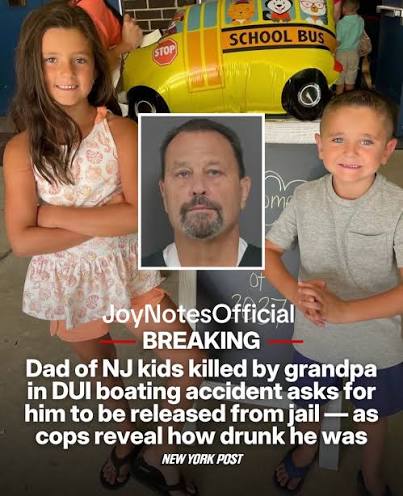
In the hours after the crash, before any laboratory had analyzed his blood, Stephen Schneider told police he had consumed two Guinnesses and one Miller Lite over about two hours. Later that night, under warrant, a blood sample was drawn. When the results returned, they showed a BAC of approximately 0.16 percent — a level associated with marked impairment of judgment, perception, and coordination.
That sequence has ensured that the three-beer claim will not remain a peripheral detail. It has become a measurable assertion that can be tested against surveillance, witnesses, records, and scientific evidence. Prosecutors are expected to scrutinize the discrepancy closely. The defense will have its opportunity to address it.
For now, the case against Stephen Schneider rests in significant part on the tension between what he said in the immediate aftermath of the crash and what the blood test revealed after midnight. Two children died after being thrown from a boat he was operating. The question of how much he had actually drunk that evening — and how impaired he was when he took the helm — remains one of the most closely examined elements of the investigation.