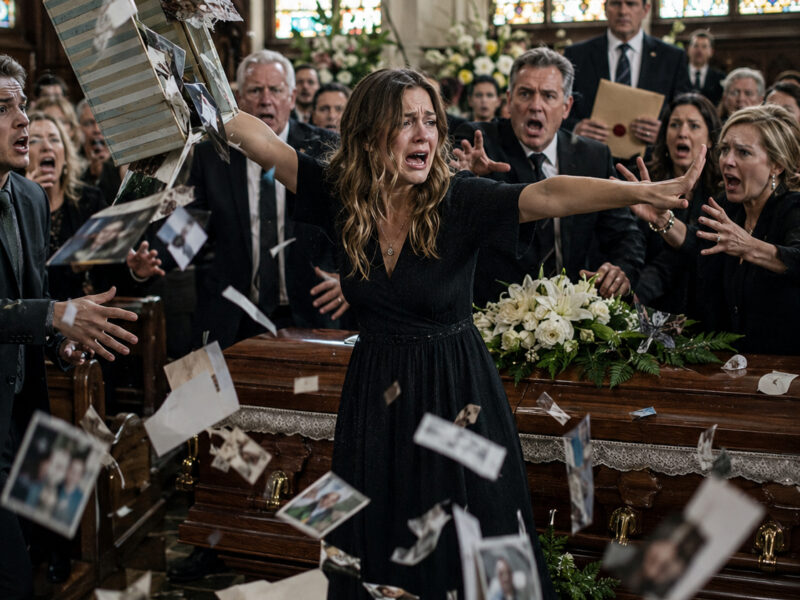
The Daughter Refused To Let Anyone Carry Her Father’s Coffin At His Funeral
*************
Chapter 1: The Tremor in the Silence
The autumn wind in upstate New York carried a biting chill, rattling the loose windowpanes of the old Victorian house on Maple Street. Inside the master bedroom, the air was thick with the faint, sterile scent of rubbing alcohol, eucalyptus, and time.
Richard Foster lay propped up against a stack of embroidered pillows, his frail body swallowed by the heavy woolen quilt. For six long years, Parkinson’s disease had waged a slow, methodical war against his nervous system. It had stolen the firm handshake that once commanded a regional logistics firm, silenced the hearty baritone laugh that used to fill Sunday dinners, and finally, pinned him permanently to a bed he could no longer leave on his own.
Yet, despite the tremor that constantly shook his hands and the exhaustion that clouded his eyes, Richard’s mind remained fiercely clear—and sharply observant.
Beside his bed, sitting on a scarred oak nightstand, was a collection of objects that served as his primary connection to the outside world. There was a framed photograph of his late wife, Martha, smiling brightly under a sunlit arbor. Next to it sat a heavy, brass-clasped mahogany box.
The door creaked open, and Megan entered carrying a steaming ceramic mug of chamomile tea with honey. At thirty-two, she was the youngest of Richard’s four children, and the only one whose face did not bear the guilty shadow of prolonged absence.
“Careful, Dad, it’s hot,” Megan murmured, her voice a soft anchor in the quiet room. She slid one arm gently beneath his shoulders, lifting him just enough so he could sip from the straw. Her movements were practiced, tender, and entirely devoid of the stiff impatience that professional aides sometimes slipped into.
Richard swallowed, catching his breath before offering a weak, trembling smile. “Thank you, Meg. You didn’t have to stay up so late. The night nurse will be here at midnight.”
“I wanted to,” Megan said simply, wiping a stray drop of tea from his chin with a soft linen cloth. “Besides, the house is quietest now. We can actually hear ourselves think.”
Richard’s gaze drifted toward the mahogany box on the nightstand. His brow furrowed slightly, a familiar shadow of melancholy passing across his features.
“Do you think they’re coming for Thanksgiving, Meg?” he asked softly, though he already knew the answer.
Megan paused, her hands freezing over the tray. She didn’t want to lie to him, but she couldn’t bear to crush the fragile hope that kept his heart beating.
Julian, the eldest, had taken a corporate promotion in Seattle four years ago, citing the grueling demands of tech management as reason enough to trade family visits for quarterly status reports. Sarah, the middle sister, lived in Miami with her husband and two children, sending glossy holiday cards and expensive floral arrangements that arrived like bureaucratic peace offerings. Thomas, the younger brother, was deep into real estate development in Chicago, always “just about to close a major deal” whenever a family emergency required his presence.
They all had lives. They all had careers, mortgages, soccer matches, and networking events. And slowly, systematically, they had edited Richard out of their daily ledgers.
“Julian has a board meeting in London next week, Dad,” Megan said gently, choosing her words with careful precision. “And Sarah’s kids have school plays. You know how hectic things get down south.”
Richard let out a long, shuddering sigh that rattled deep within his chest. He reached out with a trembling, spotted hand, his fingers brushing against the lid of the mahogany box.
“I kept everything, Meg,” he whispered, his voice cracking. “Every Father’s Day card. Every birthday drawing Julian made when he was seven. Every postcard Sarah sent from her college trip to Europe. I kept them all right here because… because I always believed that when the dust settled, when the rush of their lives slowed down, they would come back. We’d sit on the porch. We’d be a family again.”
Megan felt a sharp, burning knot tighten in her throat. She looked at her father’s worn, beautiful face—a face carved by decades of hard work and quiet sacrifice—and felt a wave of protective fury rise within her.
She loved her father with every fiber of her being. But she also remembered the day, three years ago, when she sat at this very kitchen table and made the hardest choice of her life. She had walked into her boss’s office at the graphic design agency, handed in her resignation letter, packed up her apartment in Boston, and moved back into the old house.
She had given up her career, her savings, her social life, and her youth not out of a sense of martyrdom, but out of pure love. She had wiped her father’s tears, spoon-fed him soup when his hands shook too violently to hold a spoon, and sat by his bedside through terrifying nights when his breathing grew shallow and ragged.
And through it all, where were Julian, Sarah, and Thomas?
They were busy living their lives, occasionally checking in via fifteen-minute Sunday phone calls that felt more like compliance audits than expressions of love.
“Dad,” Megan said softly, resting her hand over his trembling fingers on the box. “You don’t need the box. You have me. And I’m right here.”
Richard looked into her eyes, seeing the exhaustion, the quiet resilience, and the endless devotion etched into her expression. A single tear slipped from the corner of his eye and tracked down his wrinkled cheek.
“I know, my sweet girl,” he whispered, closing his eyes. “I know.”
Chapter 2: The Last Breath on Maple Street
The end, when it came, was neither cinematic nor sudden. It arrived with the quiet dignity of a tide receding from the shore.
It was a cold Tuesday morning in November when Richard’s breathing shifted. The heavy winter light filtered through the lace curtains, casting pale geometric patterns across the wooden floorboards. Megan sat in the armchair beside the bed, her hand locked tightly around her father’s cold, frail fingers.
She had already called the hospice nurse, who was on her way. But Richard didn’t need a medical update. He knew.
His eyes flickered open one last time. They weren’t clouded with fear; they possessed a sudden, striking clarity, as if the fog of the disease had burned away to reveal the man he had always been.
“Meg…” he breathed, his voice barely a rasp.
“I’m here, Dad. Right here,” she whispered, leaning down so her cheek rested against his hand.
“Thank you… for not letting me… be alone,” he murmured. His chest rose in one final, shallow intake of air, held for a brief, suspended second, and then settled into an absolute, profound stillness.
The monitor remained silent. The room grew very still, save for the ticking of the grandfather clock in the hallway.
Megan didn’t scream. She didn’t cry out in dramatic agony. She simply closed her eyes, pressed her lips to her father’s knuckles, and let the first hot tear fall onto the quilt. She sat there in the quiet room for a long time, holding the hand that had guided her through childhood, feeling the warmth slowly drain away until there was nothing left except the pure, enduring weight of his memory.
When the hospice nurse and the local physician arrived an hour later, Megan made the phone calls she had dreaded for years.
She dialed Julian first. It took three rings before her eldest brother answered, his voice brisk, hurried, and backgrounded by the muffled clatter of keyboard strokes and airport announcements.
“Megan? Look, I’m rushing to catch a flight to Frankfurt. Can this wait? I have a major presentation—”
“He’s gone, Julian,” Megan said, her voice completely flat, devoid of inflection.
The background noise instantly died. A heavy, suffocating silence stretched across the phone line from Seattle to New York.
“Dad…?” Julian whispered, the corporate armor cracking in a single instant. “Is… is he really gone?”
“Yes. He passed away peacefully an hour ago. Make your travel arrangements. The funeral is scheduled for Saturday.”
Before Julian could answer, Megan hung up.
Chapter 3: The Return of the Spectators
By Friday evening, the quiet house on Maple Street was overrun by strangers in expensive clothes and low-voiced mourners.
Julian, Sarah, and Thomas arrived together in a rented black SUV, stepping out onto the wet autumn pavement looking like figures stepping out of a glossy magazine ad. Julian wore an impeccably tailored charcoal Armani suit, his hair neatly styled with gel. Sarah wore a heavy designer black wool coat, her sunglasses perched regally on her head despite the gray afternoon sky. Thomas lagged slightly behind, checking his Rolex as he hoisted a garment bag over his shoulder.
They swept into the front hallway, bringing with them a rush of cold air and the heavy scent of expensive cologne and airport lounges.
“Megan, oh, sweetheart!” Sarah cried out, rushing forward with theatrical grief and wrapping her arms around her younger sister in an embrace that felt as hollow as a plastic shell. “I can’t believe he’s gone. It feels like just yesterday we were all sitting at this very table.”
Megan did not hug her back. She stood rigid, her arms pinned to her sides, her eyes cold and steady as flint. She gently untangled herself from Sarah’s grip and stepped back.
Julian cleared his throat, adjusting his silk tie with an expression of solemn, practiced mourning. “We booked the first available flights the moment you called, Meg. We’ve been coordinating with the funeral director all morning. We want to make sure Dad gets a send-off worthy of his legacy. We’ve selected the mahogany casket with the polished brass handles—the premium model.”
“Of course,” Thomas chimed in, nodding sagely. “And regarding the eulogy, Julian and I have already outlined our talking points. We’re going to highlight his contributions to the community, his leadership, and how much he meant to all of us as a patriarch.”
Megan stared at her three older siblings. For a moment, a surreal wave of disbelief washed over her. They spoke with the detached administrative efficiency of corporate executives managing a failed subsidiary, wrapping their absence in a neat package of corporate vocabulary and superficial grief.
They hadn’t called in six months. They hadn’t asked if grocery bills were met, if the physical therapist was paid, or if Megan needed a single weekend off to sleep through the night. Yet here they were, dressed in funeral-grade armor, ready to step into the spotlight and perform the role of the devoted, heartbroken children for an audience of distant relatives and neighborhood acquaintances.
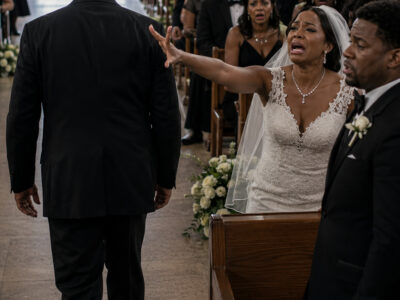
“No,” Megan said quietly.
Julian paused, mid-gesture. “Pardon? What did you say, Meg?”
“I said no,” Megan repeated, her voice rising just enough to cut through the hum of the hallway. “You are not speaking at the funeral. And you are certainly not carrying his casket.”
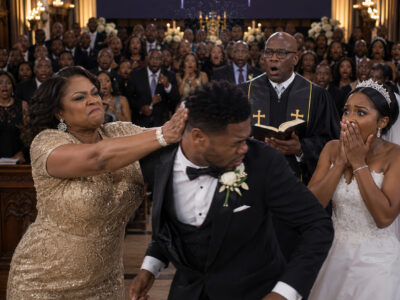
Sarah gasped, pressing a gloved hand to her chest. “Megan! Have you lost your mind? We are his children! What kind of ungrateful scene are you trying to make? People are going to be watching!”
“Let them watch,” Megan said, her eyes flashing with a cold, unyielding fire. “They can watch the people who actually showed up.”
Chapter 4: The Mahogany Box
That evening, after the siblings retreated to the guest bedrooms to argue in hushed, angry whispers about optics and family reputation, Megan walked alone into her father’s bedroom.
The room was dark, illuminated only by the amber glow of the streetlamp outside the window. The bed was stripped down to the mattress, smelling faintly of lavender linen spray.
On the nightstand, the mahogany box still sat untouched.
Megan walked over, picked it up, and set it down on the center of the bare mattress. She flipped the brass clasp. The lid popped open with a soft, hollow creak.
Inside lay the archive of a lifetime. A neat stack of greeting cards, their edges yellowed with age. A small clay ashtray molded by Thomas when he was nine, warped and lopsided. A photograph of Sarah in a ballet tutu, signed with a shaky glitter pen. A graduation program from Julian’s college ceremony, tucked safely inside a plastic sleeve.
Richard had treasured every single piece of paper in this box. For six years, when his world shrank to the perimeter of this mattress, he had looked at these items like religious relics, convincing himself that they represented love, continuity, and family.
He had spent his final years longing for people who were too busy to visit, waiting for doors to open that remained permanently locked from the outside.
Megan felt a hot tear escape her eye, but it wasn’t a tear of sorrow—it was a tear of fierce, absolute rejection.
This isn’t love, she thought bitterly. This is a museum of absence.
She reached into the box. She pulled out Julian’s graduation program and tore it cleanly down the middle. She picked up Sarah’s glitter-signed photograph and ripped it into quarters. She gathered the birthday cards, the postcards, the letters, and the childhood drawings, tearing them methodically, systematically, until the bed was covered in a snowy drift of shredded paper.
She didn’t want these objects to survive him. She refused to let them continue telling a fairy-tale story about a family that never truly existed during the years her father needed them most. These papers didn’t prove love; they only proved how easy it was to send a token from a thousand miles away while letting a dying man fade into silence.
When the box was completely empty, Megan closed the lid, walked over to the trash bin, and threw the whole thing away.
Chapter 5: The Final Request
The chapel at St. Jude’s Parish was packed to capacity the next morning. Organ music rolled softly through the vaulted wooden ceiling, and floral wreaths lined the aisle in overwhelming profusion. Parishioners, old business associates, and distant cousins filled the wooden pews in respectful, somber silence.
At the front of the chapel rested the polished mahogany casket, draped in white lilies.
Julian, Sarah, and Thomas sat prominently in the front row on the left side of the aisle, their faces arranged in expressions of profound, dignified sorrow. They wore immaculate black garments, dabbing their eyes occasionally with white linen handkerchiefs for the benefit of the surrounding crowd.
Megan sat alone on the right side of the aisle. She wore a simple black coat, her posture straight, her face completely calm and unreadable. She hadn’t spoken to her siblings since the argument the night before, and she didn’t care to.
As the final hymn faded, Attorney Harrison, the longtime family lawyer and executor of Richard’s estate, stepped up to the pulpit. He adjusted his glasses, unfolded a thick parchment document, and cleared his throat.
“Before we proceed with the final blessing,” the lawyer announced, his voice echoing cleanly through the chapel sound system, “our late friend, Richard Foster, left a final, handwritten addendum to his will, deposited with my office three days before his passing. He requested that it be read aloud at the service.”
A low murmur rippled through the pews. In the front row, Julian straightened his posture, puffing his chest out slightly, clearly expecting a public blessing or a final division of assets praising his eldest son status.
Attorney Harrison unfolded the paper, looked out over the congregation, and began to read:
“To those who sit in this chapel today, I leave my gratitude for your presence. But to my children—Julian, Sarah, Thomas, and Megan—I leave these final words of truth.
If my sons and daughters only appear today to carry my casket, I ask that you do not allow them to do so. The only people who have the right to accompany me on my final journey are those who held my hand on the days when I could no longer stand on my own.
Therefore, it is my explicit instruction that my casket shall be carried solely by my youngest daughter, Megan, and the four dedicated nurses—Maria, Elena, Chloe, and Brenda—who wiped my brow, fed me when I was weak, and stayed by my side when the world had turned its back.
Let no one else touch the handles.”
A stunned, absolute silence fell over the church.
Julian’s face drained of all color, turning a pasty, sickly white. Sarah froze, her linen handkerchief suspended halfway to her eyes. Thomas stared straight ahead, his jaw slack with unadulterated shock.
For a long, agonizing moment, the entire congregation turned their heads in unison, staring directly at the front row. The subtext was unmistakable, brutal, and entirely public. The community knew the truth; they knew who had stayed and who had fled.
Attorney Harrison folded the paper slowly, looking down at the podium. “We will now respect the final wishes of Mr. Foster.”
Julian slowly lowered his head, unable to meet the eyes of the people sitting around him. Not a single word of protest was uttered. The corporate armor had been completely stripped away, leaving them standing naked in the harsh, glaring light of their own desertion.
Chapter 6: The Weight of Absence
The heavy oak doors of the chapel swung outward, flooding the stone steps with pale, cold autumn sunlight.
Four women in simple blue scrubs—Maria, Elena, Chloe, and Brenda—stepped forward from the side pews, their eyes bright with unshed tears. They took their places at the front handles of the polished mahogany casket.
Megan stepped forward to take the final handle on the right side.
As the pallbearers lifted the weight of the casket, the collective burden shifted onto shoulders that had actually carried the reality of Richard’s final years. They began their slow, measured descent down the stone steps of the church.
Megan walked steadily beside her father for the last time. The wind caught her hair, but she didn’t shiver. She felt a deep, profound lightness settling into her chest—the release of a long, exhausting vigil, and the quiet triumph of uncompromised truth.
Behind them, walking in a solitary, isolated line down the steps, came Julian, Sarah, and Thomas. They walked without ceremony, without applause, and without the hollow dignity they had tried so hard to purchase. They were just three people trailing behind a procession they had forfeited the right to lead.
Standing at the edge of the cobblestone courtyard, watching the casket pass by, an elderly family friend leaned over to his wife and whispered words that would echo long after the funeral ended:
“You see that? People finally understand…
A presence for one hour at a funeral can never, ever compensate for years of absence while the person was still alive.”
Megan didn’t look back at her siblings. She kept her eyes fixed forward, guiding her father gently down the path, right into the quiet, permanent embrace of peace.