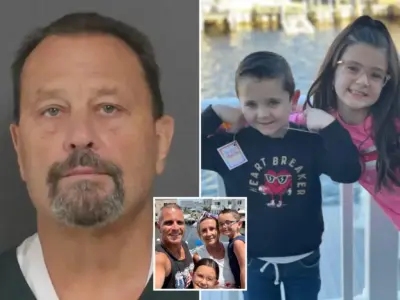
The final beer bottle has been found: Stephen Schneider’s lawyers are challenging more than just the evidence regarding alcohol!
The final beer bottle has been found: Stephen Schneider’s lawyers are challenging more than just the evidence regarding alcohol!
A blood alcohol level of 0.16% provides prosecutors with strong evidence against Schneider following the deaths of Mya and Sigmund.
However, his defense team is now examining the physical conditions surrounding the crash, including the channel marker buoy and its visibility at night.
This means the upcoming legal battle may hinge not only on Schneider’s condition but also on what was visible from the helm.
The truth about Stephen Schneider’s actions has finally come to light.
*************************
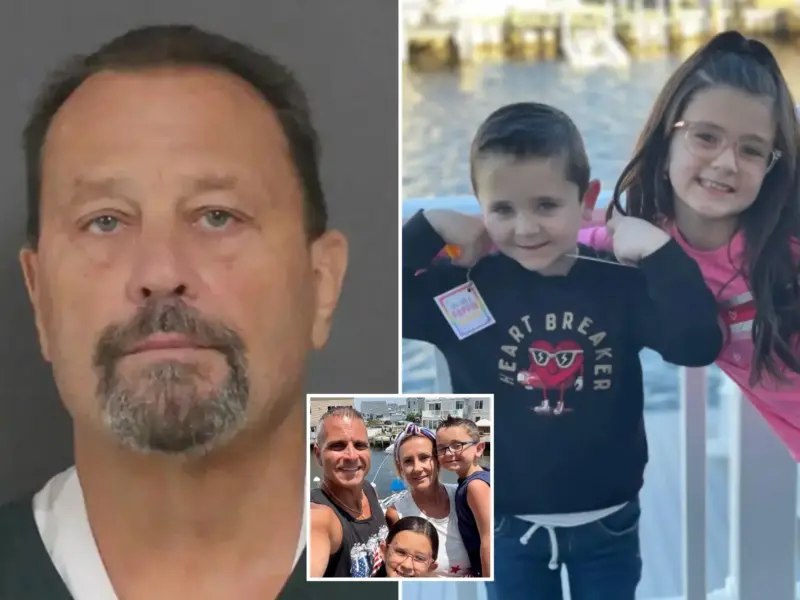
The Final Beer Bottle Has Been Found: Schneider’s Defense Challenges More Than Alcohol Evidence
A blood alcohol concentration of approximately 0.16 percent—twice New Jersey’s legal limit—has given prosecutors a powerful piece of evidence in the case against Stephen Schneider. The 64-year-old Bayville resident faces two counts of second-degree reckless vessel homicide, along with charges of operating a vessel under the influence and reckless operation of a vessel, stemming from the July 19, 2026, crash on Barnegat Bay that killed his grandchildren, 9-year-old Mya Bella Golabek and 7-year-old Sigmund “Siggy” Paul Golabek. Yet as the case moves forward, Schneider’s legal team is signaling that the courtroom fight will extend well beyond the toxicology results. Defense attorneys are examining the physical conditions of the crash itself, including the channel marker, its lighting, and what was visible from the helm in the final moments before impact.
According to the affidavit of probable cause and statements Schneider provided to investigators, the family had gathered for dinner at MJ’s Restaurant Bar and Grill in Berkeley. The children arrived with their parents on one boat; Schneider and his wife, Laurie, arrived on their 28-foot Tidewater Custom 280 center-console. After the meal, Mya and Siggy asked to ride home with their grandparents. Both children sat at the bow wearing life jackets. Shortly after 9 p.m., traveling at roughly 20 mph, the vessel struck Intracoastal Waterway Channel Marker No. 39 with its starboard bow. The impact threw the siblings into the water. Schneider later told police he saw the marker “at the last second.”
Schneider admitted consuming two Guinness beers and one Miller Lite over about two hours at the restaurant. A blood sample drawn early the next morning registered a BAC of approximately 0.16 percent. Toxicology experts concluded that his alertness, sense of care and caution, perception, judgment, response time, and coordination were markedly impaired by alcohol. Prosecutors have emphasized these findings, describing the outcome as catastrophic. Ocean County Assistant Prosecutor Kate Burke cited the BAC level when arguing against Schneider’s release at a detention hearing in mid-August. Despite those arguments, Superior Court Judge Wendel E. Daniels ordered conditional release, noting Schneider’s limited prior record and letters of support from the children’s parents. Conditions include a temporary ban on operating a boat or motor vehicle pending a court-ordered assessment. Schneider’s next scheduled appearance is in mid-September.
Defense attorney William P. Cunningham of Toms River has made clear that the defense intends to scrutinize more than the alcohol evidence. At the detention hearing and in related statements, Cunningham indicated that investigators and the defense are still examining whether the channel marker was lighted or unlighted at the time of the collision. Officials, including Berkeley Township Councilman James Byrnes, previously stated that the marker’s lights were functioning that night. Court documents describe Marker 39 as a single-stanchion illuminated navigational aid. Schneider himself told state police that both the boat’s radar and an infrared/low-light night navigation camera were activated. He also stated that he had spent his entire life on boats, lived near the restaurant, and had traveled the route numerous times.
These details open several lines of potential defense inquiry. Visibility at night on open water is never perfect. Factors such as ambient light, weather, the height and angle of the marker, glare, the operator’s seating position and eye level relative to the console and any windshield, and the effectiveness of electronic aids can all influence what a reasonably attentive operator might see. Schneider’s statement that he perceived the marker only at the last second, combined with his claim that navigational electronics were on, invites examination of whether the physical conditions contributed to the failure to detect the obstacle earlier. The defense has also expressed interest in independent review of the BAC results.
Prosecutors, for their part, are expected to argue that impairment itself explains the late recognition of a lighted, charted, and fixed navigational aid. Channel markers exist to define safe waterways. Their locations appear on standard charts, and illuminated markers are designed to be visible after dark. State Police and marine officers have publicly stressed that markers in Barnegat Bay are well marked, charted, and lit, and that boaters must slow down and remain within the marked channel. The combination of a reported speed of about 20 mph, a familiar route, activated electronics, and a BAC more than double the legal limit forms the core of the state’s case for recklessness.
The defense strategy appears aimed at complicating that narrative. By focusing on the marker’s condition and what was actually visible from the helm, the defense may seek to introduce reasonable doubt about whether alcohol alone accounts for the collision, or whether other factors—lighting, visibility angles, equipment performance, or environmental conditions—played a meaningful role. In vessel homicide cases, the state must prove not only that the operator was under the influence but that the operation was reckless and caused the deaths. Challenging the physical circumstances of the crash can test the strength of that causal link.
Newly released 911 recordings add another layer of human detail to the immediate aftermath. The children’s grandmother can be heard describing the chaos: one child already on the boat, her husband in the water attempting to recover the second, and both children unconscious. She referenced the location near channel marker 39. First responders entered the water and continued CPR efforts. Despite life jackets and rapid recovery, both children were pronounced dead at Community Medical Center in Toms River.
Schneider has no significant recent criminal history. Court records note a single incident from approximately 39 years earlier involving a controlled substance charge that was resolved through a pretrial intervention program. His attorney has stated that if released, Schneider would likely never operate a boat again and would never consume alcohol again, describing the tragedy as having “cut to the root of his family.” The children’s parents submitted letters supporting his release while the case proceeds, a fact the judge cited in ordering conditional freedom.
The legal battle now taking shape will likely involve competing expert testimony. Prosecutors can be expected to present toxicology findings, accident reconstruction, evidence of the marker’s lighting status, and Schneider’s own statements about speed and late recognition of the obstacle. The defense is positioned to challenge the lighting condition of the marker, the reliability or interpretation of the BAC measurement, the effectiveness of the radar and night-vision camera under the actual conditions that night, and the precise visibility available from the operator’s position. Questions about lines of sight from the helm, the children’s positions at the bow, and any potential visual obstruction or distraction may also arise.
Maritime navigation carries inherent responsibilities. Operators are expected to maintain a proper lookout, travel at safe speeds for conditions, and use available aids without substituting them for visual awareness. Striking a fixed, illuminated channel marker raises a presumption of fault in many contexts, yet every case turns on its specific facts. Here, the facts include both a significantly elevated BAC and the operator’s claim of last-second detection despite activated electronics and lifelong familiarity with the waters.
As the case advances toward further hearings and eventual trial, the dual focus—on Schneider’s physical condition and on the physical conditions of the waterway—will define the contest. Prosecutors hold the 0.16 percent BAC as strong evidence of impairment that compromised judgment and reaction time. The defense is preparing to test whether that impairment fully explains the collision or whether the visibility and condition of Marker 39 introduce additional variables that a jury must weigh.
The deaths of Mya and Siggy remain the central, irreversible fact. Two children who sat at the bow in life jackets after a family dinner never reached home. The investigation and the emerging legal strategies are attempts to determine responsibility under the law. Schneider’s team has made clear it will not concede that alcohol evidence alone settles the matter. By examining the channel marker, its illumination, and the view from the helm, the defense is preparing a broader challenge. Whether that challenge succeeds will depend on the evidence developed in the months ahead and on how a court or jury ultimately weighs the competing accounts of what happened in those final seconds on Barnegat Bay.
The truth about the actions taken that night continues to be tested through the formal processes of investigation and adjudication. The beer bottles have been accounted for in Schneider’s statements. The blood alcohol level has been measured and reported. Now the physical world surrounding the crash—the marker standing in the Intracoastal Waterway, the darkness of the evening, the equipment on the boat, and the line of sight available to the operator—has become part of the contested terrain. The upcoming legal proceedings will determine how those elements are resolved.