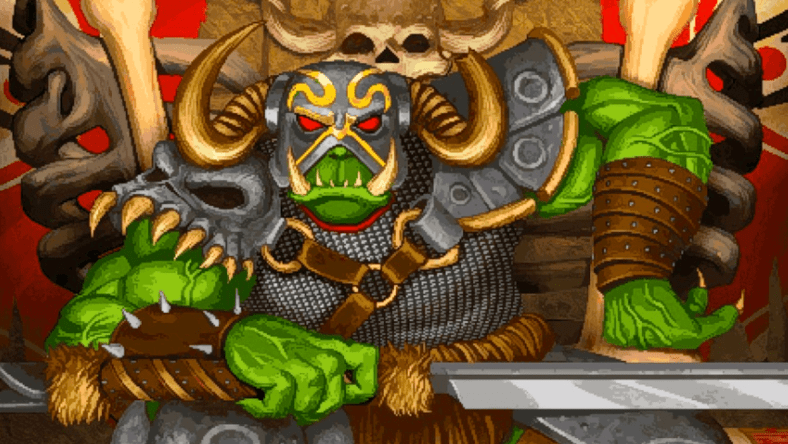
 The player prepares to fight for the Horde in Warcraft: Orcs & Humans (1994), Blizzard Entertainment
In choosing to rain on everyone’s parade just in time for the holiday season, Blizzard Entertainment has reportedly moved to delist the first two Warcraft games from digital storefronts – however, the team at Good Old Games is not letting the titles go without a fight.
 The player is promoted to the rank of Orc Warlord in Warcraft II: Tides of Darkness Remastered (2024), Blizzard Entertainment
News of Warcraft: Orcs & Humans and Warcraft II: Tides of Darkness‘ impending memory-holing was first confirmed on December 2nd, courtesy of a tweet from Good Old Games (GOG) themselves wherein the retailer revealed, “We’re deeply saddened to share the news that Warcraft: Orcs and Humans and Warcraft II will leave our store on December 13th, 2024″.
“At GOG, we believe that games should live forever,” they lamented. “This means not only preserving them but also making sure they remain accessible, updated, and enjoyable on modern systems—everything the GOG Preservation Program is built to ensure. Yet, despite our dedication and best efforts, there are times when not everything goes as we’d hoped.”
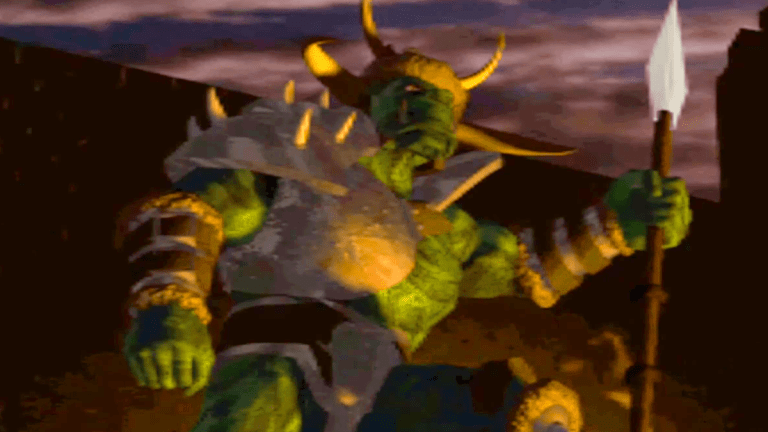 The player is promoted to the rank of Orc Warlord in Warcraft II: Tides of Darkness (1995), Blizzard Entertainment
However, rather than simply letting the original releases of these RTS classics fade into the history books in favor of their recent remasters, GOG informed their customers that they would be making a notable change to their GOG Preservation policy.
“Going forward, even if a game is no longer available for sale on GOG, as part of the GOG Preservation Program, it will continue to be maintained and updated by us, ensuring it remains compatible with modern and future systems,” the retailer announced. “
“We’re incredibly proud of our work on both Warcraft: Orcs and Humans and Warcraft II, bringing them back to life after decades of unavailability and introducing several improvements to ensure the best possible experience, as close to the original as possible,” they wrote. “Although we’ll soon no longer be able to offer these games in our store, anyone who purchased them before they were removed will still enjoy the most compatible, high-quality versions, guaranteed by the GOG Preservation Program.”
And in providing players with a workaround that even Blizzard has no authority to shut down, GOG ultimately promised their players that “because we’re DRM-free, you’ll have access to their Offline Installers, ensuring lifetime access to enjoy them whenever you like.”
 Good Old Games (@GOGcom) via Twitter
Further, in seeking “to help fans out who are worried they won’t get their copy of the games,” GOG also revealed a new discount code – MakeWarcraftLiveForever – which when used will reduce the storefront’s Warcraft I & II Bundle by roughly $2 USD, bringing the price for both games down from $15 to roughly $13.
 Good Old Games (@GOGcom) via Twitter
Given the fact that both games have long-existed on digital storefronts, this recent announcement has left many fans wondering as to just why Blizzard opted to take action against them now.
While an official reason has yet to be provided by anyone related to either Activision Blizzard or their parent company Microsoft, current speculation suggests that the delisting of Warcraft I and II is being done in the hopes of driving traffic towards their recently-released remasters, as by making them the only versions available to play, they leave customers looking to revisit the early years of the Second Great War (and the following Invasion of Draenor) with no choice but to buy the new and more expensive versions at a higher price point.
 Alliance soldiers look out on the approaching Horde ships in Warcraft II: Tides of Darkness Remastered (2024), Blizzard Entertainment
Given that Blizzard is looking to bury the classic versions of these games, one may be led to ask “What exactly is the difference between the original releases and their remasters?”
In addition to a wide range of graphical upgrades, the Warcraft remasters also bring with them a newly updated Ranked Play system, as well as a number of quality-of-life fixes (such as the ability to customize one’s own hotkey commands).
Meanwhile, GOG’s version of these games not only presents them in their original form, but Warcraft: Orcs & Humans includes an internal configuration tool to streamline multiplayer connectivity, while their release of Warcraft II incorporates a DXWrapper to preserve the game’s original presentation on modern resolutions.
Admittedly, these enhancements do little to bring the original up to ‘technological parity’ with the Remasters – however, their inclusion is nonetheless particularly appealing to classic purists.
 Alliance soldiers look out on the approaching Horde ships in Warcraft II: Tides of Darkness (1995), Blizzard Entertainment
In addition to Blizzard’s corporate greed aside, this episode has also put a spotlight on GOG’s Preservation Program, an initiative that aims to ensure “classic games remain playable on modern systems, even after their developers stopped supporting them”.
Put another way, thanks to their efforts, players can avoid being like me and resting your retro gaming hopes on your old disks, like those for the first three Resident Evil games or Final Fantasy VII (the latter of which still has yet to be preserved), still working years after their initial production.
“We test and update the games so they work flawlessly on the most popular PC configurations – now and in the future,” the company explains of their work. “The PC landscape is constantly evolving, with changes like new Windows updates or graphics card drivers occasionally affecting compatibility.”
To this end, GOG guarantees that not only will “games in the GOG Preservation Program remain part of the initiative even if they are no longer available for sale”, but they will be constantly monitored by the company to “continue ensuring their compatibility with modern systems.”
 The player prepares to fight for the Alliance in Warcraft: Orcs & Humans (1994), Blizzard Entertainment
Looking at the larger picture, Blizzard’s decision and GOG’s push back notably highlights a growing tension in the gaming community, namely that seen between those who want to preserve gaming history as comprehensively as possible and those who want to monetize their legacy content.
Over the last few years, it’s become increasingly common for publishers to remaster their classic games, often without any attention (such as a direct port) being given to the original release and generally at a slightly higher price point than players would normally pay for such old games. For examples, look no further than the recent treatments given to the Tomb Raider, Legacy of Kain, and of course, Warcraft series.
This is also to say nothing of the fact that remastered games often go through various alterations that end up changing more than just a few of their core elements, and thus present a different experience to the one that earned it its respective popularity in the first place. In contrast (and by definition), the original releases allows one to explore the developers’ initial vision, warts and all., and learn different ways to approach game development and appreciation.
 The Horde and the Alliance clash during the First War in The player prepares to fight for the Horde in Warcraft: Orcs & Humans Remastered (2024), Blizzard Entertainment
Then there’s the fact that in regards to the big name publishers producing these remasters, while poor sales for a given release may hurt their finances, they can ultimately survive an unpopular game or two (after all, somehow, Ubisoft is still kicking).
However, the more remasters they produce, the more preservation outlets like GOG will have to invest their time and money in supporting less-popular games that no longer generate significant amounts of revenue.
In the long run, such dedication to ‘cheaper’ titles could end up putting a pinch on their bottom lines – and if they do, said companies may find themselves struggling to keep the lights on across the board, which in turn would ultimately hurt their preservation efforts.
 The Alliance builds their forces in Warcraft II: Tides of Darkness (1995), Blizzard Entertainment
With all that said, the bottom line is that sometime sooner than later, the gaming industry will need to learn how to balance profit motives with historical preservation.
Until then, GOG’s policy of post-delisting-support offers a reassuring precedent for players. Whether this approach can endure long-term remains to be seen, but at least Warcraft fans can rest easy knowing the series’ humble origins can still be enjoyed in their initial form.
As noted above, for those eager to secure their piece of gaming history, the clock is ticking, with December 13 marking the last day the Warcraft I & II bundle will be available on GOG.
News
Elder Scrolls IV: Oblivion Remastered Players Discover Simple Setting Change That Instantly Boosts Performance—Find Out What’s Got Everyone Buzzing Below!
Elder Scrolls IV: Oblivion Remastered Players Discover Simple Setting Change That Instantly Boosts Performance—Find Out What’s Got Everyone Buzzing Below! The recent release of The Elder Scrolls IV: Oblivion Remastered has captivated both longtime fans and newcomers with its stunning…

STAR WARS: BATTLE OF HOTH UNVEILED: Days of Wonder’s Epic Board Game Brings Hoth’s Iconic Clash to Your Tabletop! Command Rebels or Imperials in a Fast-Paced Strategy Showdown That’s Got Fans Buzzing—Discover Why This Game Is a Must-Have! ❄️
Star Wars: Battle of Hoth Board Game Unleashes Epic Tabletop Warfare in a Galaxy Far, Far Away In the vast universe of Star Wars, few moments are as iconic as the Battle of Hoth from The Empire Strikes Back. The…
CYBERPUNK 2077 FANS, CLEAR YOUR CALENDARS FOR JULY 17: CD Projekt Red’s Mysterious Reveal Promises a Game-Changing Night City Update! A Highly Anticipated Event Sparks Feverish Hype and Speculation—Discover Why This Date Has the Gaming World Electrified! 🌃
Cyberpunk 2077’s July 17 Reveal: A Night City Bombshell That Has Fans Buzzing In the neon-lit world of Cyberpunk 2077, where corporate intrigue and cybernetic chaos reign, CD Projekt Red has mastered the art of keeping fans on edge. Since…
ELDER SCROLLS: OBLIVION REMASTERED’S SHOCKING SECRET: Hidden Door Warps Players to Game’s Epic Finale! Bethesda’s Revamped RPG Unveils a Mysterious Shortcut That’s Got Fans Buzzing with Excitement and Debate—Uncover Why This Discovery Is Taking Tamriel by Storm! 🚪
Elder Scrolls: Oblivion Remastered’s Secret Door: A Shortcut to the Finale That’s Stunning Fans In the storied legacy of The Elder Scrolls, few games hold the nostalgic weight of The Elder Scrolls IV: Oblivion. Released in 2006, its vibrant world…
SKYRIM REBORN IN UNREAL ENGINE 5: Bethesda’s Official Remake of a Fantasy Epic Stuns Fans with Next-Gen Glory! Tamriel’s Legendary World Revamped with Jaw-Dropping Visuals Ignites a Frenzy of Hype—Dive into Why This Remaster Has Gamers Spellbound! 🐉
Skyrim’s Unreal Engine 5 Remake: A Legendary RPG Reborn in Next-Gen Splendor In the annals of gaming history, few titles have left as indelible a mark as The Elder Scrolls V: Skyrim. Since its 2011 release, Bethesda’s open-world masterpiece has…
DARK SOULS 4 TAKES A BACKSEAT: New RPG Blending Skyrim’s Epic Scope with Bloodborne’s Brutal Horror Steals the Spotlight! A Groundbreaking Fusion of Open-World Adventure and Gothic Terror Has Fans Buzzing with Hype—Discover Why This Game Is the Talk of the Gaming World! 🎮
What a combo this headline is – Dark Souls, Bloodborne, Skyrim, all absolute bangers that, if merged together, could make for a hell of a game, right? I feel like we’re setting you up for something special, but this is all pulled…
End of content
No more pages to load