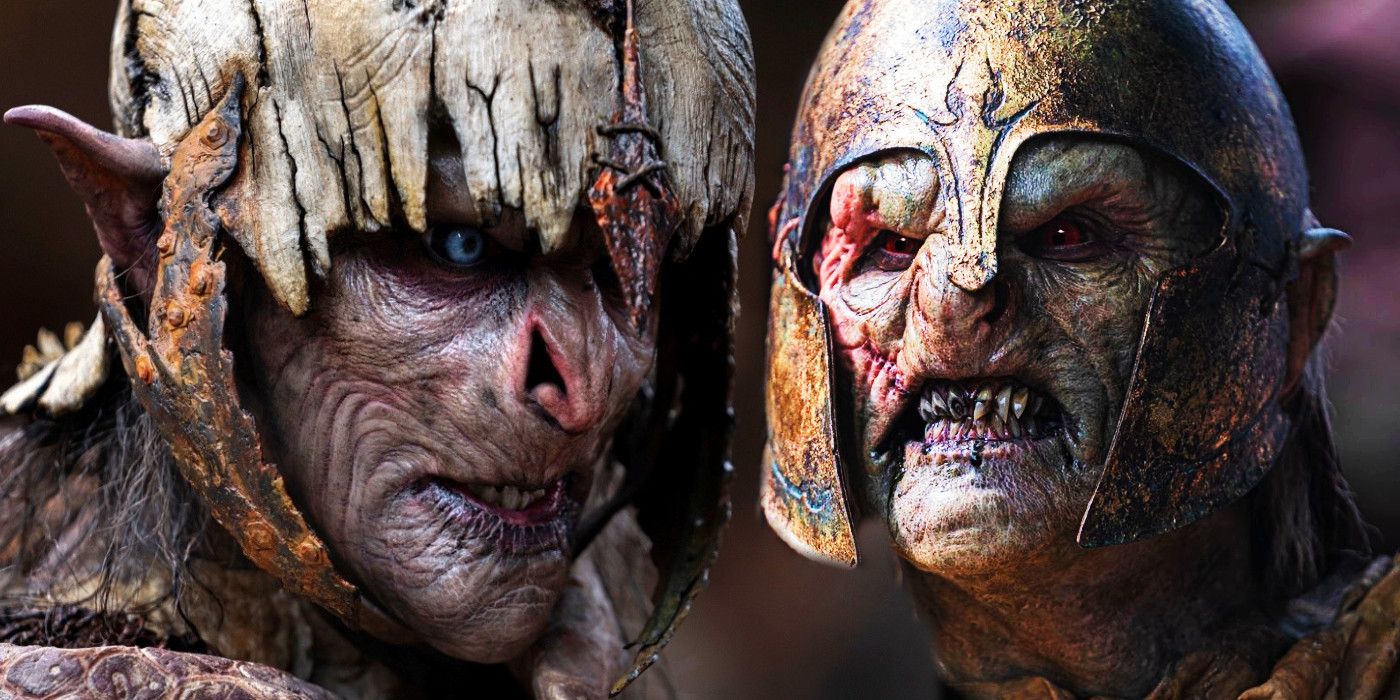
The Orcs of Lord of the Rings is a topic of debate among Tolkien enthusiasts since the author had different accounts of where they originally came from. A popular version of the story is that the Dark Lord Morgoth captured Elves shortly after they awoke in Middle-earth and corrupted them with his evil until they became something else entirely. These early Orcs then multiplied, spreading throughout the land. In the early days, they followed Morgoth. Later, it was the Dark Lord Sauron to whom most were loyal. Regardless of their master, Lord of the Rings Orcs are wholly and entirely evil, irrespective of their type.
Orcs Of The Misty Mountain
Notably Seen Throughout The Hobbit & The Lord Of The Rings
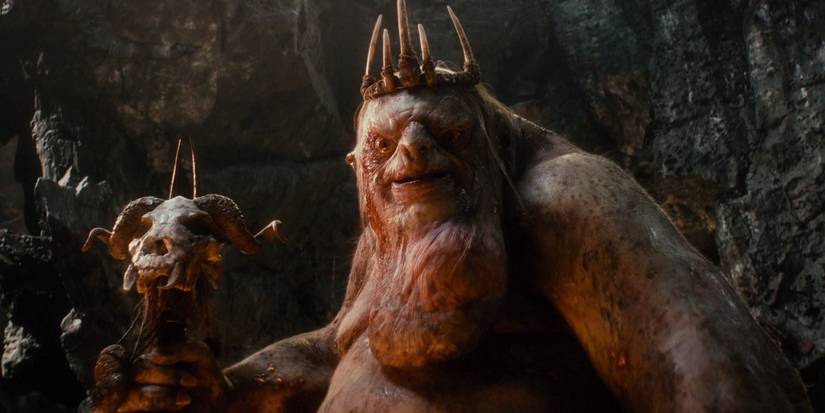
Some of the first Orcs seen in the Lord of the Rings books are those that lived beneath the Misty Mountains since it was these that Bilbo and Thorin’s company faced in The Hobbit. They lived in massive underground colonies, led by various kings and leaders throughout Middle-earth’s history. Notable Misty Mountain Orcs include the Great Goblin (whom Gandalf killed in The Hobbit), Azog (who led the Moria Orcs), and Bolg (who led the Misty Mountain Orcs in the Battle of Five Armies).
Orcs are often called Goblins in The Hobbit , and Tolkien later clarified that this was simply a different English translation for Orc-kind.
The Orcs of the Misty Mountains settled there many centuries before the events of The Lord of the Rings and assumedly served Morgoth before they allied themselves with Sauron. It was these Orcs who ambushed Isildur during the Disaster of the Gladden Fields, killing the Gondor king and causing the One Ring to be lost. The Misty Mountain Orcs also warred incessantly with the Dwarves, taking over their cities until the caves of the Misty Mountains were ultimately reclaimed following the One Ring’s destruction at the end of The Lord of the Rings.
Orcs Of Isengard
Notably Present In The Battle Of Helm’s Deep & The Ents March On Isengard


The Isengard Orcs were loyal to Saruman and settled in the pits surrounding Orthanc. Many had initially been Misty Mountain Orcs, but they were drawn out by the combined call of the White Wizard and Sauron’s evil influence. They pillaged villages as they were slowly drawn to Isengard, alerting many Middle-earth kingdoms to the Dark Lord’s growth in power. Once in Isengard, Saruman bred these Orcs, experimenting and developing new sub-types like Uruk-hai and Half-orcs (or Goblin-men), each serving unique purposes.
It was the Orcs of Isengard that were sent, along with Dunlendings (Men), to the First Battle of the Fords of Isen in The Lord of the Rings, which is when Prince Théodred of Rohan was killed. Later, some Isengard Orcs, along with thousands of Uruk-hai, were sent to the Battle of Helm’s Depp, while thousands more were left in the pits surrounding Orthanc. Nearly all were wiped out thanks to the involvement of Treebeard and the Ents in both the battle against Rohan and the march of the Ents at Orthanc.
Orcs Of Mordor
Notably Present In Nearly All Third Age Battles


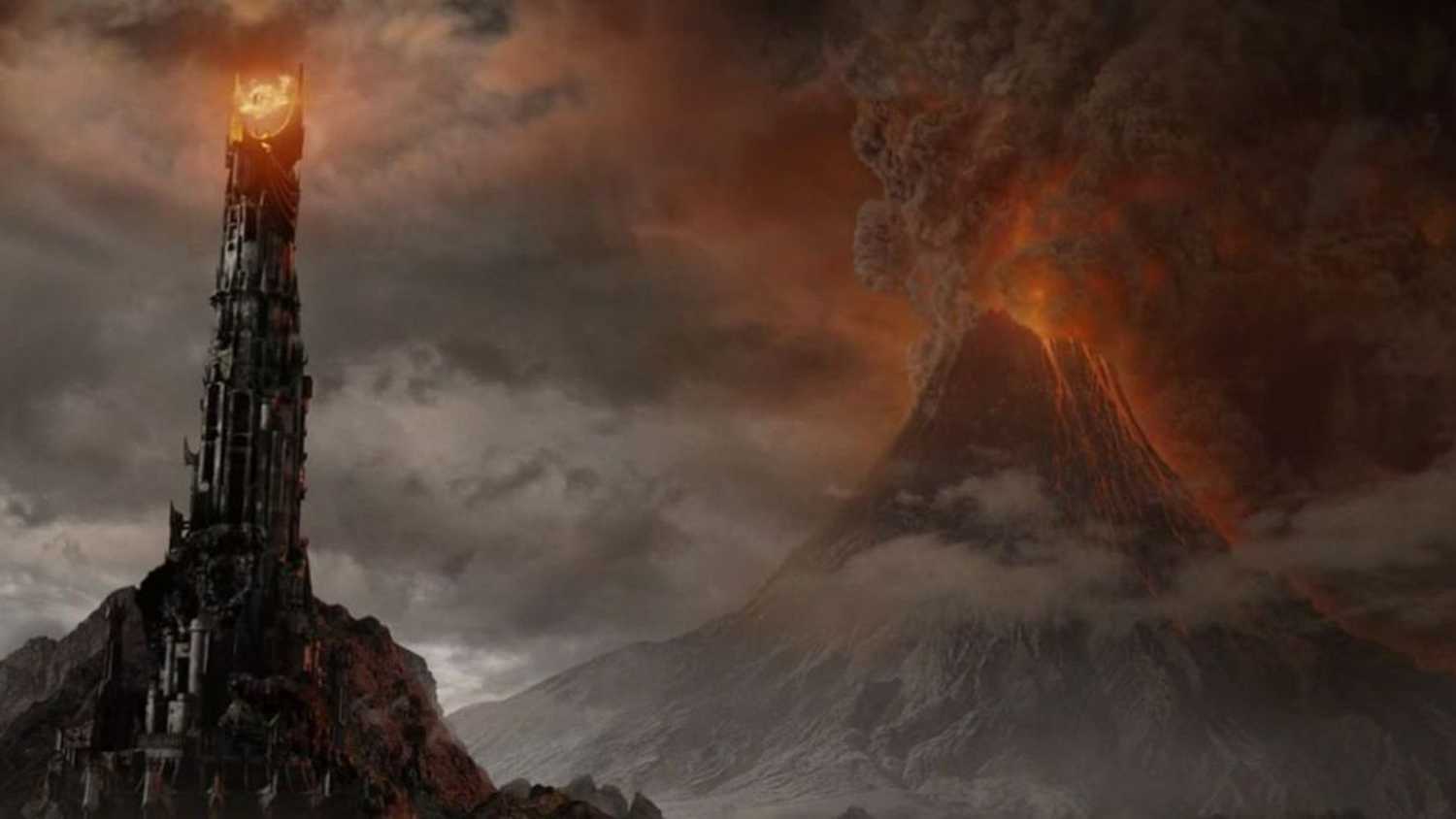


Since Mordor was Sauron’s own dark kingdom in Tolkien canon, the Orcs that resided there made up the most significant part of the Lord of the Rings villain’s army during the Second and Third Ages. It is believed that many of these Orcs had been Morgoth’s followers (or descendants of his followers) who continued to live in small numbers in the shadow of Mount Doom for centuries. Once Sauron grew in strength, their numbers quickly multiplied, and the Orcs of Mordor took part in all of Sauron’s many battles across Middle-earth.
It’s implied in The Lord of the Rings that Mordor Orcs could multiply quicker than other types, perhaps owed to the immense darkness of Sauron’s kingdom.
It’s implied in The Lord of the Rings that Mordor Orcs could multiply quicker than other types, perhaps owed to the immense darkness of Sauron’s kingdom. This fact contributed to the impossible position in which the kingdoms of Middle-earth were placed. Regardless of the victories at the Battle of Helm’s Deep (also attended by Mordor Orcs) and the Battle of Pelennor Fields, the hosts of Mordor seemed impossible to defeat. Gondor riding to Mordor was intended as a distraction in The Lord of the Rings: The Return of the King since defeating these Orcs and their allies was possibly only once the One Ring was destroyed.
Orcs Of The East
Notably Present In The Battle Of Pelennor Fields & The Battle of the Morannon

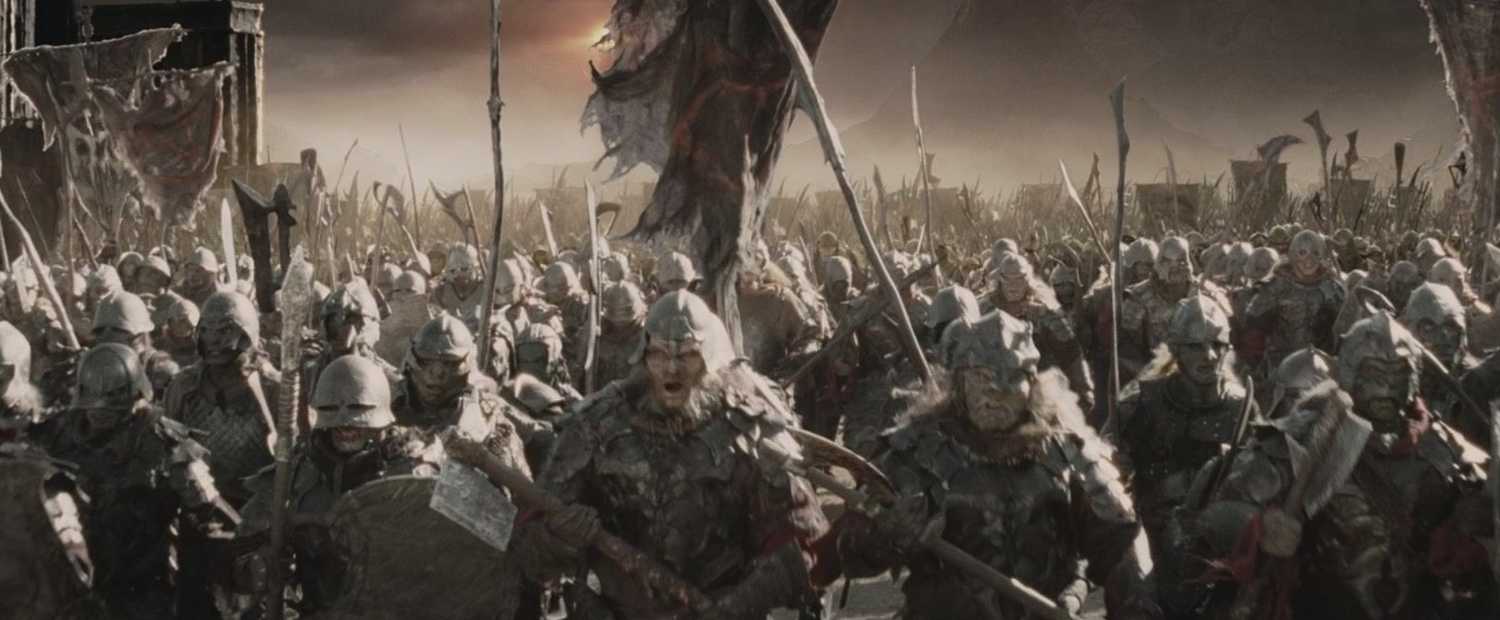


The far Eastern regions of Middle-earth went largely unexplored in The Lord of the Rings since this was said to be the home of some of the darkest beings. The Orcs of this region were meant to be especially fierce and powerful because they had avoided the broader downfall of their Western counterparts when their master, Morgoth, was defeated. For the following centuries, the Eastern Orcs answered no one, allowing them to grow stronger, more dangerous, and even more unruly.
The Eastern Orcs became so numerous and wild that they were slow to obey Sauron when he demanded their allegiance. Those who did join their Mordor counterparts were known to murder and consume even their allies, leading to a poor reputation even among the Orcs. Though a great many Eastern Orcs joined Sauron during the Third Age, even more were believed to have remained behind. Therefore, it’s assumed that the East was still plagued by the wild Orcs going into the Fourth Age, even after Sauron’s downfall.
Half-Orcs
The Result Of Breeding Orcs & Men

The Half-orcs, or Goblin-men, were the result of breeding evil Men with Orcs. According to Tolkien, this was first done in Morgoth’s time. The original Dark Lord would corrupt Men so that their minds and behavior became Orc-like, allowing them to mate with existing Orcs to create a larger and more powerful new breed. In the Third Age, Saruman led experiments that duplicated this. The Half-orcs were described as either Men-orcs, who could more easily pass as Men, and Orc-men, who resembled their Orc brethren. Both were equally as evil and nasty.
Since many passed as Men, this evil breed continued to weave its way through Middle-earth’s population.
As Saruman’s own creations, the Half-orcs were present predominantly in the Battle of Helm’s Deep and the Last March of the Ents. However, since many passed as Men, this evil breed continued to weave its way through Middle-earth’s population. Many accompanied their master Saruman as he sought to industrialize the North. So, when Frodo and his fellow hobbits returned to the Shire at the end of The Lord of the Rings: The Return of the King, they found it overrun by such evil men. This led to the Scouring of the Shire, a battle between the Hobbits and Saruman’s followers.
Uruk-Hai
Half-Orcs Genetically Perfected For Strength & Resistance To The Sun


Like the Half-orcs, the Uruk-hai were a dark combination of Men and Orcs. However, these creatures were a perfected blend, resulting in the very largest and most powerful of the Orc breeds, who also had the ability to survive in sunlight. It’s believed that Morgoth was the first to create Uruk-hai, and there were some that carried on and reproduced near Mordor going into the Third Age. However, the majority seen in The Lord of the Rings were those bred by Saruman in Isengard, who bore the white hand.
Saruman’s Uruk-hai were his pride and joy, and their ability to survive in sunlight made them the wizard’s go-to for tracking the Fellowship of the Ring. The Uruk-hai Uglúk led the party that killed Boromir and captured Merry and Pippin. However, Éomer and the Riders of Rohan killed him and his fellows before thousands more Uruk-hai were utterly defeated at the Battle of Helm’s Deep.
Snaga & Snufflers
The Lower Ranks Of The Orcs


Every general population of Orcs in Lord of the Rings contained Snaga and Snufflers. These were the lowest class within the race. The Snaga were responsible for manual labor, such as building, digging, felling trees, hunting, or sometimes fighting. They were the smallest of the Orcs and were regarded as little more than scum by the larger Uruk-hai (as is seen throughout Lord of the Rings).
Like the Snaga, the Snufflers were small and lowly, though they differed some regarding their role. They were even smaller than the Snaga and were known to be excellent trackers with a strong sense of smell. Snuffler Orcs were also quick on their feet and good for traveling long distances after a mark. There were several Snugglers who accompanied the Uruk-hai on the hunt for the Fellowship of the Ring in The Lord of the Rings, and they were also mentioned as being present when Sam and Frodo infiltrated Mordor.
Hobgoblins
Honorable Mention From The Hobbit

The term Hobgoblin was only mentioned once in The Lord of the Rings, and there has been a great deal of speculation and debate regarding what, precisely, they are. Gandalf mentions Hobgoblins when discussing the types of Orcs Bilbo might confront in The Hobbit. Later, Tolkien wrote that a hobgoblin was among the “larger kinds” of Orcs, which seems to indicate that this is another term for the Uruk-hai or Half-orcs. However, it has been argued that there may have been some differences between these beings and those who were bred using humans.
In one of his letters, Tolkien also mentioned that hobgoblins were typically smaller than their goblin counterparts in mythology but that he made the change for his own Lord of the Rings creatures. The author has provided no further explanation, so it can’t be confirmed that Hobgoblins are either the same or different from the Uruk-hai. Still, with such a variety among the Orcs, dependent on their region of origin or breeding, it’s worth mentioning the Hobgoblins.
News
Elder Scrolls IV: Oblivion Remastered Players Discover Simple Setting Change That Instantly Boosts Performance—Find Out What’s Got Everyone Buzzing Below!
Elder Scrolls IV: Oblivion Remastered Players Discover Simple Setting Change That Instantly Boosts Performance—Find Out What’s Got Everyone Buzzing Below! The recent release of The Elder Scrolls IV: Oblivion Remastered has captivated both longtime fans and newcomers with its stunning…

STAR WARS: BATTLE OF HOTH UNVEILED: Days of Wonder’s Epic Board Game Brings Hoth’s Iconic Clash to Your Tabletop! Command Rebels or Imperials in a Fast-Paced Strategy Showdown That’s Got Fans Buzzing—Discover Why This Game Is a Must-Have! ❄️
Star Wars: Battle of Hoth Board Game Unleashes Epic Tabletop Warfare in a Galaxy Far, Far Away In the vast universe of Star Wars, few moments are as iconic as the Battle of Hoth from The Empire Strikes Back. The…
CYBERPUNK 2077 FANS, CLEAR YOUR CALENDARS FOR JULY 17: CD Projekt Red’s Mysterious Reveal Promises a Game-Changing Night City Update! A Highly Anticipated Event Sparks Feverish Hype and Speculation—Discover Why This Date Has the Gaming World Electrified! 🌃
Cyberpunk 2077’s July 17 Reveal: A Night City Bombshell That Has Fans Buzzing In the neon-lit world of Cyberpunk 2077, where corporate intrigue and cybernetic chaos reign, CD Projekt Red has mastered the art of keeping fans on edge. Since…
ELDER SCROLLS: OBLIVION REMASTERED’S SHOCKING SECRET: Hidden Door Warps Players to Game’s Epic Finale! Bethesda’s Revamped RPG Unveils a Mysterious Shortcut That’s Got Fans Buzzing with Excitement and Debate—Uncover Why This Discovery Is Taking Tamriel by Storm! 🚪
Elder Scrolls: Oblivion Remastered’s Secret Door: A Shortcut to the Finale That’s Stunning Fans In the storied legacy of The Elder Scrolls, few games hold the nostalgic weight of The Elder Scrolls IV: Oblivion. Released in 2006, its vibrant world…
SKYRIM REBORN IN UNREAL ENGINE 5: Bethesda’s Official Remake of a Fantasy Epic Stuns Fans with Next-Gen Glory! Tamriel’s Legendary World Revamped with Jaw-Dropping Visuals Ignites a Frenzy of Hype—Dive into Why This Remaster Has Gamers Spellbound! 🐉
Skyrim’s Unreal Engine 5 Remake: A Legendary RPG Reborn in Next-Gen Splendor In the annals of gaming history, few titles have left as indelible a mark as The Elder Scrolls V: Skyrim. Since its 2011 release, Bethesda’s open-world masterpiece has…
DARK SOULS 4 TAKES A BACKSEAT: New RPG Blending Skyrim’s Epic Scope with Bloodborne’s Brutal Horror Steals the Spotlight! A Groundbreaking Fusion of Open-World Adventure and Gothic Terror Has Fans Buzzing with Hype—Discover Why This Game Is the Talk of the Gaming World! 🎮
What a combo this headline is – Dark Souls, Bloodborne, Skyrim, all absolute bangers that, if merged together, could make for a hell of a game, right? I feel like we’re setting you up for something special, but this is all pulled…
End of content
No more pages to load