BioWare Veteran’s Bombshell: How AAA Development Is Stifling RPGs in the Shadow of Baldur’s Gate 3
In April 2025, Mark Darrah, a former BioWare executive producer, sent ripples through the gaming industry with a candid critique of AAA role-playing game (RPG) development, spotlighted against the towering success of Baldur’s Gate 3. Darrah, who left BioWare in 2020 but returned to consult on Dragon Age: The Veilguard, argued that the AAA model—driven by corporate constraints and profit motives—is “killing” the RPG genre’s creative spirit. His comments, shared on his YouTube channel and reported by PC Gamer, frame Baldur’s Gate 3 as a “perfect storm” that exposes the industry’s flaws. Posts on X, like those from @pcgamer, amplify the narrative, suggesting that Larian Studios’ masterpiece reveals a path AAA giants like BioWare and Bethesda struggle to follow. This article delves into Darrah’s critique, Baldur’s Gate 3’s unique triumph, the AAA RPG crisis, and what it means for the genre’s future.
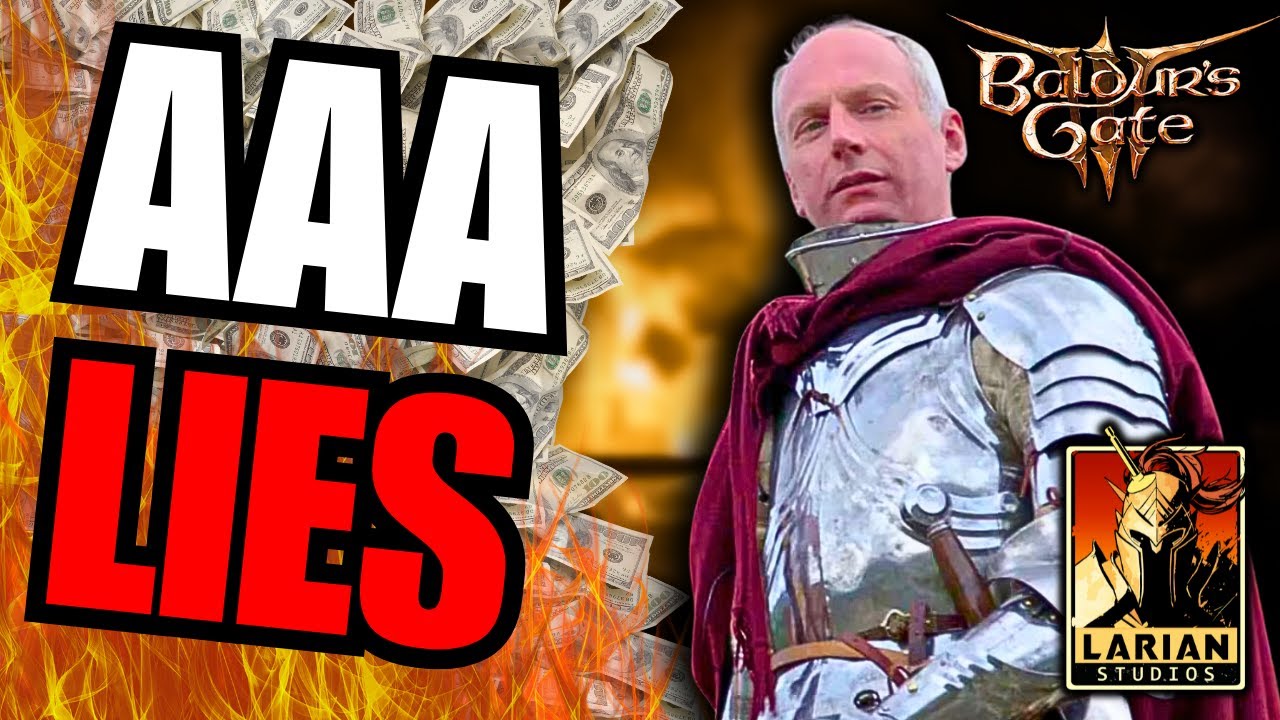
Darrah’s Critique: AAA’s Creative Stranglehold
Darrah’s remarks center on Baldur’s Gate 3’s unprecedented success and why its model is hard to replicate. Launched in August 2023 by Larian Studios, the Dungeons & Dragons-based RPG swept all five major Game of the Year awards, sold 20 million copies, and scored 96/100 on Metacritic, making it a genre benchmark. Its 174 hours of cinematics, 17,000 ending variations, and player-driven storytelling set a new standard, but Darrah argues its impact on AAA development will be “muted” due to industry conventions. “Baldur’s Gate 3 was immensely successful—and [it] did change the landscape in terms of who was willing to look at an RPG,” he said, but corporate structures limit most studios’ ability to emulate it.
He describes Baldur’s Gate 3 as a “perfect storm” of factors: Larian’s decades of RPG expertise, a mature engine from Divinity: Original Sin, D&D’s brand power, three years of Early Access funding, and autonomy from publisher meddling. AAA studios, Darrah notes, face “punishing environments” with executives imposing tight deadlines and safe, market-driven formulas. BioWare’s own struggles—Anthem’s 2019 flop, Mass Effect: Andromeda’s lukewarm reception, and Dragon Age: The Veilguard’s decade-long development hell—illustrate this. “Most big studios with execs looming over the development teams foster incredibly punishing environments with little room for agility,” Darrah’s critique implies, as echoed by PC Gamer’s Harvey Randall.
Darrah’s point isn’t to diminish Larian’s achievement but to highlight structural barriers. Unlike Larian, which operates independently, AAA studios like BioWare (under EA) or Bethesda (under Microsoft) face pressure to prioritize live-service models, microtransactions, or broad appeal over narrative depth. This, he suggests, stifles the risky, ambitious creativity that defined RPG classics like Baldur’s Gate (1998) or Knights of the Old Republic (2003), both BioWare triumphs.
Baldur’s Gate 3: A Rebel’s Triumph
Larian’s success underscores Darrah’s argument. With a $100 million budget and a 400-person team, Baldur’s Gate 3 was ambitious but leaner than AAA behemoths like Starfield (450 developers, $200 million). Its Early Access phase refined gameplay through community feedback, a luxury AAA studios rarely afford due to rigid schedules. Larian’s CEO, Swen Vincke, rejected DLC or microtransactions, focusing on a complete experience, a move actor Neil Newbon praised for prioritizing players. The result: a game that rewards imagination with mechanics like dice-rolling and exploitable systems, as GamesRadar noted, breaking free from the “rigid paradigms” of modern titles.
The game’s cultural impact is undeniable. It broadened RPG appeal, per Darrah, proving demand for complex, choice-driven narratives. Posts on X from @playswave_com highlight its genre-expanding influence, though Darrah warns its development model isn’t a blueprint for AAA. Larian’s autonomy allowed it to sidestep the “violent tight-rope” of economics and artistic integrity that Michael Douse, Larian’s publishing director, says plagues AAA games, often landing them in the “70s and 80s” on Metacritic. Baldur’s Gate 3’s 96 score contrasts with Starfield’s 83 and The Veilguard’s 82, underscoring the gap.
The AAA RPG Crisis: A Genre in Peril?
Darrah’s critique reflects a broader crisis in AAA RPGs. BioWare, once a genre titan, has faced a “rough few years,” per Rolling Stone, with layoffs, Anthem’s failure, and The Veilguard’s troubled development, which shifted from multiplayer to single-player after Star Wars Jedi: Fallen Order’s success. The Veilguard earned praise (IGN’s 8/10) but didn’t match Baldur’s Gate 3’s impact, with fans on Reddit’s r/DragonAge lamenting its streamlined combat and shorter scope. BioWare’s February 2025 restructuring, shifting staff to Mass Effect 5 and laying off others, signals ongoing turmoil.
Bethesda, too, has faltered. Starfield (2023), its first new IP in 25 years, was criticized for empty planets and outdated mechanics, scoring lower than Elden Ring (94). PC Gamer argues that Baldur’s Gate 3 and Kingdom Come: Deliverance 2—ambitious, “weird” RPGs—outshine Bethesda and BioWare’s safer offerings, signaling a shift toward innovative studios. Elden Ring and Disco Elysium further prove players crave “uncompromising” experiences over AAA polish, a trend Darrah’s critique aligns with.
The AAA model’s flaws are structural. Larian’s Douse notes that “the Big Product Market is failing to resonate” due to economics prioritizing scale over creativity. Cyberpunk 2077’s buggy 2020 launch and Warcraft 3: Reforged’s failure show how corporate meddling can derail projects. In contrast, Larian’s agility—modulating scope without C-suite interference, per academic Evan Torner—let it deliver a polished game. AAA studios, Darrah suggests, are trapped by risk-averse publishers, unable to take the six-year, community-driven approach Baldur’s Gate 3 required.
Community and Industry Reactions
The gaming community is divided. Fans on r/BaldursGate3 argue that dismissing Baldur’s Gate 3 as an “anomaly” excuses AAA mediocrity, pointing to Larian’s indie roots as proof that passion trumps budget. “To say the audience should lower their standards because you have a lower budget is nonsense,” one user wrote. Others, like indie developer Damien Crawford, worry its dominance makes pitching similar RPGs harder, as publishers expect Larian’s scale. On X, @GamesRadar echoes Darrah’s view, noting that Baldur’s Gate 3’s “perfect storm” isn’t replicable for most.
Developers are introspective. BioWare’s John Epler told Kotaku that Baldur’s Gate 3’s success “emboldened” The Veilguard’s team, silencing naysayers about single-player RPGs. Yet, Darrah’s critique suggests BioWare’s corporate constraints limited its ambition. Larian’s move to its next project, codenamed Excalibur, and its “media blackout” signal confidence in forging new paths, while BioWare shifts focus to Mass Effect 5, hoping to recapture past glory.
Critics like PC Gamer’s Robin Valentine see hope beyond AAA. “The future of RPGs may just not lie with AAA studios like BioWare,” they wrote, pointing to Elden Ring and Disco Elysium as evidence of a genre renaissance driven by smaller, bolder studios. This aligns with Darrah’s view that Baldur’s Gate 3’s influence is more about audience appetite than development practices.
Implications: A Fork in the Road
Darrah’s critique isn’t just a warning—it’s a call to rethink AAA RPGs. Baldur’s Gate 3 proves players crave “hyper-engaging, focused experiences,” as Douse noted of Stalker 2’s success. Yet, AAA studios’ reliance on bloated budgets and safe formulas risks alienating fans. South of Midnight’s 1,411-player Steam flop and Assassin’s Creed Shadows’ Japan backlash show how cultural and creative missteps compound economic pressures.
The genre’s future may lie in a hybrid model: AAA resources with indie agility. Kingdom Come: Deliverance 2’s sales and The Witcher 3 director’s Blood of Dawnwalker, inspired by D&D, suggest smaller teams can rival AAA with focused visions. Larian’s pricing freedom, as Douse told GamesRadar amid Nintendo Switch 2’s $80 game controversy, shows developers can prioritize audiences over retail norms.
For BioWare, the path is uncertain. Mass Effect 5, expected to leverage The Veilguard’s lessons, could restore its reputation if it embraces player-driven storytelling. But without structural reform—less EA oversight, more creative risk—it risks repeating past failures. Darrah’s critique, while sobering, hints at hope: if AAA studios learn from Baldur’s Gate 3’s player-first ethos, they could revive the genre’s golden era.
Conclusion: A Wake-Up Call
Mark Darrah’s exposure of AAA’s flaws, set against Baldur’s Gate 3’s triumph, is a wake-up call. The RPG genre thrives when developers prioritize imagination and player agency, as Larian did, over corporate mandates. While AAA’s scale can produce spectacle, its rigidity is “killing” the soul of RPGs, as Darrah warns. As Larian moves to Excalibur and BioWare to Mass Effect 5, the industry faces a choice: cling to outdated models or embrace the bold, weird future Baldur’s Gate 3 heralds. For now, the genre’s heart beats strongest outside the AAA machine.
News
Elder Scrolls IV: Oblivion Remastered Players Discover Simple Setting Change That Instantly Boosts Performance—Find Out What’s Got Everyone Buzzing Below!
Elder Scrolls IV: Oblivion Remastered Players Discover Simple Setting Change That Instantly Boosts Performance—Find Out What’s Got Everyone Buzzing Below! The recent release of The Elder Scrolls IV: Oblivion Remastered has captivated both longtime fans and newcomers with its stunning…

STAR WARS: BATTLE OF HOTH UNVEILED: Days of Wonder’s Epic Board Game Brings Hoth’s Iconic Clash to Your Tabletop! Command Rebels or Imperials in a Fast-Paced Strategy Showdown That’s Got Fans Buzzing—Discover Why This Game Is a Must-Have! ❄️
Star Wars: Battle of Hoth Board Game Unleashes Epic Tabletop Warfare in a Galaxy Far, Far Away In the vast universe of Star Wars, few moments are as iconic as the Battle of Hoth from The Empire Strikes Back. The…
CYBERPUNK 2077 FANS, CLEAR YOUR CALENDARS FOR JULY 17: CD Projekt Red’s Mysterious Reveal Promises a Game-Changing Night City Update! A Highly Anticipated Event Sparks Feverish Hype and Speculation—Discover Why This Date Has the Gaming World Electrified! 🌃
Cyberpunk 2077’s July 17 Reveal: A Night City Bombshell That Has Fans Buzzing In the neon-lit world of Cyberpunk 2077, where corporate intrigue and cybernetic chaos reign, CD Projekt Red has mastered the art of keeping fans on edge. Since…
ELDER SCROLLS: OBLIVION REMASTERED’S SHOCKING SECRET: Hidden Door Warps Players to Game’s Epic Finale! Bethesda’s Revamped RPG Unveils a Mysterious Shortcut That’s Got Fans Buzzing with Excitement and Debate—Uncover Why This Discovery Is Taking Tamriel by Storm! 🚪
Elder Scrolls: Oblivion Remastered’s Secret Door: A Shortcut to the Finale That’s Stunning Fans In the storied legacy of The Elder Scrolls, few games hold the nostalgic weight of The Elder Scrolls IV: Oblivion. Released in 2006, its vibrant world…
SKYRIM REBORN IN UNREAL ENGINE 5: Bethesda’s Official Remake of a Fantasy Epic Stuns Fans with Next-Gen Glory! Tamriel’s Legendary World Revamped with Jaw-Dropping Visuals Ignites a Frenzy of Hype—Dive into Why This Remaster Has Gamers Spellbound! 🐉
Skyrim’s Unreal Engine 5 Remake: A Legendary RPG Reborn in Next-Gen Splendor In the annals of gaming history, few titles have left as indelible a mark as The Elder Scrolls V: Skyrim. Since its 2011 release, Bethesda’s open-world masterpiece has…
DARK SOULS 4 TAKES A BACKSEAT: New RPG Blending Skyrim’s Epic Scope with Bloodborne’s Brutal Horror Steals the Spotlight! A Groundbreaking Fusion of Open-World Adventure and Gothic Terror Has Fans Buzzing with Hype—Discover Why This Game Is the Talk of the Gaming World! 🎮
What a combo this headline is – Dark Souls, Bloodborne, Skyrim, all absolute bangers that, if merged together, could make for a hell of a game, right? I feel like we’re setting you up for something special, but this is all pulled…
End of content
No more pages to load