Pentagon Purge or Political Ploy? Trump’s Alleged Plan to Replace Pete Hegseth Rocks Washington
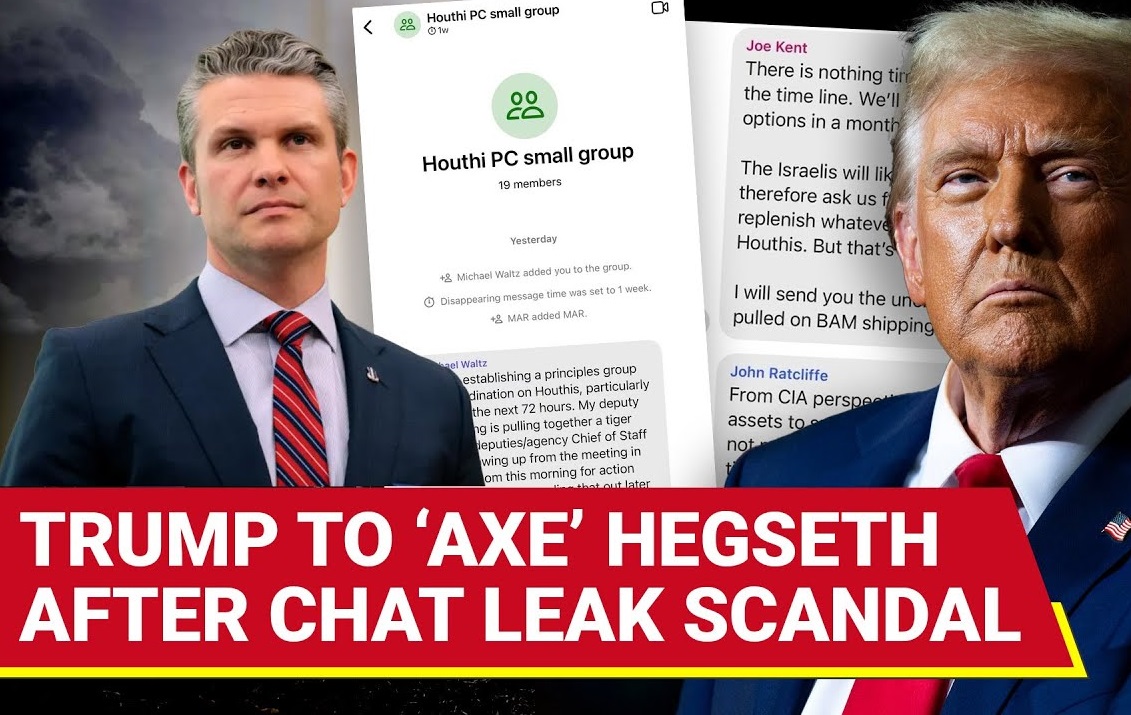
On April 21, 2025, a bombshell report from NPR sent shockwaves through Washington, claiming that President Donald Trump’s administration had begun vetting candidates to replace Defense Secretary Pete Hegseth. The news, amplified by viral X posts with headlines like “Trump FIRES Hegseth? Bombshell Report Confirms White House Vetting New Defence Secretary,” followed weeks of controversy surrounding Hegseth’s tenure. From sharing sensitive military details in unsecured Signal chats to firing top Pentagon aides, Hegseth’s brief stint as defense secretary has been marked by chaos. But is Trump truly ready to oust his loyal ally, or is this another media-fueled frenzy? This article delves into the allegations, Hegseth’s tumultuous record, White House responses, and the broader implications, drawing on web sources and X sentiment for a comprehensive look.
The Spark: NPR’s Explosive Claim
The controversy erupted when NPR reported on April 21, 2025, that the White House was quietly searching for a new defense secretary, citing a U.S. official unauthorized to speak publicly. The report linked the move to Hegseth’s latest scandal: sharing classified details of U.S. airstrikes on Houthi targets in Yemen via a Signal group chat that included his wife, brother, and personal lawyer. This followed a March 2025 incident where Hegseth inadvertently shared similar details in another Signal chat that included a journalist, as reported by The Atlantic. The NPR story, based on a single anonymous source, fueled speculation, with X users like @TristanSnell proclaiming, “TRUMP IS DUMPING HEGSETH,” while others, like @SquidwardBrian, dismissed it as “bullshit” from a biased source.
White House Press Secretary Karoline Leavitt swiftly denied the report, posting on X that Trump “stands strongly” behind Hegseth and calling the NPR story “FAKE NEWS.” Speaking at the White House Easter Egg Roll, Trump echoed her, saying, “Pete’s doing a great job—ask the Houthis how he’s doing,” and dismissing concerns as a “waste of time.” Despite these denials, the report gained traction, with outlets like Reuters and The Washington Post noting growing doubts about Hegseth’s tenure.
Pete Hegseth: A Controversial Choice
To understand the stakes, it’s worth revisiting Hegseth’s background. A 44-year-old Army veteran and former Fox News host, Hegseth was a surprise pick for defense secretary in November 2024. With deployments in Iraq and Afghanistan, a Princeton undergraduate degree, and a Harvard master’s, Hegseth brought credentials but lacked senior national security experience. His nomination, announced by Trump on CBS News, emphasized his “America First” stance and criticism of “woke” military policies, including diversity initiatives. However, his confirmation faced hurdles, with allegations of excessive drinking, financial mismanagement at veterans’ organizations, and a 2017 sexual assault claim he denied.
The Senate confirmed Hegseth on January 24, 2025, with Vice President JD Vance casting a tiebreaking vote after Republican Senators Mitch McConnell, Susan Collins, and Lisa Murkowski joined Democrats in opposition. Critics, like Senator Tammy Duckworth, called him “unfit,” citing his lack of management experience and inflammatory comments, such as questioning women in combat roles. Supporters, including Senator Joni Ernst, praised his combat record and alignment with Trump’s agenda.
The Signal Chat Scandals: A Pattern of Recklessness?
Hegseth’s tenure has been defined by two high-profile security breaches. In March 2025, The Atlantic revealed that Hegseth shared details of U.S. airstrikes on Houthi rebels in a Signal chat that accidentally included Jeffrey Goldberg, the magazine’s editor-in-chief. The chat, initiated by National Security Adviser Michael Waltz, discussed precise weapons packages and timing, raising alarms about classified information on an unsecure platform. Hegseth denied sharing classified data, and Trump claimed ignorance, but the incident, dubbed “SignalGate,” prompted a Pentagon Inspector General probe.
The second incident, reported by The New York Times on April 20, 2025, involved a Signal chat named “Defense | Team Huddle,” created by Hegseth. This group, including his wife Jennifer Rauchet (a former Fox News producer), brother Phil, and lawyer Tim Parlatore, received details about March 15 airstrikes, including F/A-18 Hornet flight schedules. Sources confirmed to NBC News that Hegseth used his personal phone, despite prior warnings about unsecure systems. Democrats, like Senator Jack Reed, called it a “reckless disregard” for protocol, while Senator Don Bacon, a Republican, deemed it “indefensible,” stopping short of demanding Hegseth’s resignation.
The White House insisted no classified information was shared, but critics, including former Pentagon spokesperson John Ullyot, argued Hegseth’s actions endangered national security. Ullyot’s Politico op-ed described a “full-blown meltdown” at the Pentagon, citing infighting and Hegseth’s firing of top aides.
Pentagon Purge: Internal Chaos
Hegseth’s leadership has been further strained by a series of firings. In April 2025, he dismissed three senior officials—Dan Caldwell, Colin Carroll, and Darin Selnick—allegedly for leaking information. The trio, in a joint X statement, called the accusations “baseless” and decried their treatment. Caldwell, a key adviser, told Tucker Carlson he was given no reason for his firing. Ullyot, who resigned voluntarily, claimed Hegseth’s team smeared the fired aides to deflect from his own failures. These departures, reported by Reuters, fueled perceptions of a Pentagon in disarray.
The firings followed Trump’s broader purge of perceived disloyal officials. On April 3, Reuters reported the dismissal of six National Security Council staffers, some linked to Secretary of State Marco Rubio, after far-right activist Laura Loomer met with Trump to discuss “vetting.” The next day, Trump fired NSA Director General Tim Haugh and his deputy Wendy Noble, prompting bipartisan criticism from lawmakers like Representative Jim Himes, who called it a “breach of norms.” Hegseth’s own firings align with this pattern, raising questions about loyalty-driven chaos in Trump’s administration.
White House Response: Loyalty or Denial?
Trump’s public support for Hegseth, echoed by Leavitt, reflects his reluctance to admit missteps. At the Easter Egg Roll, Trump quipped that Hegseth was “getting rid of bad people,” framing the firings as necessary. Hegseth blamed “disgruntled former employees” for the leaks, calling media reports “hoaxsters.” Donald Trump Jr. reinforced this on X, attacking Ullyot and rallying the MAGA base. However, Politico reported private doubts among Trump’s allies, with one source suggesting Hegseth might “implode on his own” due to the Pentagon’s “instability.” Another speculated Trump could marginalize rather than fire him, given the defense secretary’s critical role.
Leavitt’s dismissal of the NPR report as based on “one anonymous source” aimed to discredit it, but the story’s persistence across outlets like NBC News and Axios suggests deeper concerns. Representative Don Bacon’s public criticism, calling Hegseth’s actions “unacceptable,” marked a rare Republican break from Trump’s line, hinting at potential Senate pressure if the vetting rumors escalate.
Public Sentiment on X: A Divided Narrative
X posts reveal a polarized response. Supporters, like @horsescatsdogs1, speculated about NPR’s motives, tying it to board member Katherine Maher’s Signal Foundation role. Critics, like @dave43law, branded Hegseth a “walking disaster zone,” citing his firings and mismanagement. The Senate Republicans’ X account defended Hegseth, accusing “nameless leakers” of pushing a “woke” agenda, while @TristanSnell’s claim that Hegseth’s “days are numbered” garnered significant engagement. This split reflects broader divides, with Trump’s base rallying behind Hegseth and opponents seizing on the scandal to question his fitness.
The Broader Context: Trump’s National Security Shake-Up
The Hegseth controversy fits into Trump’s aggressive reshaping of national security. His April 2025 firings of NSA chief Tim Haugh and Joint Chiefs Chairman General C.Q. Brown, reported by PBS News and The New York Times, were justified as removing “Biden holdovers.” These moves, coupled with Hegseth’s deployment of troops to the Mexican border and criticism of military diversity, signal a focus on loyalty over experience. The Guardian noted a “month of total chaos” at the Pentagon, with Ullyot’s op-ed warning of long-term damage.
The NPR report, if true, would mark a rare retreat for Trump, who pushed hard for Hegseth’s confirmation. Politico’s sources suggest Trump’s frustration with Pentagon turmoil could outweigh his loyalty, especially if Hegseth becomes a liability. The absence of named replacement candidates fuels speculation, with no clear frontrunner emerging in reports.
Conclusion: Fact or Frenzy?
As of April 21, 2025, the claim that Trump is firing Pete Hegseth remains unconfirmed. The NPR report, while explosive, relies on a single anonymous source, and White House denials, backed by Trump’s public support, cast doubt on its immediacy. Hegseth’s Signal chat scandals, coupled with his purge of Pentagon aides, have undeniably weakened his position, drawing rare Republican criticism from figures like Don Bacon. Yet, Trump’s history of standing by loyalists suggests Hegseth may survive—at least for now.
The controversy underscores the volatility of Trump’s second term, where loyalty tests and media battles shape policy. Whether Hegseth implodes or endures, the Pentagon’s chaos risks undermining national security. For now, Washington watches, and X buzzes, as the truth remains just out of reach. Readers must weigh the noise against the facts, questioning anonymous leaks and viral headlines alike.
Word count: 1500
News
Elder Scrolls IV: Oblivion Remastered Players Discover Simple Setting Change That Instantly Boosts Performance—Find Out What’s Got Everyone Buzzing Below!
Elder Scrolls IV: Oblivion Remastered Players Discover Simple Setting Change That Instantly Boosts Performance—Find Out What’s Got Everyone Buzzing Below! The recent release of The Elder Scrolls IV: Oblivion Remastered has captivated both longtime fans and newcomers with its stunning…

STAR WARS: BATTLE OF HOTH UNVEILED: Days of Wonder’s Epic Board Game Brings Hoth’s Iconic Clash to Your Tabletop! Command Rebels or Imperials in a Fast-Paced Strategy Showdown That’s Got Fans Buzzing—Discover Why This Game Is a Must-Have! ❄️
Star Wars: Battle of Hoth Board Game Unleashes Epic Tabletop Warfare in a Galaxy Far, Far Away In the vast universe of Star Wars, few moments are as iconic as the Battle of Hoth from The Empire Strikes Back. The…
CYBERPUNK 2077 FANS, CLEAR YOUR CALENDARS FOR JULY 17: CD Projekt Red’s Mysterious Reveal Promises a Game-Changing Night City Update! A Highly Anticipated Event Sparks Feverish Hype and Speculation—Discover Why This Date Has the Gaming World Electrified! 🌃
Cyberpunk 2077’s July 17 Reveal: A Night City Bombshell That Has Fans Buzzing In the neon-lit world of Cyberpunk 2077, where corporate intrigue and cybernetic chaos reign, CD Projekt Red has mastered the art of keeping fans on edge. Since…

ELDER SCROLLS: OBLIVION REMASTERED’S SHOCKING SECRET: Hidden Door Warps Players to Game’s Epic Finale! Bethesda’s Revamped RPG Unveils a Mysterious Shortcut That’s Got Fans Buzzing with Excitement and Debate—Uncover Why This Discovery Is Taking Tamriel by Storm! 🚪
Elder Scrolls: Oblivion Remastered’s Secret Door: A Shortcut to the Finale That’s Stunning Fans In the storied legacy of The Elder Scrolls, few games hold the nostalgic weight of The Elder Scrolls IV: Oblivion. Released in 2006, its vibrant world…

SKYRIM REBORN IN UNREAL ENGINE 5: Bethesda’s Official Remake of a Fantasy Epic Stuns Fans with Next-Gen Glory! Tamriel’s Legendary World Revamped with Jaw-Dropping Visuals Ignites a Frenzy of Hype—Dive into Why This Remaster Has Gamers Spellbound! 🐉
Skyrim’s Unreal Engine 5 Remake: A Legendary RPG Reborn in Next-Gen Splendor In the annals of gaming history, few titles have left as indelible a mark as The Elder Scrolls V: Skyrim. Since its 2011 release, Bethesda’s open-world masterpiece has…
DARK SOULS 4 TAKES A BACKSEAT: New RPG Blending Skyrim’s Epic Scope with Bloodborne’s Brutal Horror Steals the Spotlight! A Groundbreaking Fusion of Open-World Adventure and Gothic Terror Has Fans Buzzing with Hype—Discover Why This Game Is the Talk of the Gaming World! 🎮
What a combo this headline is – Dark Souls, Bloodborne, Skyrim, all absolute bangers that, if merged together, could make for a hell of a game, right? I feel like we’re setting you up for something special, but this is all pulled…
End of content
No more pages to load