South of Midnight’s Steam Flop and Sweet Baby Inc. Controversy: A Deep South Disaster?
South of Midnight, an action-adventure game developed by Compulsion Games and published by Xbox Game Studios, launched on April 8, 2025, with high hopes of capturing players with its Southern Gothic folklore and stop-motion-inspired art. However, the game’s Steam debut was a disaster, peaking at just 1,411 concurrent players, far below expectations for a Microsoft-backed title. Compounding the issue, controversy surrounding Sweet Baby Inc., a narrative consultancy involved in the game, has erupted, with community manager Katie Robinson’s past statements—labeled “racist” and “anti-gamer” by critics—fueling backlash. Posts on X, such as @SmashJT’s claim of a mere 184 players at one point, and media reports from That Park Place and Fandom Pulse have amplified the narrative of failure. This article explores the game’s launch, the Sweet Baby Inc. drama, and what it means for Compulsion Games and the industry.
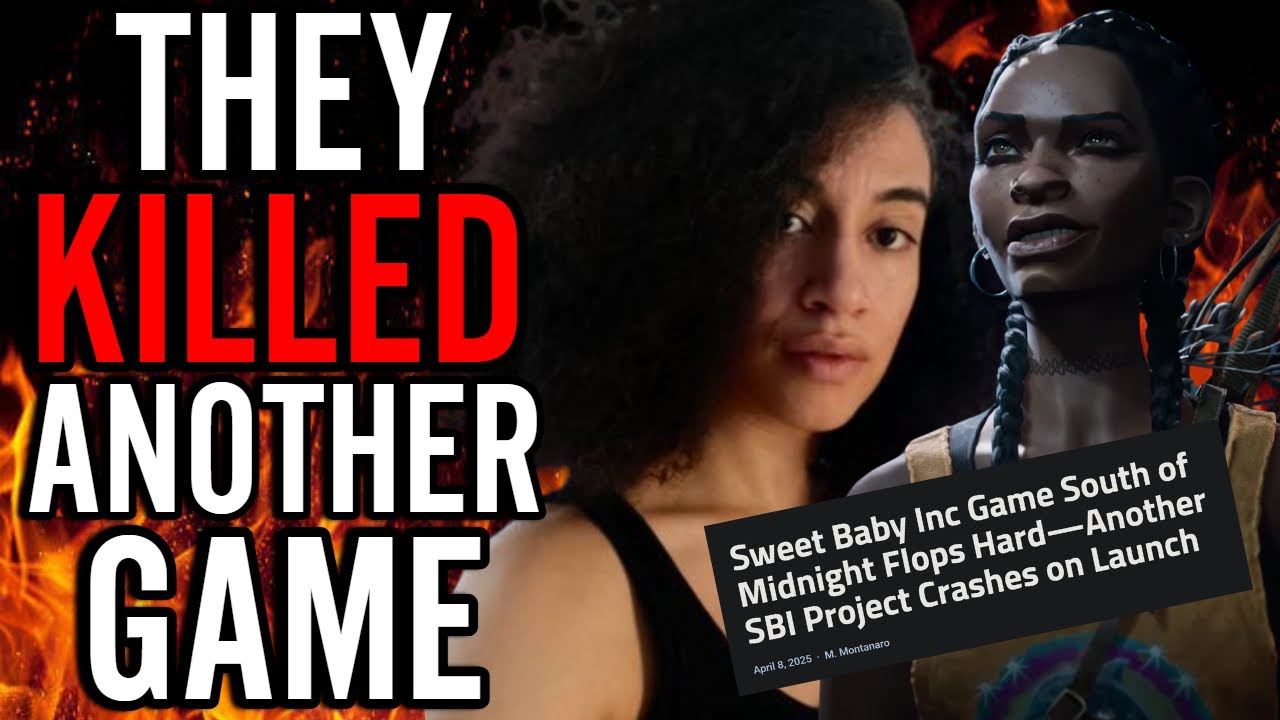
A Disastrous Launch: Steam Numbers Tell a Grim Story
South of Midnight casts players as Hazel, a Weaver with magical powers, navigating a fictionalized Deep South to confront mythical creatures and unravel her family’s past. Marketed as a AA title with a unique stop-motion aesthetic, it launched on Xbox Series X/S, Windows, and Game Pass, with Steam early access starting April 3, 2025. Despite a 92% positive rating from Steam reviews, praising its visuals and atmosphere, the game failed to attract players. SteamDB reported a peak of 1,411 concurrent players on launch day, dwarfed by older Xbox titles like Sunset Overdrive (2,326) and Hellblade II (3,982).
Analysts and fans expected at least 2,000–3,000 players for a first-party Xbox release, but South of Midnight’s numbers are among the lowest for a Game Pass day-one title. Critics like SmashJT called it “DOA,” arguing that even Game Pass availability didn’t drive interest. The game’s 7.5-hour runtime, per YouTube playthroughs, has been mocked as too short for a $40 title, with Eurogamer criticizing its “rote platforming” and “ill-thought-out combat.” On NeoGAF, users compared it unfavorably to Concord, which peaked at 2,388 players before its shutdown, labeling it a “weakest Game Pass release.”
Microsoft’s marketing efforts, including showcases at Developer Direct, didn’t translate to hype. Some argue the Game Pass model cannibalized Steam sales, as players opted for the subscription over a $40 purchase. However, defenders on Reddit’s r/XboxGamePass note that Xbox and Game Pass player counts—unavailable publicly—could be higher, and Steam’s niche AA audience may not reflect total engagement. Still, the numbers are a blow to Compulsion Games, already reeling from staff turnover since We Happy Few (2018).
Sweet Baby Inc. and the “Lunatic” Controversy
The game’s association with Sweet Baby Inc., a Montreal-based narrative consultancy, has been a lightning rod. Founded in 2018 by Kim Belair, Sweet Baby advises on diversity, equity, and inclusion (DEI) in game narratives, working on titles like God of War Ragnarök and Alan Wake 2. For South of Midnight, Sweet Baby contributed to Hazel’s story, with a Black writer hired to ensure authenticity in depicting the Deep South. However, the studio’s involvement has drawn ire from gamers skeptical of “woke” agendas, with X posts like @AkiraToriyama’s claiming, “Everything Sweet Baby touches flops.”
The controversy intensified due to Katie Robinson, Compulsion’s community manager, known as @PikaChulita. In 2022, Robinson told Refinery29 she tweeted that “white male gamers were a mistake,” and in February 2024, she posted, “Honestly? I hate gamers.” These statements, resurfaced by critics like @Grummz, sparked accusations of racism and anti-gamer sentiment. On NeoGAF and Reddit’s r/KotakuInAction, users cited Robinson’s comments as evidence of a toxic studio culture, with one calling her a “lunatic” whose presence alienates players.
Sweet Baby’s broader reputation hasn’t helped. A Steam curator group, “Sweet Baby Inc detected,” with over 355,000 followers, flags their projects as “woke,” leading to review bombing of games like Flintlock: The Siege of Dawn (648 peak players) and Unknown 9: Awakening (285). Critics argue Sweet Baby prioritizes ideology over gameplay, with South of Midnight’s race-swapped protagonist—originally a white, red-haired woman, per @Grummz—seen as pandering. Defenders, like a Steam Community poster, argue the “woke” label is overblown, noting no overt DEI themes in the game and citing successful Sweet Baby projects like Spider-Man 2.
Studio Turmoil and Cultural Missteps
Compulsion Games’ internal struggles have compounded the issue. After Microsoft’s 2018 acquisition, less than 10% of the We Happy Few team remains, with ex-developers citing disillusionment over studio politics and DEI-driven promotions. The Montreal-based team, predominantly white, reportedly felt uneasy depicting the Deep South, relying on Sweet Baby and a single Black writer for authenticity. Critics argue this led to a disjointed narrative, with TheGamer calling the story “almost good” but overly expository, spelling out themes of trauma without depth.
Compulsion’s public relations missteps haven’t helped. The studio blocked critics like SmashJT on X after he requested a review code, a move labeled “cowardly” and “insecure.” Robinson’s continued employment, despite her inflammatory comments, has fueled perceptions of a studio out of touch with its audience. On r/KotakuInAction, users speculated that Microsoft and Sweet Baby’s influence turned a promising Southern Gothic tale into a “DEI-infused mess.”
Community Divide: Artistry vs. Execution
Despite the backlash, South of Midnight has defenders. IGN gave it a positive review, calling it a “well-executed action-adventure” elevated by “artistry and heart.” Rock Paper Shotgun praised its “beautiful folkloric tale” and music, though it noted “unambitious” combat. On Steam, 92% of reviews are positive, with players like those on r/XboxGamePass lauding its “unique” visuals and “engaging” story, comparing it to Psychonauts or Alice: Madness Returns. One Xbox player called it “exactly what I’m looking for after a long day,” appreciating its simplicity.
Critics, however, slam its gameplay as “janky” and “boring,” with Eurogamer noting that enemies are “damage sponges” and combat lacks synergy. NeoGAF users called it “mediocre,” arguing that its $40 price and lack of customization or replayability deter players. The stop-motion animation, while visually striking, has been divisive, with some on Steam Community finding it a “massive turn-off.” The game’s short length and linear structure further alienate those expecting a deeper experience.
Industry Implications: Sweet Baby’s Tipping Point?
The flop raises questions about Sweet Baby Inc.’s viability. With multiple underperforming titles in 2024, including Flintlock and Unknown 9, rumors swirl that Sony may sever ties, per SmashJT. On X, @SmashJT celebrated the launch as a potential “end” for Sweet Baby, arguing their “identity-driven” narratives tank games. Yet, Sweet Baby’s work on hits like God of War Ragnarök suggests their influence isn’t universally detrimental, and TheGamer’s Stacey Henley called the backlash a “dogwhistle” for rejecting progressive ideas.
For Compulsion, the failure is a setback. Microsoft’s Game Pass strategy, while boosting accessibility, may dilute sales, as seen with Avowed and Indiana Jones and the Great Circle. The studio’s loss of talent and reliance on external consultants like Sweet Baby highlight broader industry issues: balancing authenticity with creative freedom in a polarized climate. The controversy echoes Assassin’s Creed Shadows’ cultural backlash in Japan, where Ubisoft faced similar accusations of disrespect.
Looking Ahead: Can South of Midnight Recover?
South of Midnight’s future depends on post-launch support and word-of-mouth. Compulsion’s patches could address combat and add content, but the damage to its reputation may be harder to mend. The Sweet Baby controversy, fueled by Robinson’s remarks, has cemented the game as a culture war flashpoint, with r/KotakuInAction users rooting for its failure as a stand against “woke” ideology. Yet, fans on Steam Community urge others to “ignore the haters,” arguing the game’s art and story deserve a chance.
The saga reflects gaming’s fraught relationship with DEI. While inclusivity can enhance storytelling, as seen in Baldur’s Gate 3, execution matters. South of Midnight’s missteps—short runtime, weak gameplay, and PR blunders—have overshadowed its potential, leaving Compulsion and Sweet Baby at a crossroads. As the industry watches, the question remains: can South of Midnight weave its way out of this mess, or is it another cautionary tale of ambition undone by controversy?
News
Elder Scrolls IV: Oblivion Remastered Players Discover Simple Setting Change That Instantly Boosts Performance—Find Out What’s Got Everyone Buzzing Below!
Elder Scrolls IV: Oblivion Remastered Players Discover Simple Setting Change That Instantly Boosts Performance—Find Out What’s Got Everyone Buzzing Below! The recent release of The Elder Scrolls IV: Oblivion Remastered has captivated both longtime fans and newcomers with its stunning…

STAR WARS: BATTLE OF HOTH UNVEILED: Days of Wonder’s Epic Board Game Brings Hoth’s Iconic Clash to Your Tabletop! Command Rebels or Imperials in a Fast-Paced Strategy Showdown That’s Got Fans Buzzing—Discover Why This Game Is a Must-Have! ❄️
Star Wars: Battle of Hoth Board Game Unleashes Epic Tabletop Warfare in a Galaxy Far, Far Away In the vast universe of Star Wars, few moments are as iconic as the Battle of Hoth from The Empire Strikes Back. The…
CYBERPUNK 2077 FANS, CLEAR YOUR CALENDARS FOR JULY 17: CD Projekt Red’s Mysterious Reveal Promises a Game-Changing Night City Update! A Highly Anticipated Event Sparks Feverish Hype and Speculation—Discover Why This Date Has the Gaming World Electrified! 🌃
Cyberpunk 2077’s July 17 Reveal: A Night City Bombshell That Has Fans Buzzing In the neon-lit world of Cyberpunk 2077, where corporate intrigue and cybernetic chaos reign, CD Projekt Red has mastered the art of keeping fans on edge. Since…
ELDER SCROLLS: OBLIVION REMASTERED’S SHOCKING SECRET: Hidden Door Warps Players to Game’s Epic Finale! Bethesda’s Revamped RPG Unveils a Mysterious Shortcut That’s Got Fans Buzzing with Excitement and Debate—Uncover Why This Discovery Is Taking Tamriel by Storm! 🚪
Elder Scrolls: Oblivion Remastered’s Secret Door: A Shortcut to the Finale That’s Stunning Fans In the storied legacy of The Elder Scrolls, few games hold the nostalgic weight of The Elder Scrolls IV: Oblivion. Released in 2006, its vibrant world…
SKYRIM REBORN IN UNREAL ENGINE 5: Bethesda’s Official Remake of a Fantasy Epic Stuns Fans with Next-Gen Glory! Tamriel’s Legendary World Revamped with Jaw-Dropping Visuals Ignites a Frenzy of Hype—Dive into Why This Remaster Has Gamers Spellbound! 🐉
Skyrim’s Unreal Engine 5 Remake: A Legendary RPG Reborn in Next-Gen Splendor In the annals of gaming history, few titles have left as indelible a mark as The Elder Scrolls V: Skyrim. Since its 2011 release, Bethesda’s open-world masterpiece has…
DARK SOULS 4 TAKES A BACKSEAT: New RPG Blending Skyrim’s Epic Scope with Bloodborne’s Brutal Horror Steals the Spotlight! A Groundbreaking Fusion of Open-World Adventure and Gothic Terror Has Fans Buzzing with Hype—Discover Why This Game Is the Talk of the Gaming World! 🎮
What a combo this headline is – Dark Souls, Bloodborne, Skyrim, all absolute bangers that, if merged together, could make for a hell of a game, right? I feel like we’re setting you up for something special, but this is all pulled…
End of content
No more pages to load