“She Moved Into My Life Before I Moved Out”: Betrayal and Blended Families in the Shadow of Tragedy
The dissolution of a marriage often leaves scars that time struggles to heal, especially when children are caught in the crossfire. “She moved into my life before I moved out,” Tawnia McGeehan allegedly confided to a friend upon discovering that her ex-husband Brad Smith had introduced his new wife, McKennly Smith, to their daughter Addi Smith mere weeks after their separation. This raw expression of betrayal highlights the rapid reconfiguration of family dynamics that fueled a nine-year custody battle, culminating in a heartbreaking murder-suicide. Parental exchange logs, as detailed in court records, capture a heated argument revolving around the fundamental question: “Who gets to define family?” In the quiet suburbs of West Jordan, Utah, what began as a partnership devolved into a war of words, accusations, and legal maneuvers, exposing the vulnerabilities of post-divorce parenting and the devastating impact on mental health.
Tawnia McGeehan, 38, a devoted mother immersed in the world of competitive cheerleading, and Brad Smith, a father who swiftly rebuilt his life, shared custody of their 11-year-old daughter Addi until tragedy struck in February 2026. Their story, pieced together from court documents, social media posts, and interviews with those close to the family, reveals a tapestry of resentment woven from infidelity suspicions, parental alienation claims, and the intrusion of new partners into fragile family structures.

ksl.com
Court records reveal Utah mom’s legal issues years before Las Vegas murder-suicide | KSL.com
The Seeds of Separation: A Marriage Unravels
Tawnia and Brad’s union produced Addi in 2013, a vibrant child whose love for gymnastics and cheerleading became a beacon in her mother’s life. Family snapshots from Utah’s stunning red rock canyons show Tawnia and Addi smiling together, embodying the joy that once defined their bond. Yet, by January 2015, irreconcilable differences prompted Tawnia to file for divorce in Utah’s 4th District Court. The proceedings finalized in 2017, but the separation’s immediate aftermath set the tone for years of conflict.
Initial temporary orders granted Tawnia primary physical custody, with Brad sharing joint legal custody and scheduled parenting time. However, Brad’s quick transition to a new relationship intensified Tawnia’s sense of displacement. Reports indicate Brad introduced McKennly to Addi shortly after the separation, a move that Tawnia perceived as an invasion of her still-fresh familial space. “She moved into my life before I moved out,” she allegedly lamented, capturing the blurred lines between ending one chapter and beginning another.
Brad’s 2016 Facebook post selling his wedding ring with the biting comment, “I only wore the ring for a year,” publicly underscored the acrimony. By 2020, Brad married McKennly, who quickly integrated into Addi’s life, referring to her as “my daughter” in social media tributes. This blending of families, while common in modern divorces, became a flashpoint. Tawnia, battling lifelong depression, felt sidelined, her role as primary caregiver challenged by the new maternal figure.

ksltv.com
West Jordan neighborhood grieves after mother-daughter murder‑suicide – KSLTV.com
Psychologists note that introducing new partners early in separations can exacerbate feelings of betrayal, particularly for the left-behind spouse. Dr. Susan Heitler, a family therapist, explains in general terms that such actions can trigger “abandonment trauma,” leading to heightened conflict in custody arrangements.
The Custody Crucible: Defining Family Amidst Dispute
The custody battle, spanning from 2015 to 2024, involved over 350 court filings, many sealed to protect privacy. Parental exchange logs, part of these records, document intense arguments, including one centered on “who gets to define family.” This phrase encapsulated Tawnia’s frustration over McKennly’s involvement, from attending Addi’s events to participating in daily decisions.
In 2020, a pivotal ruling temporarily awarded Brad sole physical custody, citing Tawnia’s “behavior on the spectrum of parental alienation” and an act of domestic violence committed in Addi’s presence. The judge praised Brad’s understanding of Addi’s needs, restricting Tawnia to supervised visits. Tawnia fought back, filing for a restraining order in 2021, alleging McKennly violated court terms by recording custody exchanges. This incident highlighted the distrust: Tawnia viewed McKennly not as a stepmother but as an interloper undermining her authority.
By May 2024, the court restored joint legal and physical custody on a week-on, week-off basis, deeming both parents “fit and proper.” However, the order imposed draconian rules to minimize contact: handoffs at school or the Herriman Police Department with parents parking five spaces apart; no filming; no disparagement; and communication via the Our Family Wizard app. Brad was ordered to pay $288 monthly child support, though he accumulated over $9,600 in arrears.

dreamstime.com
Custody Battle Stock Illustrations – 103 Custody Battle Stock Illustrations, Vectors & Clipart – Dreamstime
Accusations flew both ways. Tawnia faced custodial interference charges, later dismissed. Brad’s camp alleged alienation tactics, while Tawnia’s filings pointed to privacy breaches by McKennly. Emails and texts, now under investigation, include McKennly’s message titled “Custody Changes Everything,” sent 48 hours before a key event. These exchanges reflect the ongoing power struggle over Addi’s upbringing.
High-conflict custodies like this affect millions annually in the U.S., with alienation claims often weaponized. According to the American Psychological Association, such battles can lead to chronic stress, depression, and, in extreme cases, tragic outcomes.
The Cheer World: A Double-Edged Sword
Addi’s passion for cheerleading with Utah Xtreme Cheer (UXC) provided solace amid the turmoil. Photos of the team, clad in sparkling uniforms, capture moments of triumph at competitions.

utahxtremecheer.com
Utah Xtreme Cheer Home
Tawnia, a quintessential “dance mom,” volunteered extensively, her life intertwined with Addi’s pursuits. However, this community also amplified stresses. Tawnia received “mean texts” from other moms, blaming Addi for team errors like dropped stunts. One confrontation in a waiting room escalated tensions.
McKennly’s presence at events further strained relations. Brad admitted to disputes over Addi’s travel schedule, with McKennly often involved. For Tawnia, who confided feeling “betrayed” by the new family’s dynamics, these intrusions compounded her isolation.

utahxtremecheer.com
Utah Xtreme Cheer Home
The competitive cheer environment, while empowering for young athletes, can foster toxic parental interactions. Experts like those from the Positive Coaching Alliance warn that “mom bullying” in youth sports contributes to mental health crises.
The Fatal Weekend: Las Vegas and Loss
The JAMZ National Cheer Competition in Las Vegas was meant to be a highlight. Tawnia and Addi checked into the Rio Hotel & Casino on February 14, 2026, but never appeared. Teammates’ social media pleas prompted welfare checks. On February 16, authorities discovered their bodies: Addi from a gunshot wound (homicide), Tawnia from self-inflicted injury (suicide).

tripadvisor.com
RIO HOTEL & CASINO – Updated 2026 Prices & Resort Reviews (Las Vegas, NV)
A sealed envelope on the nightstand, contents undisclosed, may hold clues. Connie McGeehan, Tawnia’s mother, hinted at unseen pressures, including custody strains and community bullying. Tawnia’s depression, lifelong but reportedly improving, likely played a role.
Aftermath: Grief, Reflection, and Reform
Brad, shattered, initiated a GoFundMe through brother Greg, raising funds for funerals. McKennly mourned Addi publicly, her bond evident despite tensions. UXC paid tribute to Addi’s spirit, dedicating performances in her memory.
Connie defended Tawnia, promising the “real truth” would emerge. Legal experts question the restoration of joint custody despite violence findings. This case spotlights family court flaws, where alienation allegations can eclipse abuse concerns.
Broader implications urge mental health integration in custodies. Mandated therapy and support, as in progressive states, could prevent escalations. The National Alliance on Mental Illness emphasizes divorce’s role in worsening depression.
In youth sports, addressing parental toxicity is crucial. UXC’s response exemplifies community healing, but prevention demands vigilance.
A Fractured Legacy: Who Defines Family?
Tawnia’s alleged words, “She moved into my life before I moved out,” and the argument over defining family encapsulate the pain of blended realities. From partnership to tragedy, this saga warns of ignored emotional wounds. Addi’s bright life, extinguished too soon, calls for empathy, reform, and a redefinition of family centered on children’s well-being.
As society reflects, let this be a catalyst: turning betrayal’s sting into bridges of support, ensuring no more families fracture irreparably.
News

BREAKING: NEW DEVELOPMENTS EMERGE IN THE HENRY NOWAK CASE
BREAKING: NEW DEVELOPMENTS EMERGE IN THE HENRY NOWAK CASE The investigation surrounding Henry Nowak has taken another significant turn after authorities announced additional charges. The latest legal development is being described as a major shift in the case, with many…

UNBEARABL — HENRY NOWAK’S FATHER SPEAKS OUT AFTER THE SENTENCING
UNBEARABL — HENRY NOWAK’S FATHER SPEAKS OUT AFTER THE SENTENCING In an emotional public statement, Henry Nowak’s father has strongly criticized the way authorities handled his son’s final hours, describing the experience as “unbearable.” As the person responsible was sentenced,…
“THE DNA DIDN’T MATCH HIM.” 😳🚢 A major twist has emerged in the Anna Kepner case after investigators revealed DNA from an unknown teenage male was found during the cruise ship investigation 👀 👇 But it’s the single unidentified fingerprint that reportedly still doesn’t belong to anyone in the case that is now raising even more questions
New questions raised over Anna Kepner’s Carnival cruise murder after DNA from unknown male minor found Anna Kepner, 18, allegedly had sex with an unknown male juvenile aboard a Carnival cruise ship shortly before her shocking death, federal prosecutors revealed….

He’s changed: Ryan Willis McFarland, the son of the man accused of killing six family members before committing suicide, leaving his only son grieving the loss of his entire family, has officially spoken out to recount everything that happened, revealing his motives
Son loses entire family after father kills 6 before turning gun on himself, police say Six people were killed in an Iowa town before the gunman fatally shot himself, according to local police. Muscatine police said 52-year-old Ryan Willis McFarland…
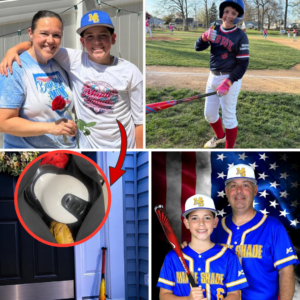
“If only I had looked back one more time…”: The father of 12-year-old Xavier Taylor says there’s a small detail hidden in the last family photo taken that afternoon, and now he can’t stop staring at it
In the dim glow of a hospital room at University Hospital in San Antonio, where the rhythmic beeps of life-support machines formed a constant backdrop to whispered prayers, the father of 12-year-old Xavier Taylor found himself trapped in an endless…
THEY DIDN’T REALIZE IT UNTIL LATER…: Following the latest update on Xavier Taylor’s health, his best friend revealed a problem with the protective gear—and the reason why left everyone speechless
In the hushed atmosphere of Xavier Taylor’s hospital room at University Hospital in San Antonio, where the faint glow of monitors cast long shadows across the walls lined with children’s drawings, the latest medical update delivered another layer of uncertainty…
End of content
No more pages to load