:max_bytes(150000):strip_icc():focal(749x0:751x2)/College-Student-James-Weston-Higginbotham-Disappears-on-Family-Vacation-to-Japan-060326-da9d310df4344b73b7218309fa836aff.jpg)
PLEASE DON’T LET THIS BE ANOTHER SUDIKSHA CASE… The search for James “Weston” Higginbotham has entered its fifth day, but as his parents released the latest medical examination results, fears escalated, and a four-word note in it is causing a storm
PLEASE DON’T LET THIS BE ANOTHER SUDIKSHA CASE… The search for James “Weston” Higginbotham has entered its fifth day, but as his parents released the latest medical examination results, fears escalated, and a four-word note in it is causing a storm.
The plea echoes across social media and in desperate family statements from Kyoto, Japan. As the search for 20-year-old Auburn University student James “Weston” Higginbotham reaches its fifth day, comparisons to the unresolved disappearance of Sudiksha Konanki — the University of Pittsburgh student who vanished on spring break in the Dominican Republic in 2025 — are growing louder. Both cases involve bright, promising young Americans abroad whose fates remain shrouded in uncertainty. Weston’s parents, Nancy and Keith Higginbotham, have now shared partial medical and psychological evaluation notes from before the trip, hoping for leads, but one four-word phrase has ignited fresh fears and intense online discussion.
“We know he made it this far,” Nancy said while standing near Yamashina Station, where Weston was last seen. Investigators have narrowed his final confirmed movements to under 500 feet after he exited the train around 8:30 p.m. on May 29, 2026. His phone signal traveled less than 200 feet before going silent near the station entrance. Search crews are retracing this tight corridor while expanding into nearby wooded hills and river areas north of the station. Yet the family’s release of pre-trip medical documents has shifted some focus from physical search to Weston’s inner world.
The documents, which include recent wellness checks and counselor notes, reveal that Weston had been quietly struggling with anxiety and depressive episodes. The four-word note causing the storm, reportedly written in a self-assessment section, reads simply: “Future feels out of reach.” Those words, combined with the family’s earlier disclosures about his belief that his promising future in biosystems engineering was slipping away, have triggered widespread concern that Weston may have sought isolation in nature and encountered tragedy — much like fears that surrounded Sudiksha Konanki’s case.

Sudiksha Konanki, a 20-year-old pre-med student, disappeared in Punta Cana under mysterious circumstances. Her case drew global attention, with initial theories ranging from drowning to foul play, before her parents eventually requested she be declared legally dead. For the Higginbothams, the parallel is terrifying. “Please don’t let this be another Sudiksha case,” one family supporter posted, capturing the sentiment of many who fear Weston’s story could end in permanent uncertainty rather than resolution.
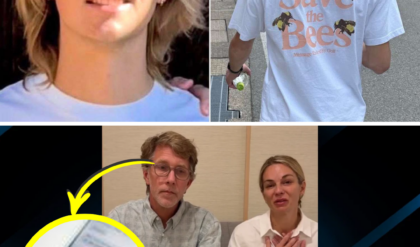
Weston, a junior at Auburn, triathlete, vegan, and passionate environmentalist known for his “Save the Bees” apparel and Alabama-themed shoulder bag, was in Japan with his parents and younger brother Grayton to celebrate academic milestones. The trip turned tragic when he separated from the family at Yamashina Station. CCTV shows him carrying his dark backpack with the small white patch just moments before vanishing. That backpack remains a critical identifier for searchers combing trails and riverbanks.
Japanese authorities, supported by the U.S. Embassy, continue intensive operations. Drones, K-9 units, and ground teams battle heavy rains and difficult terrain. The conflicting witness account — a shopkeeper claiming to see a tall blonde foreigner heading toward a bus stop — still doesn’t perfectly align with surveillance, adding to the frustration. Detectives are re-interviewing witnesses while analyzing every second of footage in the critical 500-foot zone.
The family has been transparent about Weston’s mental health. In the weeks before Japan, he expressed feelings of overwhelming pressure regarding his future. As an honors graduate from Spain Park High School with a heart for sustainability, Weston appeared outwardly successful. Privately, however, the “future feels out of reach” note suggests deeper despair. Mental health experts note that international travel can amplify such struggles through jet lag, cultural adjustment, and family proximity.
Back in Hoover, Alabama, the Auburn community has mobilized. Prayer vigils, fundraisers, and #BringWestonHome campaigns fill social platforms. Classmates describe him as kind, intelligent, and resilient — qualities that give his family hope he could still be navigating the Japanese countryside safely. Yet with each passing day, the fear of another unresolved student disappearance grows.
Unlike Sudiksha’s beach setting, Weston’s case centers on urban-to-rural transition near hiking areas. His skills as an outdoorsman and navigator could be lifesaving — or lead him deeper into remote zones with rivers that pose risks during rainy season. Searchers are specifically looking for the dark backpack and any personal items along trails near Mount Otowa.
The Higginbothams remain in Japan, balancing exhaustion with determination. They meet daily with police, review new leads, and make emotional public appeals in both English and Japanese. “Someone had to see him,” Nancy has pleaded repeatedly. “He’s 6’1”, blonde hair, blue eyes, carrying that distinctive backpack. Please look at your photos from that night.”
The release of the medical notes was a difficult but deliberate step. The family hopes the details will encourage anyone who encountered a distressed young American man to come forward without fear of judgment. They emphasize that sharing Weston’s struggles helps reduce stigma around mental health while aiding the search.
As the fifth day closes, the four-word note continues to spark debate online. Some see it as evidence of possible suicidal ideation or a need for solitude that went wrong. Others view it as a cry for help that highlights the pressures facing high-achieving young adults. Either way, it has humanized Weston beyond the missing person posters.
The broader conversation now includes calls for better mental health support for students traveling abroad. Universities and travel organizations are being urged to implement stronger protocols. Weston’s case, like Sudiksha’s before it, exposes vulnerabilities even in safe destinations like Japan.

Hope still flickers. The Higginbothams repeat their earlier message: “Hope isn’t gone yet.” They believe their son’s resourcefulness and love of nature may protect him until he is found. Auburn University continues offering support to students and faculty affected by the news, while the U.S. Embassy treats the matter with urgency.
As search crews push through another night of rain-soaked terrain and investigators pore over the station’s 500-foot radius, the world watches with heavy hearts. The fear of “another Sudiksha case” — a bright young life lost to unresolved mystery — drives greater effort and public attention.
For Nancy and Keith Higginbotham, the priority remains simple: bring their son home. The four-word note may have escalated fears, but it has also strengthened resolve. Somewhere in the hills and streets near Yamashina, answers may wait. Until then, the plea remains: Please don’t let this become another tragic story without ending. Weston, if you see this — we love you. Come home.
News
We know he made it this far…: Search crews are retracing the final route of James “Weston” Higginbotham after investigators narrowed his last known movements to a stretch of less than 500 feet, but one witness account still doesn’t match the surveillance footage
We know he made it this far… Search crews are retracing the final route of James “Weston” Higginbotham after investigators narrowed his last known movements to a stretch of less than 500 feet, but one witness account still doesn’t match…
“Someone had to see him… right?”: As the search for missing Auburn student James “Weston” Higginbotham enters its 5th day, his family has revealed his fragile mental state before the trip, but detectives are now focusing on one unexplained detail — his phone signal traveled less than 200 feet before suddenly going silent near the station entrance
“Someone had to see him… right?” As the search for missing Auburn student James “Weston” Higginbotham enters its 5th day, his family has revealed his fragile mental state before the trip, but detectives are now focusing on one unexplained detail…
HOPE ISN’T GONE YET… The parents of missing college student James “Weston” Higginbotham say their son had recently become convinced his future was slipping away, but the detail haunting them most isn’t what he said — it’s the dark backpack with a small white patch that witnesses claim he was still carrying just 90 seconds before he disappeared into the crowd
HOPE ISN’T GONE YET… The parents of missing college student James “Weston” Higginbotham say their son had recently become convinced his future was slipping away, but the detail haunting them most isn’t what he said — it’s the dark backpack…
“PLEASE COME HOME…”: The family of Auburn student Weston Higginbotham says he battled unseen demons before disappearing on a trip to Japan, but his GPS location near his last known river is becoming the focus of the entire investigation
“Please come home…” The family of Auburn student Weston Higginbotham says he battled unseen demons before disappearing on a trip to Japan, but his GPS location near his last known river is becoming the focus of the entire investigation. In…
‘He had psychological issues, fearing that everything was over,…’ Family Auburn University student James “Weston” Higginbotham, who went missing in Japan, has just revealed his last known health condition, along with a 3-WORD message that still haunts us
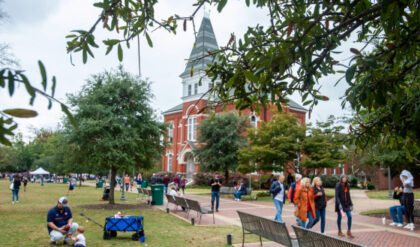
Auburn student goes missing in Japan; family fears he’s ‘emotionally distressed’ James “Weston” Higginbotham, a junior studying biosystems engineering at the Alabama college, was last seen in Kyoto. Auburn University in Auburn, Ala. Jake Crandall / USA Today Network via Reuters …

The machines continued to beep… the family members continued to pray… but there were 3 doctor’s conclusions just minutes before the baseball struck Xavier Taylor that his father said he couldn’t stop looking at
The rhythmic, sterile beeping of the life-support machines continued to echo through the intensive care unit, a persistent, artificial pulse filling the heavy silence of the room. Around the bed, family members remained huddled together, their voices reduced to a…
End of content
No more pages to load