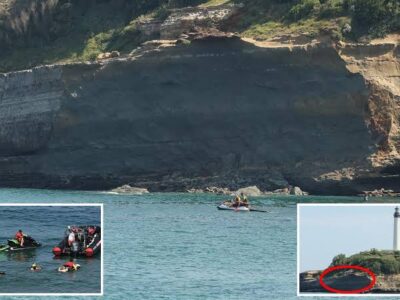
He disappeared after the raft went under… 💔🌊 Search crews are racing to find 17-year-old Nathan Lowery after a raft carrying family and friends sank in Galveston Bay early Saturday. But it’s the final place witnesses say they saw him that is now guiding the search
In the early hours of Saturday, June 27, 2026, a routine family outing on the waters of Galveston Bay turned into a desperate search and rescue operation. Nathan Lowery, a 17-year-old from Texas City, Texas, disappeared after an inflatable raft he was sharing with his 16-year-old brother and reportedly others began taking on water and sank near the Texas City Dike. While his brother was rescued unharmed by the Texas City Fire Department’s Marine Unit, Nathan did not resurface. By evening, authorities transitioned the mission from rescue to recovery, suspending active searches overnight with plans to resume at first light Sunday.

This tragic incident has gripped the local community and highlighted the unpredictable dangers of Galveston Bay, even in seemingly calm conditions close to shore. As search efforts continue, families, first responders, and volunteers from organizations like Texas EquuSearch are united in hope for a safe return, while questions linger about the circumstances that led to the capsizing.
The Incident: A Morning Outing Goes Wrong
According to officials, including Texas City Emergency Management Coordinator Joe Tumbleson, Nathan and his younger brother launched the inflatable raft from a point approximately three miles out on the 5-mile-long Texas City Dike around 5:30 a.m. Reports vary slightly on the exact number of people aboard—some accounts mention family and friends, while others focus on the two brothers—but the core facts remain consistent: the raft began taking on water, prompting those aboard to jump or fall into the bay.
The 16-year-old was rescued by marine units and evaluated by paramedics, found physically unharmed. Nathan, however, became separated in the water. A U.S. Coast Guard flight crew later spotted the unmanned raft drifting about 15 miles away in Trinity Bay near Baytown, underscoring how quickly currents can carry objects (and people) in the area.
Texas EquuSearch, a volunteer organization renowned for its work in missing persons cases, joined Texas City Police, the U.S. Coast Guard, Galveston Police Marine Division, Texas Parks and Wildlife game wardens, and other agencies in a multi-faceted search involving boats, helicopters, and specialized teams. Despite exhaustive efforts throughout the day, Nathan remained missing as of Saturday evening.
Authorities urged anyone with information to contact Texas City Police at (409) 948-2525 or Texas EquuSearch at (281) 309-9500. Nathan was last seen wearing a royal blue t-shirt and dark gray shorts.
The Texas City Dike: A Beloved Landmark with Hidden Risks
The Texas City Dike is one of the most iconic features of the Galveston Bay area. Stretching roughly 5.3 miles into the bay, it is often touted as the longest man-made fishing pier in the world. Constructed primarily in the early 20th century (with roots in 1915 and extensions later), the dike was originally engineered by the U.S. Army Corps of Engineers to protect the Texas City Channel from silting and cross-currents caused by earlier port development.
What began as an industrial solution evolved into a recreational haven. Today, it features boat ramps (one of the busiest in the Galveston Bay area), fishing piers, beaches, picnic areas, trails, and more. It serves as a popular spot for families, anglers, and boaters seeking easy access to the bay. However, its location at the mouth of Galveston Bay exposes users to dynamic conditions: tidal influences, ship traffic, variable depths, and sudden weather shifts.
Galveston Bay itself is a complex estuary system, the largest in Texas, fed by rivers and opening to the Gulf of Mexico. Its waters can appear inviting but conceal strong currents, especially near structures like the dike. Shallow areas transition quickly to deeper channels, and wind-driven waves or wakes from larger vessels can overwhelm small, inflatable craft not designed for open bay use.
Incidents like Nathan’s are reminders that proximity to shore does not equate to safety. Inflatable rafts, popular for their affordability and portability, lack the stability and structural integrity of proper boats. They can deflate, flip, or drift rapidly with minimal propulsion, leaving occupants vulnerable if they end up in the water.
Water Safety in Galveston Bay: Lessons from Tragedy
Boating and water safety experts emphasize several key principles that could prevent similar tragedies. The U.S. Coast Guard reports that drowning accounts for a significant portion of recreational boating fatalities, with the majority involving individuals not wearing life jackets. In 2023 data, 87% of drowning victims in such incidents were not wearing personal flotation devices (PFDs).
Texas Parks and Wildlife Department guidelines stress wearing life jackets at all times on vessels like kayaks, paddleboards, or rafts; checking weather conditions; boating with a buddy; and understanding local hazards. For Galveston Bay specifically, boaters must contend with shallow waters, ship traffic, and changing tides. Inflatable rafts are particularly cautioned against in open water or areas with potential for offshore drift.
The bay’s water quality is generally suitable for contact recreation in many open areas, but risks from bacteria, marine life, or sudden immersion remain. Public health monitoring by entities overseeing Galveston Bay tracks pathogens, though the primary threat in cases like this is physical—hypothermia, exhaustion, disorientation, or currents preventing return to safety.
Similar incidents occur periodically along the Texas coast and beyond. From inner tube floaters swept into rapids to kayakers or rafters caught in Gulf currents, the pattern is clear: underestimating water conditions, inadequate equipment, or venturing out without proper preparation can have fatal consequences. In one notable parallel, rescuers in other coastal areas frequently warn against inflatable rafts on windy days due to their tendency to drift far from shore.
Community Response and the Human Element
The Lowery family has shared images of Nathan in hopes of aiding the search, evoking an outpouring of support on social media and from local organizations. Texas EquuSearch’s involvement brings specialized expertise and volunteer manpower, often crucial in these scenarios.
Texas City and surrounding Houston-Galveston communities are tight-knit, especially around the water. The dike is more than infrastructure—it’s a gathering place for generations of families creating memories through fishing, boating, and picnics. Events like this ripple through the area, prompting renewed calls for safety education.
First responders worked tirelessly on Saturday, balancing urgency with the realities of fading light and vast search areas. The transition to recovery mode is a somber but necessary step when active rescue windows close, yet hope persists as searches resume.
Broader Context: Recreation, Risk, and Resilience on the Texas Coast
Galveston Bay supports a vibrant economy and lifestyle—shipping, fishing, tourism, and residential growth. Texas City itself transformed from an industrial hub to a community balancing port activities with recreational appeal. The dike exemplifies this duality: protector and playground.
Yet, climate factors, sea-level rise, and increased recreational use amplify risks. Hurricanes have tested the dike’s protective role historically, and everyday users must respect the bay’s power. Education campaigns by the Coast Guard, state agencies, and nonprofits aim to bridge the gap between enjoyment and preparedness.
For families like the Lowerys, this incident underscores the fragility of life. Nathan, a teenager presumably enjoying a simple summer adventure with his brother, represents countless young people drawn to the water. His story serves as a poignant call to action: families should review safety protocols, ensure proper gear (U.S. Coast Guard-approved life jackets, whistles, lights, communication devices), file float plans, and never assume calm morning waters will remain forgiving.
Looking Ahead: Continued Search and Prevention
As of the latest reports, recovery efforts are set to intensify on Sunday. The involvement of multiple agencies demonstrates a coordinated commitment. The community’s prayers and vigilance offer additional layers of support.
This event also presents an opportunity for reflection on infrastructure and policy. Enhanced signage at the dike, rental safety briefings for inflatables, expanded education programs, and perhaps technology like wearable trackers could save lives in the future.
In the vast expanse of Galveston Bay, where industrial channels meet recreational waters, Nathan Lowery’s disappearance is a stark reminder. The bay gives much—livelihoods, joy, beauty—but demands respect. As searches continue, the hope remains that Nathan will be found safe and reunited with his loved ones. Until then, the waters hold their silence, and the community holds its breath.