SHOCKING TURN: Nolan Wells’ Former Teammate Lawyers Up After Viral Photo Triggers Death Threats

**SHOCKING TURN: Nolan Wells’ Former Teammate Lawyers Up After Viral Photo Triggers Death Threats**
A former high school football teammate of Nolan Wells has retained an attorney after being falsely accused online in connection with the teen’s death. His lawyer says the widely shared photo that fueled the rumors has been misidentified and that the woman pictured is not Katie McCormick. The false claims allegedly escalated into death threats against his client and his family, and the attorney says defamation lawsuits are now being prepared against those responsible for spreading the accusations.
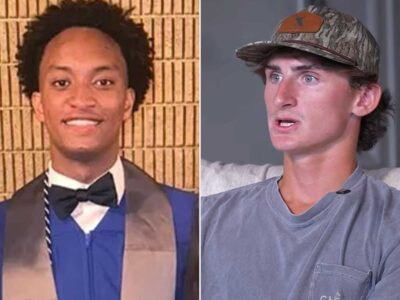
Bart Edmiston Jr., who played football alongside Nolan Xavier Wells at Ocean Springs High School and now serves as a punter for the University of Wyoming, has hired Mississippi attorney Russ Latino to pursue civil claims against individuals and accounts that published what the legal team describes as wholly fabricated statements linking him to Wells’ death. Latino, who also serves as chief executive officer of the Magnolia Tribune, announced the representation publicly and confirmed that the first of multiple cease-and-desist letters has already been sent. The decision to engage counsel followed what the family characterizes as a credible death threat directed at Edmiston and members of his household, an escalation that prompted notifications to the Federal Bureau of Investigation as well as state and local law-enforcement agencies.
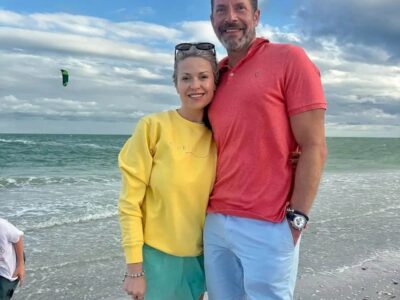
At the center of the online campaign was a high-school-era photograph showing a younger Edmiston standing with a young woman. Social-media users asserted that the woman was Katie McCormick, the person some accounts claim Wells was speaking with on Horn Island on July 4, 2026, the day he disappeared. From that identification, posters constructed a narrative in which Edmiston and McCormick had been romantically involved and in which Edmiston therefore possessed a motive of jealousy that could explain Wells’ death. Latino has rejected every component of that storyline. He acknowledges that the photograph does depict Edmiston with a young woman but states categorically that she is not Katie McCormick. According to the attorney, Edmiston did not know McCormick before Wells’ death, has never been in a relationship with her, and had no personal connection to her of any kind. The romantic-jealousy theory, Latino said, is invented and unsupported by any evidence.
Latino has also issued a flat denial of any suggestion that Edmiston killed Wells, contributed to his death, witnessed the events that led to it, or participated in any form of cover-up. In statements released on behalf of the family, the attorney emphasized that Edmiston’s only documented involvement on July 4 was assisting a boat that was taking on water near Horn Island. The family says Edmiston boarded the distressed vessel, removed its transom plug so accumulated water could drain, and briefly towed it. They maintain that more than twenty people aboard two separate vessels witnessed this assistance. The family further states that Edmiston has never been identified as a suspect by any investigating agency.
The Edmistons describe a high degree of voluntary cooperation with law enforcement. According to their account, Bart sat for interviews, answered every question, shared his full recollection of the day’s events, allowed investigators to examine his telephone, provided requested photographs and videos, and granted access to his boat and GPS device. All of this, they say, occurred without the need for an attorney, search warrants, or any form of legal compulsion. He also compiled and submitted a list of potential witnesses. Latino has contrasted this transparency with the online claims that Edmiston concealed information or behaved in a manner inconsistent with innocence.
The decision to pursue formal legal action was driven by safety concerns as much as by reputational harm. Latino stated that the volume and intensity of the false accusations created a genuine risk to Edmiston and his family. After a credible death threat was received, federal, state, and local authorities were notified. The family also reports being doxxed: at least one online user allegedly posted photographs of their residence, their street address, land records, and information about their employment. In response, a private investigative firm has been retained to identify and track individuals engaged in the alleged defamation. Latino has warned that neither youth nor limited financial resources will prevent the filing of lawsuits. The purpose of the litigation, he said, is not financial recovery but the protection of the family and the deterrence of reckless online conduct that places real people in physical danger.
Latino has also addressed common linguistic strategies used in the posts. He cautioned that simply inserting the word “allegedly” or framing statements as “people are reporting” does not automatically immunize a speaker from liability for defamation when false assertions are presented in a manner that a reasonable audience would understand as statements of fact. The first cease-and-desist letter was directed at influencer Kymbra Li, who maintains a substantial following across Facebook and Instagram. Additional letters are expected as the private investigation identifies further targets.
This legal development unfolds against the still-unresolved background of Nolan Wells’ death. Wells, an 18-year-old student-athlete from Ocean Springs, traveled by boat to Horn Island on July 4 with a group of friends. He did not return with them. His body was recovered on July 6 by a National Park Service ranger in an area known for strong rip currents. An independent autopsy commissioned by the family left both the cause and manner of death undetermined pending further investigation and could not rule out non-accidental factors. The official state autopsy and toxicology results remain pending. Friends have maintained that Wells chose to remain on the island in the company of a young woman and that their boat experienced a bilge-pump failure that required them to leave. Wells’ parents and their attorney, Ben Crump, have questioned elements of that account, citing the return of Wells’ phone and keys without him, apparent anomalies in digital activity on the recovered device, and conflicting statements about his final interactions.
Online speculation has been intense almost from the outset of the case. It has ranged from theories of accidental drowning in hazardous currents to far more sinister interpretations involving race, jealousy, or coordinated misconduct. Some of those theories have been directed at the young men who were with Wells that day and at people who later rendered assistance to the group. Threats against members of the friend circle and their families have been reported previously; the FBI has acknowledged addressing interstate threats connected to the matter. Judge Ashlee Cole, mother of one of the friends, publicly described receiving graphic threats that prompted her to limit further media engagement and to prioritize her children’s safety.
Edmiston’s retention of counsel and the announcement of impending lawsuits represent a formal institutional response to that atmosphere. Latino has framed the effort as an attempt to introduce accountability into online discourse surrounding a tragedy that has already imposed severe emotional costs on multiple families. In public comments he has underscored that the Edmistons continue to grieve Nolan Wells’ death alongside the rest of the Ocean Springs community and that they want the truth to emerge through the official investigative process rather than through unverified social-media narratives. Spreading invented claims, he argued, does not honor Wells’ memory and actively obstructs the search for accurate information.
Whether the threatened lawsuits will proceed to formal filings, and what outcomes they may produce, remains to be determined. Defamation actions based on social-media speech present legal complexities, particularly when the speech touches matters of public concern and when speakers employ conditional or opinion-based language. At the same time, the receipt of a credible death threat and the documented doxxing of a private residence introduce concrete harms that courts have recognized in other contexts. The involvement of the FBI and other agencies indicates that the safety dimension is being treated seriously by authorities independent of any civil litigation.
For the present, the public record contains Latino’s clear denials on behalf of his client, the family’s description of extensive cooperation with investigators, the clarification regarding the circulating photograph, and the announcement that legal steps are underway. These statements stand alongside the still-pending official autopsy and toxicology results, the independent pathologist’s undetermined findings, the GPS and towing evidence related to the boat’s movements, and the ongoing work of the Jackson County Sheriff’s Office and assisting federal agencies. The case continues to generate intense public interest precisely because so many central questions remain unanswered. The entry of formal defamation counsel into the picture adds a new institutional response to the secondary harms—threats, doxxing, and reputational injury—that have accompanied the primary tragedy of Wells’ death.
As the investigation proceeds toward eventual presentation of evidence to a grand jury, the tension between the demand for rapid public answers and the slower requirements of careful fact-finding remains unresolved. Edmiston’s legal team has made clear that it intends to pursue those who, in its view, crossed the line from speculation into actionable falsehoods that endangered real people. Whether that effort will succeed in reducing the volume of unverified claims or will simply become another contested front in an already highly charged case is a question that will be answered in the weeks and months ahead. What is already evident is that the human consequences of the online narrative have extended well beyond the central mystery of what happened to Nolan Wells on Horn Island. The decision by a former teammate to lawyer up after a misidentified photograph triggered death threats marks a significant turn in the public dimension of a case that continues to resist easy resolution.