🚨 PHONE MYSTERY: Nolan Wells’ friend officially speaks out, accusing the person who deleted all the data from his phone, and it is…
🚨 PHONE MYSTERY: Nolan Wells’ friend officially speaks out, accusing the person who deleted all the data from his phone, and it is…
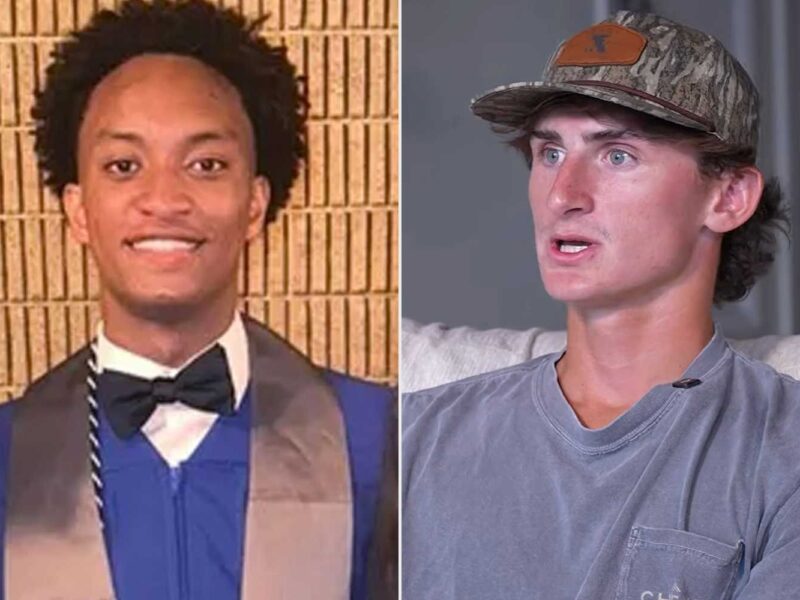
Warren Hudson, one of Nolan Wells’ friends on the fateful trip to Horn Island, said he had no knowledge of anyone deleting anything from Nolan’s phone, refuting one of the most widely circulated rumors surrounding the case.
His statement comes as questions continue to surround Nolan’s final hours, as investigators await crucial forensic results, including the autopsy and official toxicology test results.
Full details in the first comment. 👇
**Warren Hudson Breaks Silence on Nolan Wells’ Phone: Denies Knowledge of Any Deletions as Investigation Continues**
Warren Hudson, a close friend of Nolan Xavier Wells and one of the young men present on the July 4, 2026, boat trip to Horn Island, has publicly denied any knowledge that content was deleted from Wells’ recovered phone. In a multi-part interview with commentator Brandon Tatum on The Officer Tatum platform, Hudson addressed one of the most persistent claims surrounding the case: that photographs, videos, or messages may have been removed from the device before it was returned to the family. Hudson stated repeatedly that neither he nor anyone in their group accessed or altered the phone. “There was no reason for us to get on Nolan’s phone, no one touched Nolan’s phone,” he said. “If none of us had touched Nolan’s phone, then there’s no reason for anything to be deleted.” He added that no one in the group knew Wells’ password, that the only contact with the device occurred when it was moved from the boat to a truck, and that “we had no reason to delete anything… There’s nothing to hide here.”
Hudson’s remarks respond directly to concerns first voiced by Wells’ mother, Christine Wonsley. After the phone was recovered and returned, she and a relative examined the two Snapchat accounts associated with her son and found no photographs or videos from the outing. She described the absence as “suspicious,” noting that Wells routinely documented social gatherings with pictures and short videos and that the empty accounts did not match his established habits. In interviews she recalled that Snapchat content typically remains visible for twenty-four hours and that the lack of any material within that window raised immediate questions. Attorney Ben Crump, representing the family, has repeatedly highlighted the phone as a potential source of information about Wells’ final hours and has characterized the digital record as incomplete. A mutual forensic inspection of the device by law-enforcement investigators and independent experts retained by the family has been discussed. More recently the family issued subpoenas to Snapchat, Meta Platforms, TikTok, WhatsApp, and the location-sharing app Life360 seeking account records, metadata, and location history connected to the phone.
Hudson has offered a consistent account of how the phone came to be left on the boat and later returned. He explained that it was common practice among the group, and among many visitors to Horn Island, to leave phones on the vessel rather than carry them into the water. People were often waist-deep in the Gulf, the water was murky from recent rain, and the risk of damaging a device was high. According to Hudson, multiple phones belonging to different people remained on the boat throughout the afternoon. When the group prepared to leave because of mechanical problems, the phones were collected and moved into a truck. Hudson stated that Wells’ phone was among them and that he later ensured it was returned to Wells’ mother that same evening. He maintained that at no point did anyone open the device, enter a password, or delete material.
The broader timeline Hudson has described places the last direct interaction with Wells around 3 p.m. on July 4. He said Wells was with a young woman on the island and that members of the group, including Hudson himself, repeatedly urged Wells to board the boat as a bilge-pump failure caused the vessel to take on water. According to Hudson, Wells declined, stating he would stay and find another ride back. The boat, after being assisted and towed, left the island around 4:30 p.m. Hudson has characterized the situation as an emergency focused on saving the boat and getting everyone who chose to leave safely to shore. He has also said that later that night, when the group realized no one had heard from Wells, he obtained Wells’ mother’s phone number and made contact, after which the Coast Guard was notified.
Hudson has described Wells as his best friend and “like a brother,” a relationship that dated back to middle school. He has spoken of the emotional toll of the loss and of the intense online scrutiny that followed. He cited death threats directed at him and his family as one reason he did not attend Wells’ funeral, stating that he did not want to draw attention away from the service or place himself or others at further risk. His mother, Chancery Judge Ashlee Cole, earlier issued a public statement describing graphic threats the family had received and explaining her decision to limit further media engagement in order to protect her children’s safety and privacy.

The phone-related questions sit within a larger investigative picture that remains incomplete. An independent autopsy performed by forensic pathologist Dr. Roger Mitchell at the request of the family classified both the cause and manner of death as undetermined pending further investigation. Mitchell noted limitations created by advanced decomposition and by the prior official examination. The state autopsy conducted by Mississippi authorities and the accompanying toxicology results have not been released; officials have indicated they will remain under seal until the full investigative file is presented to a grand jury. GPS data from the boat, video of the subsequent tow, the Sea Tow distress call placed around 4 p.m., and numerous witness interviews form part of the record still under review by the Jackson County Sheriff’s Office with assistance from federal agencies on digital evidence and on threats connected to the case.
Public discussion of the phone has been polarized. Supporters of the family’s concerns point to Wells’ documented habit of recording social events and to the complete absence of Snapchat material as inconsistent with ordinary use. They argue that a mutual forensic examination and the subpoenaed platform records are necessary to determine whether any content was removed, when it was removed, and by what means. Hudson and others in the friend group maintain that the absence of content is explained by the practical decision to leave phones on the boat and by the fact that no one accessed the device afterward. They emphasize that they had no password and no motive to delete anything. Authorities have not publicly accused any individual of deleting material from the phone, nor have they released a forensic report confirming or ruling out intentional deletion.
The investigation continues on multiple tracks. Original photographs, videos, and firsthand accounts from anyone present on Horn Island on July 4 are still being solicited. Digital evidence from the recovered phone and from the subpoenaed social-media platforms is expected to be analyzed. Once the sheriff’s office completes its work, the evidence will be presented to a grand jury. District Attorney Angel Myers McIlrath has stated that information is being withheld in the interim to protect the integrity of that process. Until the state autopsy, toxicology results, complete digital analysis, and full witness file are available, the precise sequence of events surrounding Wells’ final hours remains the subject of competing accounts.
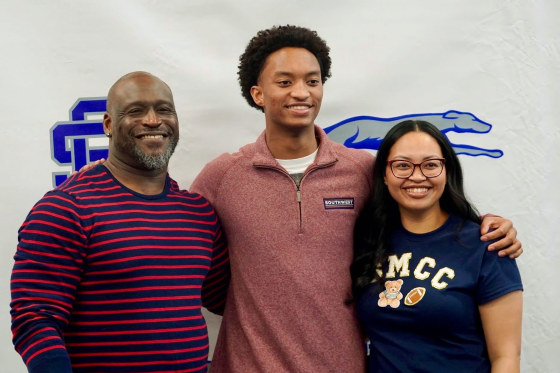
Hudson’s public denial adds a direct statement from someone who was present on the boat and who handled the transfer of the phone. It does not, by itself, resolve the evidentiary questions that the family and investigators continue to pursue. The mutual inspection and the platform records are intended to supply objective data that can either corroborate or contradict the competing narratives. In the meantime, the case remains defined by the central unresolved facts: an 18-year-old student-athlete left Horn Island with friends, did not return with them, and was found dead two days later; an independent pathologist could not determine how he died; the official medical findings are still pending; and digital questions surrounding his phone have not yet been answered by forensic analysis.
The human cost of the tragedy extends beyond the immediate family. Members of the friend group and their relatives have reported receiving death threats. Online speculation has produced doxxing and reputational attacks that have prompted at least one formal retention of defamation counsel by another young man connected to the day’s events. Hudson has spoken of the difficulty of grieving a close friend while simultaneously defending himself against public accusations. He has asked that the focus remain on discovering what actually happened rather than on unverified theories.
As the investigation moves forward, the phone remains one piece of a larger puzzle. Christine Wonsley’s observation that the Snapchat accounts were empty stands as a factual report of what she saw when the device was returned. Hudson’s insistence that no one in the group accessed or deleted content stands as a factual denial from someone who says he was involved in returning the phone. The forensic examination and the subpoenaed records are the mechanisms through which those two positions can be tested against technical evidence. Until that testing is complete and the official medical findings are released, the questions surrounding Nolan Wells’ final hours continue without definitive resolution. The process is slow by design; the demand for answers is urgent. Both realities define the current state of the case.