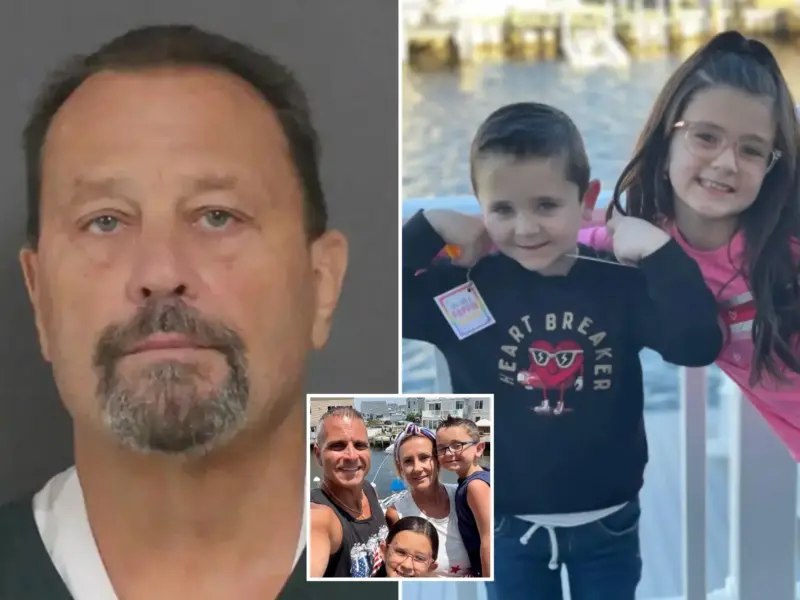
“I HAD THE RADAR ON”: Stephen Schneider stated that both the radar and the infrared camera were active before the boat struck the marker
“I HAD THE RADAR ON”: Stephen Schneider stated that both the radar and the infrared camera were active before the boat struck the marker.
According to records, Schneider told police he had turned on both the radar and the infrared/low-light camera to aid navigation in the dark.
He also stated that the boat was traveling at approximately 20 mph and that he only spotted the marker at the last second.
A boat equipped with visibility aids, an illuminated marker, and a collision that threw two children into the water.
Details regarding which devices were active immediately prior to the impact are becoming a crucial part of the crash reconstruction.
In the darkness of Barnegat Bay on the evening of July 19, 2026, a 28-foot Tidewater Custom 280 center-console boat struck an illuminated Intracoastal Waterway channel marker, ejecting two young children into the water. Both later died. The operator of the vessel, Stephen Schneider, told investigators that he had activated both the boat’s radar and its infrared/low-light navigation camera specifically to aid visibility in the dark. He said the boat was traveling at approximately 20 miles per hour and that he spotted the marker only at the last second.
Those statements have become central to the ongoing reconstruction of the crash and to the criminal case against Schneider, who faces charges of reckless vessel homicide in the deaths of his grandchildren.
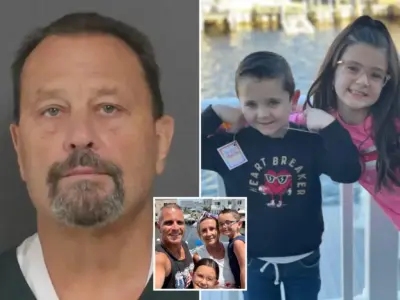
The collision occurred shortly after 9 p.m. near Berkeley Township, New Jersey. Schneider, then 63, was at the helm. Also aboard were his wife, Laurie Schneider, and the couple’s grandchildren: 9-year-old Mya Bella Golabek and 7-year-old Sigmund “Siggy” Paul Golabek. The children were seated at the front of the boat and were wearing life jackets, according to court documents and police accounts. The impact with marker No. 39 threw both children overboard. Schneider and his wife recovered the unresponsive children from the water and began CPR. The children were transported to a hospital, where they were pronounced dead.
Schneider later told New Jersey State Police that he had turned on the radar and the infrared/low-light camera to help navigate in the nighttime conditions. He reported traveling at about 20 mph when the marker suddenly appeared in his path. Investigators confirmed that the channel marker was a single-stanchion illuminated navigational aid and that its lights were functioning properly at the time of the crash.
The presence of those visibility systems has drawn particular scrutiny. Modern recreational boats are frequently equipped with radar and thermal or low-light cameras precisely to detect fixed objects, other vessels, and hazards in conditions of limited natural light. Radar can display hard targets such as channel markers as returns on a screen, while infrared or low-light cameras can reveal the outlines of structures that might otherwise blend into the night. Schneider’s assertion that both systems were active raises questions that crash reconstruction experts and prosecutors will examine closely: whether the systems were properly configured and monitored, whether their displays were within the operator’s field of view, and whether alcohol impairment affected his ability to interpret the information they provided.
According to the affidavit of probable cause, Schneider told investigators he had consumed three beers—two Guinness and one Miller Lite—over the course of roughly two hours before the collision. The family had eaten dinner at MJ’s Restaurant Bar & Grill in Bayville. The children’s parents had arrived by a separate boat; after the meal the children elected to return home with their grandparents. Toxicology results later indicated that Schneider’s blood alcohol content was approximately 0.16 percent—twice New Jersey’s legal limit of 0.08 percent for operating a vessel. A toxicology analysis concluded that his alertness, judgment, and response time were “markedly impaired by alcohol.”
Schneider was charged with two counts of reckless vessel homicide (also described as death by vessel), operating a vessel under the influence, and reckless operation of a vessel. The homicide charges are second-degree offenses that carry a potential sentence of up to 20 years in prison if convicted. He surrendered to authorities in mid-August and was held briefly before a Superior Court judge in Ocean County ordered his conditional release pending trial. Prosecutors had sought continued detention, citing the elevated blood alcohol level and the catastrophic outcome. The defense noted that the crash was not intentional and that investigators were still examining aspects of the marker’s visibility and the boat’s equipment. Schneider’s attorney also stated that Schneider himself sustained injuries in the collision. The children’s parents submitted letters supporting their grandfather’s release.
The case has underscored longstanding concerns about nighttime boating safety on New Jersey’s busy coastal and bay waters. Channel markers are critical navigational aids, especially in the Intracoastal Waterway, where commercial and recreational traffic share constrained channels. Even when illuminated, markers can be difficult to distinguish against background lights from shore or other vessels if an operator’s attention is divided or judgment is impaired. The combination of speed, darkness, and alcohol creates a particularly unforgiving environment. At 20 mph, a boat covers nearly 30 feet every second; the interval between first visual detection of a fixed object and the moment of impact can shrink to a fraction of a second.
Reconstruction of the sequence will likely involve examination of the boat’s electronic systems, any recorded track or radar data, the precise location and lighting characteristics of marker No. 39, water and weather conditions that night, and the physical dynamics of the impact that ejected the children from the forward seating area. The fact that both children were wearing life jackets and were still recovered unresponsive highlights the violence of the collision and the limited time available for rescue once they entered the water.
Schneider’s statements about the radar and infrared camera place those devices at the center of the factual narrative. If the systems were indeed operating, investigators will seek to determine what information they displayed in the moments before impact and whether that information was—or could have been—acted upon. If the systems were not monitored or were not configured for the conditions, that too will form part of the analysis of the operator’s attentiveness and decision-making. Alcohol impairment, already documented at a significant level, provides a separate and independent basis for the charges of operating under the influence and reckless operation.

The tragedy has also drawn attention to the human dimensions of the case. The children were the only children of Schneider’s daughter. Family members have described profound grief alongside the complex legal proceedings. The parents’ decision to support Schneider’s release pending trial reflects the personal relationships that exist alongside the criminal allegations.
As the case proceeds, the precise role of the boat’s visibility aids, the functioning of the channel marker, the operator’s speed and course, and the degree of impairment will remain subjects of detailed examination. Schneider’s statement—“I had the radar on”—and his parallel claim that the infrared camera was active have become fixed points in the official record. How those systems performed, and how their operator responded to what they showed or failed to show, will help shape the final accounting of the seconds that ended two young lives on Barnegat Bay.
Boating safety advocates note that technology is only as effective as the human attention and judgment applied to it. Radar and thermal imaging can dramatically improve situational awareness in darkness, but they do not replace the need for sober, vigilant operation, appropriate speed for conditions, and continuous scanning of both electronic displays and the physical environment. The Barnegat Bay collision of July 19, 2026, stands as a stark illustration of how quickly a nighttime passage can turn catastrophic when those elements align poorly.
The investigation and legal process continue. Prosecutors will present their evidence of impairment and recklessness. The defense will scrutinize the equipment, the marker, and the circumstances surrounding the impact. At the center of both efforts remain Schneider’s own words to police: that the radar and the infrared camera were on, that the boat was moving at about 20 mph, and that the marker appeared only at the last second—moments before two children were thrown into the dark water of the bay.