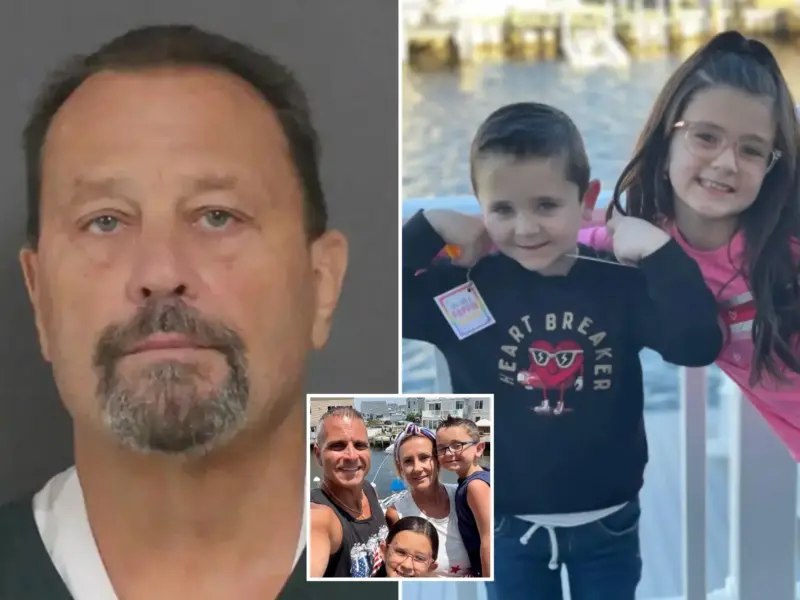
A detail in the testimony contradicts how the crash actually unfolded: Stephen Schneider’s beer consumption has just been revealed!
A detail in the testimony contradicts how the crash actually unfolded: Stephen Schneider’s beer consumption has just been revealed!
Schneider’s account of the trip, the speed, and the moment he spotted the marker is being cross-referenced with evidence from the scene.
Investigators are interested not only in what he said after the incident but also in whether his statement aligns with the physical traces found on the boat.
Mya and Sigmund cannot recount the final moments.
Consequently, every word of the helmsman’s testimony has become one of the most critical pieces of the case.
**************

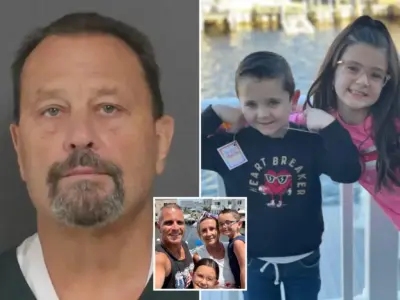
In the investigation of the July 19, 2026, boat crash on Barnegat Bay that killed two young children, a critical tension has emerged between Stephen Schneider’s statements to police and the physical evidence recovered from the scene. Investigators are now closely examining whether the helmsman’s account of the trip—his reported speed, the moment he claimed to have spotted the channel marker, and the sequence of events after impact—aligns with the traces left on the Tidewater Custom 280 and the surrounding waterway.
One newly emphasized element of that account is Schneider’s admission regarding alcohol. According to the investigative record, he told police he had consumed three beers in the hours before the collision. That detail, combined with toxicology results showing a blood alcohol content of approximately 0.16 percent—twice New Jersey’s legal limit—has become a central point of scrutiny. Because the two children, 9-year-old Mya Bella Golabek and 7-year-old Sigmund “Siggy” Paul Golabek, cannot describe the final moments, every word of the operator’s testimony carries exceptional weight.
The Helmsman’s Account
Schneider told investigators that he was an experienced boater who had traveled the same route many times. He said both the boat’s radar and its infrared/low-light camera were operating as the vessel moved through the Intracoastal Waterway after dark. He reported traveling at approximately 20 miles per hour and stated that he saw the illuminated channel marker—identified as marker No. 39—only at the last second. After the starboard bow struck the marker, he said, he did not immediately realize the children were no longer on board. Only afterward did he and his wife discover that Mya and Sigmund, who had been seated at the bow, were missing. Schneider then entered the water to search for them.
These statements form the primary narrative from the person who was at the helm. In the absence of testimony from the children, that narrative is being tested against every available form of physical and forensic evidence.
Alcohol Consumption and Its Implications
Schneider’s admission that he drank three beers—specifically two Guinness and one Miller Lite over roughly two hours before the crash—has taken on heightened significance. Toxicology testing confirmed a blood alcohol concentration of about 0.16 percent. Analysis indicated that his alertness, judgment, and response time were markedly impaired.

Alcohol at that level affects precisely the capacities required for safe nighttime boat operation: continuous visual scanning, accurate judgment of distance and closing speed, divided attention between electronic displays and the physical environment, and rapid decision-making when a hazard appears. Investigators are examining whether the impairment contributed not only to the failure to detect and avoid the marker in time but also to the delayed recognition that the children had been ejected.
The revelation of the beer consumption is being cross-referenced with the timeline of the evening. The family had dined at MJ’s Restaurant Bar & Grill in Bayville. Schneider and his wife had arrived by boat; the children’s parents had come by a separate vessel. After dinner the children elected to return with their grandparents. The interval between the last drink and the moment of impact, the quantity consumed, and the measured blood alcohol level together form a factual foundation for the charges of operating a vessel under the influence and reckless operation.
Cross-Referencing Testimony with Physical Evidence
Investigators are comparing Schneider’s description of speed, course, and the last-second sighting of the marker against physical traces on the boat and at the scene. The point of impact on the starboard bow, any deformation or marking consistent with striking a fixed channel marker, the condition of the forward seating area, and any data recoverable from the radar or camera systems are all relevant. If electronic logs or recorded tracks exist, they may indicate the boat’s actual speed and path in the seconds before collision.
The children’s position at the bow is another fixed element. Forward seating placed them closest to the point of impact and in the most exposed location on the open center-console layout. The force required to eject two children wearing life jackets provides an independent measure of the violence of the collision and can be compared with the speed Schneider reported.
The delayed realization that the children were missing is also being examined in light of the physical evidence. A collision severe enough to throw two passengers overboard would have produced a distinct jolt and noise. In darkness, with possible residual motion of the boat, the absence of the children might not have been immediately obvious. Yet the length of that interval, and the actions taken once the absence was understood, form part of the overall assessment of the operator’s awareness and response under impairment.
The Absence of the Children’s Voices
Mya and Sigmund cannot recount what they saw, felt, or experienced in the final moments. They cannot describe the approach to the marker, the sensation of the impact, or the moments after they entered the water. Their silence places extraordinary emphasis on the sole remaining firsthand account from the helm. Every inconsistency, every gap, and every point of alignment between Schneider’s words and the physical record therefore assumes greater importance.
Prosecutors have charged Schneider with two counts of reckless vessel homicide, operating a vessel under the influence, and reckless operation of a vessel. The homicide charges are second-degree offenses carrying a potential maximum sentence of 20 years. He was arrested in mid-August, held briefly, and released on conditions after a detention hearing at which the blood alcohol level and the fatal outcome were cited by the state. The defense has maintained that the crash was not intentional and that aspects of the marker’s visibility and the boat’s equipment remain under review. The children’s parents submitted letters supporting their grandfather’s release pending trial.
Reconstruction of the Final Seconds
Crash reconstruction specialists are expected to integrate the operator’s statements with the physical evidence to produce a second-by-second account of the approach, the impact, and the immediate aftermath. Key questions include whether the reported speed is consistent with the damage and the ejection dynamics, whether the radar and infrared systems— if active—would have been expected to display the marker at a distance that allowed avoidance, and whether the last-second sighting described by Schneider aligns with the geometry of the channel and the lighting conditions that night.
Investigators have already established that the marker’s lights were functioning. An illuminated navigational aid on a route the operator claimed to know well should, under ordinary circumstances, have been detectable at a range sufficient for an attentive, unimpaired helmsman traveling at moderate speed to take corrective action. The fact that the collision still occurred, and that the operator’s recognition of the children’s ejection was delayed, places the focus on the factors that degraded performance that night.
The Broader Stakes of the Testimony

In cases where the most vulnerable victims cannot speak, the testimony of the person in control of the vessel becomes the primary human narrative against which all other evidence is measured. Schneider’s statements about his experience, the active navigation systems, the speed of the boat, the last-second detection of the marker, the delayed realization that the children were gone, and the three beers he consumed are now being tested for internal consistency and for consistency with the physical record.
Any contradiction between the testimony and the scene evidence will be material. Any alignment will also be material. Because the children cannot fill in the gaps, the precision and reliability of the helmsman’s account have become among the most critical elements of the case.
The investigation continues to examine the boat, the marker, the electronic systems, the toxicology results, and the timeline of the evening. The legal process will determine how the accumulated evidence—statements and physical traces alike—assigns responsibility for the deaths of Mya Bella Golabek and Sigmund Paul Golabek. In that process, every word Schneider spoke to police about the trip, the speed, the marker, and the beer he drank stands as a point of reference against which the silent evidence of the crash is being carefully measured.