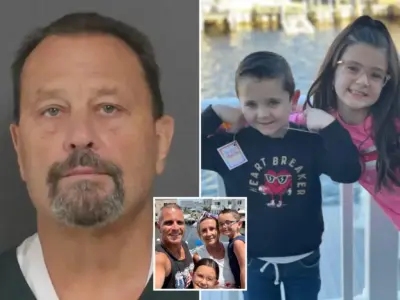
There were many witnesses at the table: Stephen Schneider did not drink alone before taking his two grandchildren out on the boat!
There were many witnesses at the table: Stephen Schneider did not drink alone before taking his two grandchildren out on the boat!
The dinner at MJ’s Restaurant was attended by Stephen Schneider, his wife, his daughter, his son-in-law, and his two grandchildren.
Schneider later stated that he had consumed three beers over the course of about two hours.
However, those seated at the table would know better than anyone else exactly what transpired during the meal.
From the testimony of his relatives to the beverage bill and restaurant surveillance footage, Stephen Schneider’s timeline can be scrutinized minute by minute.
***************
There Were Many Witnesses at the Table: Stephen Schneider Did Not Drink Alone Before Taking His Grandchildren Out on the Boat
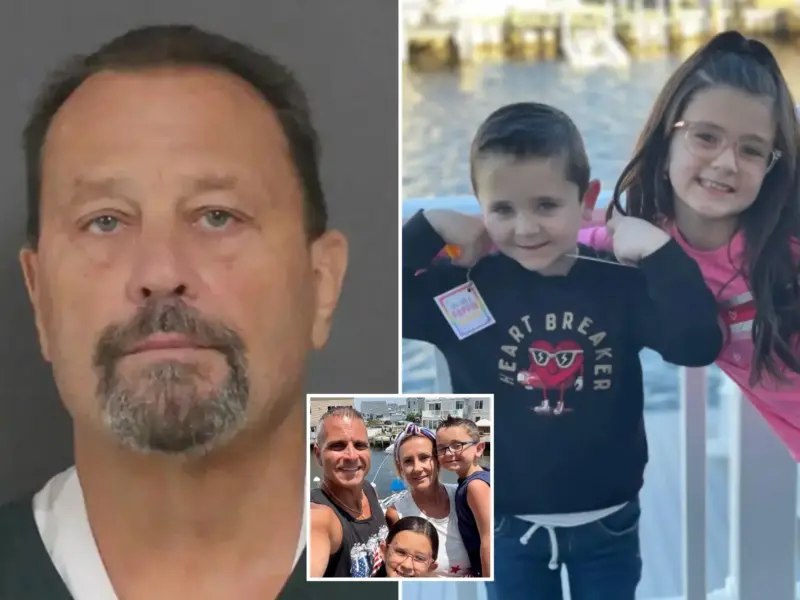
The dinner at MJ’s Restaurant Bar & Grill in Bayville on the evening of July 19, 2026, was not a solitary meal. Seated at the table with Stephen C. Schneider were his wife, Laurie; his daughter; his son-in-law; and his two young grandchildren, 9-year-old Mya Bella Golabek and 7-year-old Sigmund Paul Golabek. The gathering lasted approximately two hours. When Schneider later told New Jersey State Police that he had consumed only three beers — two Guinness and one Miller Lite — during that period, he was describing an event that multiple other people had observed in real time.
That fact has elevated the importance of the dinner itself within the reckless vessel homicide investigation. Schneider did not drink in isolation. He drank in the presence of family members who shared the same table, the same conversation, and the same window of time before he took the helm of the boat that would later strike a channel marker on Barnegat Bay, throwing both children into the water. Those relatives, along with any restaurant staff who served the table and any surveillance cameras that recorded the scene, now form a potential network of evidence capable of testing Schneider’s account minute by minute.
The Family Gathering
According to court documents, Schneider and his wife arrived at MJ’s by boat. The children’s parents arrived separately by boat with Mya and Sigmund. The group came together for dinner. After the meal, the children transferred to their grandparents’ 28-foot Tidewater center-console vessel for the return trip. Shortly after 9 p.m., the boat struck an illuminated Intracoastal Waterway channel marker. Both children, who were wearing life jackets and seated near the front, were ejected into the bay. They later died at Community Medical Center in Toms River.
In the hours that followed, Schneider told investigators he had consumed two Guinnesses and one Miller Lite over the roughly two-hour dinner. A blood sample drawn under warrant at 12:46 a.m. returned a blood alcohol concentration of approximately 0.16 percent — twice the legal limit in New Jersey. Laboratory experts concluded that his judgment, perception, response time, and coordination were markedly impaired by alcohol.
The conflict between the three-beer claim and the 0.16 percent result is already central to the case. The presence of multiple witnesses at the table makes that conflict more readily testable.
Why the Table Matters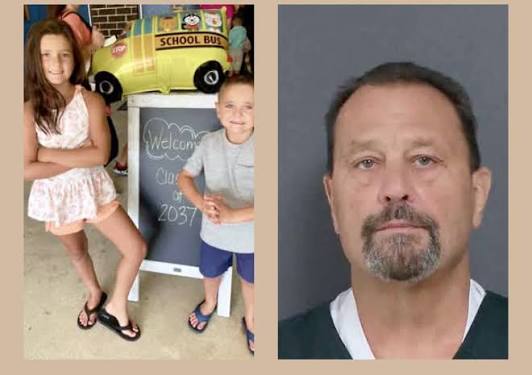
When a person drinks alone, reconstructing the volume and timing of consumption often depends heavily on the individual’s own statements, receipts, and any available camera footage. When a person drinks in the company of several others at the same table, additional sources of information become available. Family members seated nearby can be asked what they saw Schneider order, what was placed in front of him, how many times glasses or bottles were replaced, and whether his appearance or behavior changed over the course of the meal.
In this case, the witnesses were not strangers. They were Schneider’s wife, his daughter, and his son-in-law — people who knew him well and who were present for the entire dinner. Their observations, if consistent or if they diverge from Schneider’s account, carry particular weight. A relative who noticed additional drinks, or who saw no more than the three beers Schneider described, can either corroborate or undermine the version of events he provided to police.
Restaurant staff who served the table form another layer of potential testimony. Servers and bartenders are trained to track orders, monitor consumption in some establishments, and remember patterns of service, especially on a night that later became the subject of a major investigation. Their recollections, combined with any order tickets or payment records, can help establish a more complete picture of what was delivered to Schneider’s place at the table.
Surveillance and Documentary Evidence
Beyond human memory, electronic and documentary records offer the possibility of a minute-by-minute reconstruction. If MJ’s Restaurant maintained functioning surveillance cameras covering the dining area or bar, the footage could show the arrival of drinks, the frequency of service, and the overall pattern of consumption during the two-hour period. Even partial footage can narrow the range of possibilities and test the credibility of a specific claim.
Payment records, whether credit-card receipts or cash logs, can indicate how many alcoholic beverages were charged to the table or to Schneider individually. Order tickets from the point-of-sale system can list specific items and times. Together, these materials can either align with the three-beer narrative or reveal a different volume of alcohol.
Because Schneider provided a precise rather than vague account — naming brands and quantifying both the number of drinks and the time window — investigators have a clear standard against which to measure the available evidence. The presence of multiple witnesses and potential electronic records means the three-beer claim is not insulated from independent verification.
The Scientific Context
The 0.16 percent BAC measured hours after the crash already stands in tension with the stated consumption of three beers over two hours. For a typical adult male, that quantity of alcohol, consumed over that period and then subjected to several additional hours of metabolism, would not ordinarily produce a reading of 0.16 percent. The discrepancy has prompted close scrutiny of whether Schneider’s account understated the true amount of alcohol he consumed.
The witnesses at the table are uniquely positioned to address that question. They were present while the drinks were ordered and consumed. Their testimony, if obtained and if reliable, can help determine whether the three-beer description is accurate or whether additional alcohol was present that Schneider did not mention to police.
Legal Significance
Schneider faces two counts of reckless vessel homicide, operating a vessel under the influence, and reckless operation of a vessel. Prosecutors have cited the 0.16 percent BAC as evidence of the degree of impairment under which he operated the boat. At his detention hearing, the state argued that he consumed enough alcohol to reach that level and then took the helm, with catastrophic results.
Schneider’s pre-test statement about three beers remains the primary competing narrative. Because that statement describes an event observed by multiple people, the credibility of the claim can be tested through the recollections of those who shared the table, the records of the restaurant, and any available camera footage. The more specific the original claim, the more powerful consistent or inconsistent corroboration becomes.
The children’s parents have supported Schneider’s pretrial release, describing him as a loving grandfather. That support does not resolve the factual conflict between the three-beer account and the toxicology result, but it forms part of the complex family context surrounding the case.
Reconstructing the Evening
Investigators now have a defined window — approximately two hours at a specific restaurant — and a defined claim about what occurred inside that window. They also have a list of people who were physically present and able to observe. The task is to determine, as precisely as possible, what Schneider drank, when he drank it, and whether his description to police matches the observations and records of the evening.
Every minute of the dinner is potentially relevant. The arrival of the first drink. The ordering of subsequent ones. The pace of consumption. Any change in Schneider’s demeanor. The transition from the table back to the boat. The presence of multiple witnesses means that the reconstruction need not rely solely on Schneider’s memory or on the blood test alone. It can draw on the collective observations of the people who sat with him.
A Case With Built-In Observers
Stephen Schneider did not consume alcohol in private before operating the boat that night. He did so at a family dinner attended by his wife, his daughter, his son-in-law, and his two grandchildren. He later told police he had three beers. A blood test drawn after midnight showed 0.16 percent.
The people at the table are now potential sources of evidence capable of confirming, qualifying, or contradicting that account. Restaurant records and surveillance, if they exist and are obtainable, offer additional avenues of verification. The specificity of Schneider’s claim has made the dinner at MJ’s a focal point of the investigation. The presence of multiple witnesses has made that focal point richer in potential information.
As the case proceeds, the testimony of those who shared the table, the documentary trail left by the restaurant, and the scientific measurement of Schneider’s blood alcohol concentration will continue to be examined side by side. The question is no longer only what Schneider said he drank. It is also what the people around him saw, what the restaurant recorded, and whether those independent sources align with the three-beer narrative or with the 0.16 percent result that followed.
In a case defined by the deaths of two children and a contested account of impairment, the fact that Schneider did not drink alone has ensured that the two hours at MJ’s Restaurant will remain under sustained scrutiny. The witnesses at the table may ultimately help determine which version of the evening — the one Schneider described to police, or the one suggested by the blood test — more accurately reflects what occurred before he took his grandchildren out on the boat.