A single receipt can serve as evidence: Police retraced the evening Stephen Schneider claimed to have consumed only three beers!
A single receipt can serve as evidence: Police retraced the evening Stephen Schneider claimed to have consumed only three beers!
Stephen Schneider provided a very specific account regarding the amount of beer he drank before operating his boat.
This meant the timeline could be cross-referenced against the simplest details: service times, payment receipts, and staff accounts.
In a case centering on a blood alcohol content (BAC) of approximately 0.16%, every detail from the table could become evidence.
An evening at the bar can now be reconstructed based on each individual drink order.
***************
A Single Receipt Can Serve as Evidence: Police Retraced the Evening Stephen Schneider Claimed to Have Consumed Only Three Beers
In the investigation surrounding the deaths of two children on Barnegat Bay, one of the most consequential pieces of potential evidence may ultimately prove to be something as ordinary as a restaurant receipt. Stephen C. Schneider told New Jersey State Police that over the course of a roughly two-hour family dinner at MJ’s Restaurant Bar & Grill in Bayville on July 19, 2026, he consumed exactly three beers — two Guinness and one Miller Lite. That specific claim transformed the evening at the restaurant into a reconstructible timeline. Service times, payment records, staff recollections, and any available surveillance footage could now be examined against a clear and limited account of alcohol consumption.
The blood sample drawn from Schneider under warrant in the early hours of the following morning returned a blood alcohol concentration of approximately 0.16 percent — twice the legal limit in New Jersey. Laboratory experts concluded that his judgment, perception, response time, and coordination were markedly impaired. The conflict between the three-beer statement and the 0.16 percent result has made every detail of the dinner subject to scrutiny. In a case centered on impairment and recklessness, the ordinary mechanics of a restaurant evening — what was ordered, when it was served, and how it was paid for — have taken on the weight of potential evidence.
The Specificity That Created a Roadmap
Schneider’s statement to investigators was not vague. He did not say he had “a couple of drinks” or “a few beers.” He named the brands and quantified the number within a defined time window. By doing so, he provided investigators with a concrete version of events that could be tested against independent records.
That specificity is significant. A general claim of moderate drinking is difficult to disprove with precision. A claim of exactly three named beers over approximately two hours can be cross-referenced against the restaurant’s own systems. Point-of-sale records can show what was ordered and at what time. Payment receipts can indicate how many alcoholic beverages were charged. Staff who served the table can be asked what they delivered and how frequently. If surveillance cameras covered the relevant area, the footage can show the physical arrival of bottles or glasses at Schneider’s place.
In practical terms, Schneider’s account invited a forensic reconstruction of the dinner. Every drink order becomes a data point. Every timestamp becomes a potential point of comparison. The evening at MJ’s is no longer simply background to the crash; it is a sequence of events that can be examined minute by minute.
The Timeline of the Evening
According to court documents, Schneider and his wife arrived at the restaurant by boat. The children’s parents arrived separately by boat with 9-year-old Mya Bella Golabek and 7-year-old Sigmund Paul Golabek. The family shared a meal lasting about two hours. After dinner, the children transferred to their grandparents’ 28-foot Tidewater center-console boat. Shortly after 9 p.m., the vessel struck an illuminated channel marker on Barnegat Bay. Both children, who were wearing life jackets and seated near the front, were thrown into the water. They later died at Community Medical Center in Toms River.
In the aftermath, Schneider told police he had consumed two Guinnesses and one Miller Lite during the dinner. A blood sample taken at 12:46 a.m. under a search warrant returned the 0.16 percent reading. By the time the sample was drawn, several hours had passed since the last reported drink, meaning the concentration at the time Schneider operated the boat would have been higher still.
How a Receipt Becomes Evidence
A single itemized receipt from MJ’s Restaurant, if it exists and if it can be linked to Schneider or the table, can serve multiple functions. It can confirm or contradict the number of alcoholic beverages ordered. It can establish approximate times of service if the system records order or payment timestamps. It can show whether additional drinks beyond the three Schneider described were charged to the party. Even a receipt that lists only three beers would be relevant, because it would align with his statement and shift the focus to other possible explanations for the BAC result, such as drinking before arrival or variations in individual metabolism.
Conversely, a receipt showing a larger number of alcoholic drinks would directly undermine the three-beer claim and strengthen the prosecution’s argument that Schneider understated his consumption. In either scenario, the document becomes a piece of objective evidence against which a self-reported account can be measured.
The same principle applies to other ordinary records. Order tickets generated by the point-of-sale system can list specific items and the times they were entered. Credit-card authorizations can show the sequence of payments. Cash transactions, while less detailed, can still indicate the volume of business at the table. When combined with staff testimony, these materials can produce a more complete picture of what was served during the two-hour window.
Staff Accounts and Human Observation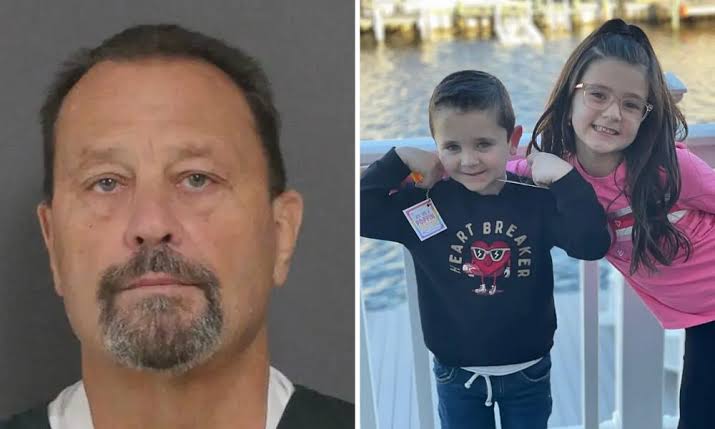
Restaurant employees who interacted with the table form another layer of potential evidence. Servers track orders as part of their work. Bartenders prepare and sometimes deliver drinks. In the course of a busy evening, individual details may blur, but a table that later becomes the subject of a major investigation often prompts clearer recollection. Staff can be asked whether they remembered serving Schneider, how many times they returned to the table with alcoholic beverages, and whether anything about the service stood out.
Because the dinner involved a family group that included two children, the table may have been more memorable than a routine adult party. The subsequent tragedy has ensured that anyone who served or observed the group has reason to search their memory carefully.
Surveillance as a Silent Witness
If MJ’s Restaurant maintained functioning cameras covering the dining room or bar, the footage could provide the most direct visual record of the evening. Cameras can show the arrival of drinks, the number of bottles or glasses placed in front of Schneider, the pace of consumption, and any additional service that occurred outside the three-beer narrative. Even incomplete or partially obscured footage can narrow the range of possibilities and test the credibility of the account Schneider gave police.
The value of such footage lies in its independence from human memory. It does not rely on a server’s recollection or a family member’s observation. It records what occurred in the space and time under examination.
The Scientific Backdrop
The 0.16 percent BAC already creates a significant problem for the three-beer claim. For a typical adult male, three standard beers consumed over two hours, followed by several additional hours of metabolism, would not ordinarily produce a reading of that magnitude. The discrepancy has made the accurate reconstruction of Schneider’s alcohol intake a priority. Restaurant records and staff accounts offer one of the few avenues for independently verifying or challenging the volume of alcohol he reported.
Prosecutors have treated the BAC as central evidence of impairment. At Schneider’s detention hearing, the state argued that he consumed enough alcohol to reach 0.16 percent and then operated a vessel, with catastrophic consequences. Schneider’s pre-test statement about three beers remains the primary competing narrative. The ability to cross-reference that statement against receipts, order times, and staff testimony gives investigators a practical method for evaluating its reliability.
Legal and Investigative Implications
Schneider faces two counts of reckless vessel homicide, operating a vessel under the influence, and reckless operation of a vessel. The prosecution’s theory rests in significant part on the degree of impairment present when he took the helm with two children aboard. The 0.16 percent result is the strongest single piece of scientific evidence supporting that theory. The three-beer claim is the main alternative account. Any documentary or testimonial evidence from the restaurant that bears on the volume of alcohol consumed therefore carries direct relevance to the central issue in the case.
The children’s parents have supported Schneider’s pretrial release, describing him as a loving grandfather. That support forms part of the human context of the case but does not resolve the factual conflict between the stated consumption and the measured BAC. The ordinary records of a restaurant evening — receipts, tickets, timestamps, and staff observations — remain available as tools for addressing that conflict.
Reconstructing an Evening Drink by Drink
Because Schneider provided a specific claim, the investigation is positioned to attempt a drink-by-drink reconstruction of the two hours at MJ’s. What was ordered. When it was entered into the system. When it was delivered. How it was paid for. What staff remembered. What, if anything, cameras recorded. Each of those details can be compared against the assertion that only three beers were consumed.
In many impaired-operation cases, the precise volume of alcohol remains difficult to establish with certainty. Here, the combination of a specific self-report, a hard toxicology number, and the potential availability of restaurant records has created conditions in which a more detailed reconstruction is possible. A single receipt, if it captures the relevant transactions, can serve as a foundational piece of that reconstruction. Additional records and testimony can fill in the sequence around it.
A Case in Which the Ordinary Has Become Critical
Stephen Schneider told police he drank three beers over about two hours before operating the boat that struck a channel marker and threw his grandchildren into Barnegat Bay. A blood test drawn after midnight showed 0.16 percent alcohol. The distance between those two facts has made the dinner at MJ’s Restaurant a focal point of the investigation.
The tools available to examine that dinner are, in many respects, ordinary. Receipts. Order tickets. Service times. Staff accounts. Surveillance footage. In the context of a homicide case centered on impairment, those ordinary materials have taken on extraordinary significance. They offer a means of testing a precise claim against independent evidence and of reconstructing an evening that ended in the deaths of two children.
As the case proceeds, the ability to retrace the dinner drink by drink will remain one of the practical methods by which investigators and, eventually, a court can evaluate the reliability of Schneider’s account and the true extent of his impairment on the night of July 19, 2026.