The last person to see Stephen Schneider before the boat trip might hold the most crucial detail!
The last person to see Stephen Schneider before the boat trip might hold the most crucial detail!
Before the boat left the restaurant area, Stephen Schneider spent time eating and drinking with his family.
He stated that he consumed two Guinnesses and one Miller Lite.
However, from the waitstaff to those nearby, many people may have witnessed what transpired during the final hours leading up to the crash.
While a blood alcohol content (BAC) of approximately 0.16% is already on record, witnesses at the restaurant could help fill in the missing pieces of that night’s timeline.
************
**The Last Person to See Stephen Schneider Before the Boat Trip Might Hold the Most Crucial Detail**
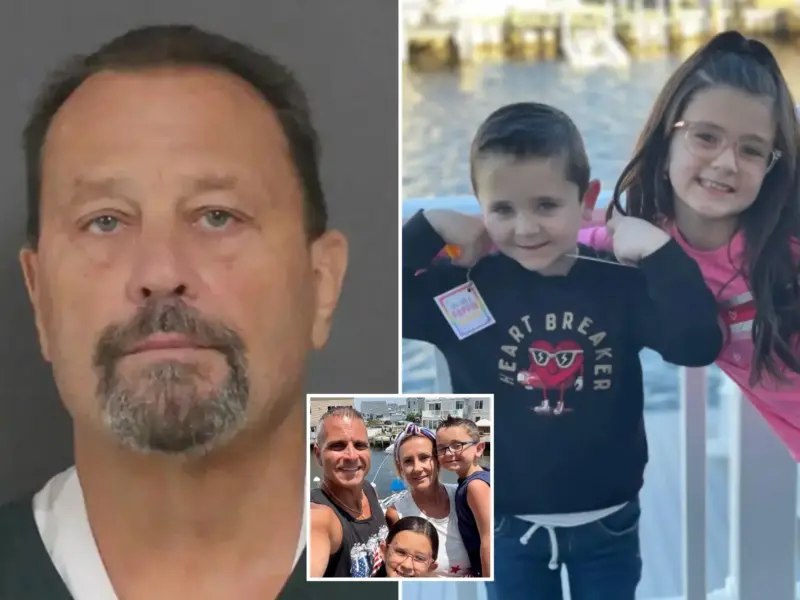
In the final hours before a 28-foot boat struck a channel marker on Barnegat Bay and threw two children into the water, Stephen C. Schneider was not alone. He was seated at a table at MJ’s Restaurant Bar & Grill in Bayville with his wife, his daughter, his son-in-law, and his two grandchildren. He later told New Jersey State Police that during the roughly two-hour dinner he consumed two bottles of Guinness and one Miller Lite. A blood sample drawn under warrant after midnight returned a blood alcohol concentration of approximately 0.16 percent — twice the legal limit. Between those two facts lies a stretch of time that multiple people observed. The last individuals who saw Schneider before he cast off may ultimately help determine which version of the evening more accurately reflects what occurred.
### The Final Hours Ashore
According to court documents, the family gathering at MJ’s on July 19, 2026, brought together Schneider, his wife Laurie, their daughter, their son-in-law, and the two children — 9-year-old Mya Bella Golabek and 7-year-old Sigmund Paul Golabek. Schneider and his wife had arrived by boat. The children’s parents had arrived separately by boat with Mya and Sigmund. The group shared a meal that lasted about two hours.
After the dinner concluded, the children transferred to their grandparents’ Tidewater center-console vessel for the return trip across the bay. Shortly after 9 p.m., the boat struck an illuminated Intracoastal Waterway channel marker at a speed Schneider later estimated at approximately 20 mph. Both children, who were wearing life jackets and seated near the front, were ejected into the water. They were recovered and transported to Community Medical Center in Toms River, where they were pronounced dead.
In the aftermath, Schneider told investigators he had consumed three beers during the dinner. The blood drawn at 12:46 a.m. told a different story. Toxicology experts concluded that his alertness, judgment, perception, response time, and coordination were markedly impaired by alcohol.
### Why the Last Observations Matter
The period immediately before a person takes control of a vehicle or vessel is often the most relevant window for assessing impairment. By the time Schneider left the restaurant area and got underway, any alcohol he had consumed during the meal was already in his system and beginning to affect his faculties. The people who saw him during those final minutes ashore — whether family members rising from the table, staff clearing the check, or others nearby — were in a position to observe his demeanor, speech, balance, and the final details of what he had in front of him.
A relative who noticed that Schneider appeared steady and clear-headed would offer one kind of observation. A relative or staff member who noticed slowed speech, repeated orders, or an unsteady gait would offer another. Even neutral details — how many empty bottles remained on the table, whether a final drink was unfinished, whether Schneider handled the payment or the walk to the boat without difficulty — can help fill gaps in the timeline.
Because Schneider provided a specific claim about his consumption, these final observations gain additional significance. They can be compared against both his statement and the later BAC result. Consistency or inconsistency with either becomes part of the larger evidentiary picture.
### The Circle of Potential Witnesses
The most obvious witnesses are the family members who shared the table for the entire meal. Schneider’s wife, daughter, and son-in-law were present for the full two hours and for the transition from the restaurant back to the boats. They saw what was ordered, what was consumed, and how Schneider appeared as the evening progressed. Their recollections, if obtained and if reliable, can either support the three-beer account or suggest a different volume of alcohol.
Restaurant staff form a second category. Servers who took orders and delivered drinks, bartenders who prepared them, and any managers who interacted with the table may remember details about the service. In the ordinary course of a shift, individual tables blur together. A table that later becomes linked to a fatal crash and a major investigation tends to sharpen memory. Staff can be asked what they served Schneider, how many times they returned with alcoholic beverages, and whether anything about his condition stood out as the group prepared to leave.
Other patrons seated nearby constitute a third, more peripheral group. Someone at an adjacent table might have noticed the number of bottles accumulating or overheard conversation about another round. While less likely to provide detailed accounts, such observations can still contribute fragments to the overall reconstruction.
### The Scientific Pressure on the Timeline
The 0.16 percent BAC measured hours after the crash already creates substantial pressure on the three-beer narrative. For a typical adult male, three standard beers consumed over two hours, followed by additional time for metabolism, would not ordinarily produce a reading of that magnitude. The discrepancy implies either a higher volume of alcohol than Schneider reported or some other factor affecting the result. Observations from the final period at the restaurant can help distinguish between those possibilities.
If witnesses describe a pattern of drinking consistent with three beers and a man who appeared only mildly affected, the focus may shift toward questions about individual metabolism, prior consumption, or the precise timing of the blood draw. If witnesses describe a larger number of drinks or clearer signs of intoxication as the group prepared to leave, the three-beer claim becomes more difficult to sustain.
### Reconstructing the Departure
The moments of departure are particularly relevant. The decision to leave the table, the handling of the check, the walk from the restaurant to the dock, the boarding of the boat, and the initial casting off all occurred after the alcohol had been consumed and before the collision. Anyone who observed Schneider during that sequence was seeing him at the point when impairment, if present, would have been active.
Family members who walked with him to the boat, staff who watched the group exit, or dockside observers if any existed, may hold details about his coordination, speech, or decision-making in those final minutes ashore. Even the absence of noticeable impairment in the recollections of those who saw him leave would be relevant, because it would have to be reconciled with a BAC that laboratory experts later associated with marked impairment.
### Legal Context
Schneider faces two counts of reckless vessel homicide, operating a vessel under the influence, and reckless operation of a vessel. Prosecutors have cited the 0.16 percent figure as evidence of the degree of impairment under which he operated the boat. At his detention hearing, the state argued that he consumed enough alcohol to reach that level and then took the helm, with catastrophic results. Schneider’s statement about three beers remains the primary competing account.
The presence of multiple people who saw him during the dinner and the departure gives the investigation avenues for testing that account that go beyond Schneider’s own words and the blood test alone. The last person to interact with him before the boat left the restaurant area — whether a family member, a server handling the final check, or someone else — may hold a detail that helps resolve the tension between the two versions of the evening.
### The Weight of Ordinary Observations
In many impaired-operation cases, the critical window of consumption occurs in relative privacy. Here, it occurred in a public restaurant in the company of family. The ordinary observations of people who shared a meal and watched a group prepare to leave have therefore taken on potential evidentiary value. What they saw Schneider drink. How he appeared as the evening ended. Whether anything about his condition gave them pause as he prepared to operate a boat with two children aboard.
Those observations cannot change the BAC result. They can, however, help explain it or deepen the conflict with Schneider’s statement. In a case that already turns in significant part on the distance between a claim of three beers and a reading of 0.16 percent, the recollections of the last people who saw him ashore remain among the most practical means of filling in the missing pieces of the timeline.
### A Timeline Still Being Assembled
Stephen Schneider spent the final hours before the boat trip eating and drinking with his family at MJ’s Restaurant. He told police he consumed two Guinnesses and one Miller Lite. A blood test drawn after midnight showed 0.16 percent alcohol. Between the end of the meal and the moment the boat got underway, multiple people had the opportunity to observe him.
The investigation continues to examine what those people saw. Their accounts, together with any restaurant records and the scientific evidence already in hand, will help determine how the evening is ultimately understood. In a case defined by the deaths of two children and a contested account of impairment, the last observations made before Schneider took the helm may prove as significant as any single document or laboratory result. The people who saw him in those final minutes ashore were the last to witness his condition before the boat left the restaurant area and the night turned irreversible.