Stephen Schneider remembers exactly which beers he drank, but the lab holds the final figure!
Stephen Schneider remembers exactly which beers he drank, but the lab holds the final figure!
He told the police he had consumed Guinness and Miller Lite.
That was the 64-year-old man’s recollection of the evening before the tragedy.
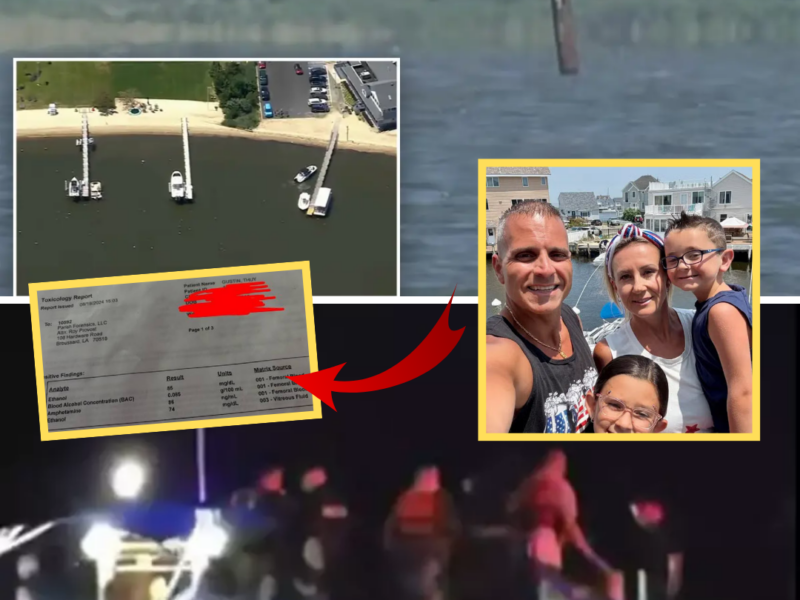
But weeks later, a number from the lab emerged: approximately 0.16%.
Now, his version based on memory is pitted against the evidence recorded in the blood sample.
***********************

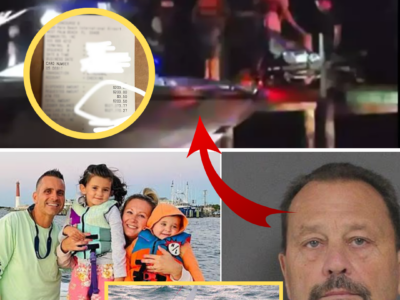
Stephen C. Schneider gave police a clear and limited description of what he had consumed on the evening of July 19, 2026. He did not speak in generalities. He named the beers and fixed the total. Over the course of a roughly two-hour family dinner at MJ’s Restaurant Bar & Grill in Bayville, New Jersey, he said, he drank two bottles of Guinness and one Miller Lite.
That statement was recorded in the immediate aftermath of a collision that killed his two young grandchildren. A blood sample drawn under warrant hours later returned a different figure: a blood alcohol concentration of approximately 0.16 percent. The laboratory result is twice New Jersey’s legal limit for operating a vessel. Experts who reviewed the sample concluded that Schneider’s alertness, sense of care and caution, perception, judgment, response time, and coordination were markedly impaired by alcohol.
The contrast between a specific memory of three beers and a measured reading of 0.16 percent has become one of the defining tensions in the case. Because Schneider’s account is narrow and detailed, it can be examined against external evidence rather than accepted or rejected on the basis of recollection alone.
The Dinner and the Departure
The evening began as a family outing. Schneider and his wife Laurie arrived at MJ’s by boat. Their daughter and son-in-law arrived in a separate boat with the two children, Mya and Sigmund. The group sat down together. The meal lasted about two hours.
Schneider later told State Police that during those two hours he drank two Guinnesses and one Miller Lite. He finished the beers, left the table with the family, and boarded the 28-foot Tidewater for the trip home. The children rode with their grandparents.
Shortly after 9 p.m. the boat struck an illuminated channel marker on Barnegat Bay. Both children were thrown into the water. They were wearing life jackets. Schneider and his wife attempted to recover them and began CPR. The children were taken to Community Medical Center in Toms River and pronounced dead.
At the time Schneider gave his account of the three beers, no laboratory result was available. His description of the evening stood alone.
The Blood Sample and the Laboratory Result
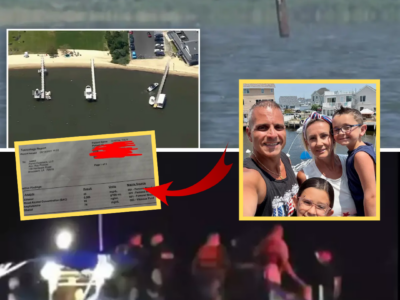
Police observed signs of impairment. They obtained a warrant for a blood sample. The sample was drawn at the hospital at 12:46 a.m. When the results came back from DrugScan Labs, the blood alcohol concentration was approximately 0.16 percent.
That figure is twice the legal limit in New Jersey for operating a vessel. The laboratory’s doctors concluded that Schneider was unfit to operate a motor vehicle and that his alertness, sense of care and caution, perception, judgment, response time, and coordination were markedly impaired by alcohol.
The 0.16 percent reading arrived after Schneider had already given his account of the three beers. The two versions of the evening — the memory of three specific beers and the measured concentration of 0.16 percent — were now on the record together.
Why Specificity Changes the Investigation
A vague statement about drinking is hard to test. A specific list of three named beers is not. Schneider’s account supplies a fixed quantity and a fixed window. That precision opens the door to cross-referencing against other sources of information from the same evening.
Restaurant records can show what was ordered and when. Staff who served the table can describe what they brought and how many times they returned. Family members who sat with him can recount what they saw him drink and how he appeared. Any surveillance cameras that covered the dining room, the bar, or the exits can supply visual confirmation of the sequence.
Because the claim is narrow, each of these sources can be compared directly with it. Agreement strengthens the account. Divergence requires explanation. The three-beer story no longer depends only on Schneider’s recollection. It can be checked.
The Final Hours at the Table
The closing portion of the dinner is especially relevant. By the time the family finished the meal and prepared to leave, any alcohol Schneider had consumed was already circulating. The people who saw him in those final minutes — relatives at the table, staff handling the last service or the check, anyone who observed the walk toward the dock — were seeing him at the point when the impairment later measured at 0.16 percent would have been present.
Their observations of the number of drinks, the pace of consumption, and his demeanor as he left the restaurant supply details that sit close in time to the operation of the boat. Those details can be set beside both Schneider’s statement and the laboratory result.
Building a Timeline That Does Not Depend on One Memory
The practical task is to assemble a sequence of the dinner that stands apart from Schneider’s recollection. When were the first beers ordered? How many were delivered in total? What brands appeared on the tickets or in staff memory? When was the last drink placed on the table? When did the check close? When did Schneider leave the building? When did the boat depart?
Each of these points can be constrained by a combination of staff testimony, family recollection, electronic records, and any available video. Once that independent sequence exists, it can be compared directly with the three-beer claim. Points of agreement support the account. Points of difference require explanation. The 0.16 percent figure remains the scientific benchmark against which both the self-report and the external timeline are evaluated.
The Legal Stakes
Schneider faces two counts of reckless vessel homicide, operating a vessel under the influence, and reckless operation of a vessel. Prosecutors have placed the 0.16 percent BAC at the center of their argument about impairment. Schneider’s specific account of three beers remains the competing narrative. Because that account is detailed, the evidence that confirms or contradicts it carries clear weight.
The children’s parents have supported his pretrial release, describing him as a loving grandfather. That support is part of the family context. It does not remove the need to examine whether the three-beer description matches what others saw and what the restaurant recorded.
A Story That Can Be Checked
Stephen Schneider has given his account of what he drank. The blood test has given a number. Between them stand the people who worked at the restaurant and the people who sat at the table. Their observations, the records of service, and any visual data from the evening together create a means of testing the accuracy of the claim given to police.
The final hours at MJ’s Restaurant are no longer simply the backdrop to a boat trip. They are a period that can be reconstructed from multiple independent angles. With the 0.16 percent result on the record, those angles have become essential. The witnesses from that evening — starting with the staff who brought the drinks and the family who shared the meal — may hold the practical key to determining whether Schneider’s description of the evening survives contact with the evidence. In a case defined by the deaths of two children and a sharp conflict between a self-report and a scientific measurement, that determination remains one of the central tasks of the investigation.