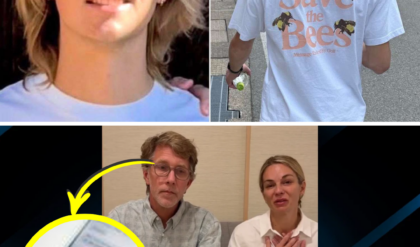
The disappearance and subsequent discovery of the body of 20-year-old James “Weston” Higginbotham, an Auburn University student from Hoover, Alabama, in the mountainous terrain outside Kyoto, Japan, has left his family, friends, and a broader community grappling with profound grief and unanswered questions. What began as a celebratory family vacation to mark his younger brother’s high school graduation turned into a nightmare when Weston, an avid hiker and passionate environmentalist, ventured off alone on the evening of May 29, 2026. His last confirmed movements, captured on CCTV at Yamashina Station, showed him heading toward wooded trails, a path that aligned perfectly with his lifelong love for the outdoors. Yet, as search efforts intensified and ultimately revealed his remains days later, a peculiar detail has emerged that haunts those who knew him best: the absence of his trusted little flashlight.
Weston Higginbotham was the kind of young man who embodied curiosity and a deep respect for nature. Born and raised in Alabama, he graduated from Spain Park High School before pursuing a degree in biosystems engineering at Auburn University, where his focus on sustainability reflected a broader commitment to preserving the environments he so cherished. Friends described him as someone who approached life with quiet intensity, whether it was debating the ecological impacts of technology or planning solo treks into the wilderness. Hiking was not merely a hobby for Weston; it was a ritual, a way to connect with the world on his own terms. He prepared meticulously for every outing, packing essentials that spoke to both practicality and personal habit. Among them, according to those closest to him, was a small pocket flashlight that he never left behind, a reliable companion for navigating trails after dusk or illuminating unexpected discoveries along the way.
The circumstances surrounding his final hours remain shrouded in ambiguity. During the family trip to Japan, tensions had simmered over seemingly mundane matters, including Weston’s discomfort with his mother’s reliance on artificial intelligence tools like ChatGPT for navigation and planning. As a naturalist wary of technology’s environmental footprint, he reportedly sought some space to clear his head, stepping away from the group to explore Kyoto independently. Surveillance footage placed him in the Yamashina area around 8:15 p.m., walking along a path that led directly into forested hiking grounds. His phone, tracked via a family app, soon went dark, a sudden silence that alarmed his parents, Nancy and Keith Higginbotham. What followed was a desperate multinational effort involving Japanese police, search dogs, helicopters, and volunteers, all hampered by inclement weather, including heavy rains that turned trails into slippery hazards.
For nearly a week, the Higginbotham family navigated the unfamiliar bureaucracy and language barriers of a foreign country while clinging to hope. They appealed publicly for information, sharing details of Weston’s appearance—his long blonde hair, pierced ears, white “Save the Bees” T-shirt, and lavender corduroy pants—and emphasizing his experience as a hiker who knew how to handle challenging terrain. Japanese authorities treated the case as a missing persons investigation with no initial signs of foul play, though they noted it was highly probable that Weston had intentionally separated from his family. As official searches scaled back amid the challenging conditions, volunteer rescue groups pressed on, driven by the family’s unwavering persistence. On June 6, their efforts yielded the tragic news: Weston’s body was located in a steep, densely wooded mountainous area outside Kyoto.
The discovery brought a painful closure to the immediate uncertainty but opened new layers of sorrow and speculation. In a heartfelt Facebook post, Nancy Higginbotham expressed the family’s devastation, writing that the grief was impossible to articulate. They thanked supporters, rescuers, and the community that had rallied around them. Yet even in mourning, subtle questions lingered about the details of that fateful hike. One close friend, speaking on condition of anonymity due to the ongoing sensitivity of the investigation, revealed that authorities had specifically inquired about Weston’s habitual pocket flashlight. “He never went hiking without that little flashlight,” the friend recounted. “It was this compact, durable thing he’d picked up years ago, something he kept charged and ready in his backpack no matter where he went. Investigators asked about it recently because when they recovered his belongings, it wasn’t there with the rest.”
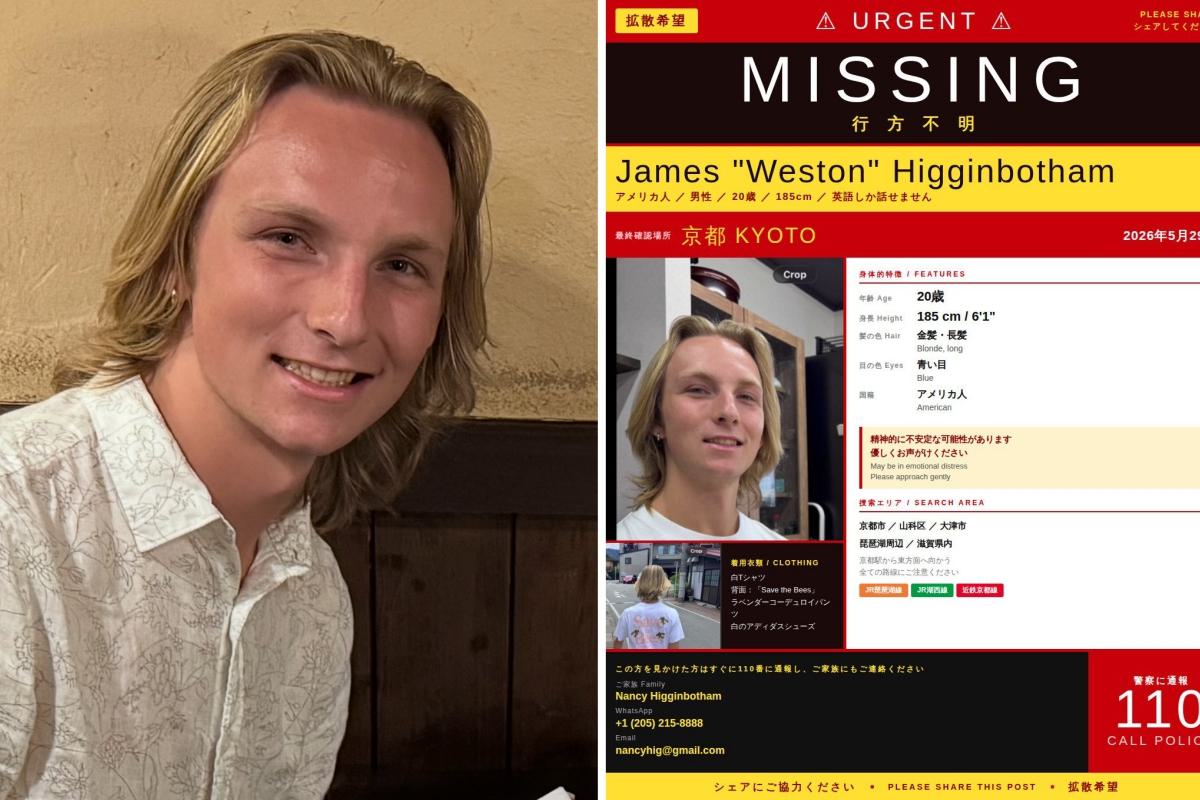
This missing item, seemingly minor in the grand scheme of a young life cut short, has fueled quiet contemplation among those who knew Weston. Flashlights are ubiquitous tools for hikers, especially in regions like Japan’s mountainous trails where daylight fades quickly and unexpected delays can occur. Weston’s preparation was legendary among his circle; he often shared stories of past adventures where his gear had proven invaluable, from spotting wildlife at twilight to safely retracing steps in fading light. The absence of this particular light raises intriguing possibilities. Did he lose it during a fall or while traversing difficult ground? Could it have been left behind intentionally, perhaps as part of a moment of reflection or distress? Or might it point to something more enigmatic about his final movements? Rescue crews, operating in treacherous post-storm conditions, faced significant challenges in recovering all personal effects, but the friend’s account suggests this detail stood out enough to prompt targeted questions.
Weston’s passion for the natural world was evident long before his trip to Japan. Growing up in the American South, he explored forests, rivers, and trails that shaped his worldview and academic pursuits. At Auburn, he immersed himself in studies that blended engineering with environmental stewardship, advocating for sustainable practices that honored the ecosystems he loved. Friends recalled late-night conversations about biodiversity, climate change, and the importance of immersive experiences in nature over digital shortcuts. His decision to wander alone in Kyoto, despite the family’s itinerary, aligned with this independent spirit. He carried a book about butterflies in his pocket, a small testament to his curiosity about local flora and fauna. The trails near Yamashina offered precisely the kind of immersive escape he sought, with their ancient forests, scenic overlooks, and opportunities for solitude amid Japan’s rich natural heritage.
The search operation itself highlighted both the dedication of responders and the perils of wilderness areas. Japanese police deployed extensive resources, including ground teams navigating waist-high mud and helicopter support for aerial sweeps. Weather played a cruel role, with storms bringing heavy rain that obscured tracks and increased risks of slips or exposure. Volunteers, often locals familiar with the terrain, continued where official efforts paused, combing steep slopes and dense undergrowth. The discovery of Weston’s body in such challenging topography underscored the unforgiving nature of the landscape he had chosen to explore. Preliminary reports have not detailed the exact cause of death, leaving room for hypotheses ranging from accidental injury and hypothermia to other factors consistent with a solo hike gone awry. Authorities continue to investigate, emphasizing that no evidence of criminal activity has surfaced.
For the Higginbotham family, the loss extends far beyond the immediate tragedy. Weston was the oldest sibling, a protective and inspiring figure to his brother, whose graduation the trip was meant to celebrate. Nancy and Keith have spoken of their son’s gentle heart, his love for travel, and his dreams of exploring mountains worldwide to embed himself in different cultures. Back in Alabama, his absence ripples through a tight-knit community of friends, classmates, and fellow outdoors enthusiasts. Social media has filled with tributes, memories of shared hikes, and messages of support. One recurring theme is Weston’s reliability and preparedness, qualities that make the missing flashlight all the more poignant. It was not just gear; it symbolized his thoughtful approach to adventure, a safeguard against the unknowns of the trail.

As details continue to emerge, the story of James “Weston” Higginbotham serves as a reminder of the delicate balance between human curiosity and the raw power of nature. Japan’s hiking trails, while breathtaking, demand respect, especially for visitors unaccustomed to local conditions or sudden weather shifts. Weston’s case has drawn international attention, prompting discussions about safety protocols for young travelers, the importance of sharing itineraries, and the emotional toll of family separations during trips. His friends hope that the inquiry into the flashlight might yield insights into those last hours, offering some measure of understanding amid the pain. Whether it slipped away unnoticed during a desperate moment or holds clues to his mindset, its absence adds a layer of mystery to an already heartbreaking narrative.
In the days following the discovery, the family has begun the solemn process of repatriation and remembrance. Plans for a memorial are underway, likely to honor Weston’s life through stories of his adventures, his academic achievements, and his unwavering commitment to the environment. Those who knew him emphasize that he lived fully, chasing experiences that aligned with his values. The little flashlight, though missing from the recovered items, remains a vivid part of his legend—a small but constant light in the darkness he so often navigated with confidence. Its story, shared now in whispers and reflections, underscores how even the most prepared among us can encounter the unexpected.
Broader reflections on Weston’s journey touch on universal themes of youth, exploration, and loss. In an era of constant connectivity, his choice to disconnect, however briefly, resonates with many who seek authenticity in nature. Yet it also highlights vulnerabilities: the isolation of solo travel, the limits of preparation against unforeseen circumstances, and the enduring bonds of family stretched across continents. Investigators’ interest in the flashlight may prove incidental, a routine detail in piecing together timelines, or it could illuminate something deeper about Weston’s final decisions. Either way, it humanizes the tragedy, reminding us that behind every missing persons case are personal habits, cherished items, and lives rich with meaning.
As the Higginbothams mourn privately and publicly, their resilience in the face of unimaginable loss has inspired countless others. Supporters worldwide have offered prayers, donations for search costs, and messages celebrating Weston’s spirit. His story, while ending in sorrow amid Kyoto’s misty mountains, carries forward lessons about cherishing time with loved ones, respecting the wild, and holding onto hope even in darkness. The little flashlight that accompanied him on so many trails may never be found, but its memory endures as a symbol of the light Weston brought to those around him—a beacon of curiosity, kindness, and adventure that continues to guide reflections on a life too soon extinguished.
The forested paths of Yamashina, now forever linked to Weston’s name, stand as silent witnesses to countless stories of wanderers drawn to their beauty. For his family and friends, the coming weeks and months will involve navigating grief while preserving his legacy. They speak of his laughter, his insights, and his unyielding passion for a better world. In time, perhaps more details will surface to clarify the events of that May evening. Until then, the missing flashlight serves as a quiet enigma, one thread in the tapestry of a young man’s indelible mark on the world. James “Weston” Higginbotham will be remembered not for how he vanished, but for the vibrant life he led, illuminating trails for others long after his own journey concluded.
News
“‘THE BOY WOULD NEVER DO THAT…’ The family of James “Weston” Higginbotham speaks out against the conclusion reached when his body was found, believing it to be a homicide and that the suspect is one of these individuals”
The tragic conclusion to the search for James “Weston” Higginbotham in the forested mountains outside Kyoto, Japan, has brought an unimaginable layer of grief to his family, who now find themselves in a painful struggle against the official explanations of…
He wasn’t supposed to be there…: After 8 days of searching, Auburn student James “Weston” Higginbotham was found in a remote mountainous area outside Kyoto — miles from where his phone last went silent, and that one detail is leaving everyone with the same question
The conclusion of an intense, eight-day international search operation has left an entire community enveloped in grief, yet the discovery of James “Weston” Higginbotham has introduced a profound tactical mystery that investigators are now scrambling to decipher. The twenty-year-old Auburn…
BREAKING NEWS — Weston Higginbotham’s body has been found, but what haunts his family and rescue team is his heartbreaking condition when it was discovered
The agonizing suspense that has gripped the family of James “Weston” Higginbotham and the Auburn University community has culminated in a devastating conclusion, bringing a heartbreaking end to a week-long multi-national search. The young biosystems engineering student, who vanished while…
PLEASE TELL ME THIS ISN’T TRUE… Family members say investigators recently asked whether James “Weston” Higginbotham was helpless when he saw the item rescuers found by the river
The deepening mystery surrounding the disappearance of James “Weston” Higginbotham has taken a profoundly somber and unsettling turn, plunging his family and the community into a state of heightened distress. In a case already marked by a series of chilling…
He never went anywhere without that watch…: Family members searching for James “Weston” Higginbotham said investigators are now trying to locate it because they believe it contains his FINAL WORDS
In the forensic landscape of a missing person case, certain items transcend their material value to become profound symbols of identity, habit, and potentially, the ultimate truth of what occurred. For the family of James “Weston” Higginbotham, that item is…
The situation may have changed. A newly interviewed witness says they remember seeing James “Weston” Higginbotham bending down to look at something in his hand after the last official CCTV footage. His message is making her tremble
The dynamic nature of a missing person investigation has been starkly illuminated by a dramatic turn of events in the search for James “Weston” Higginbotham. While previous efforts focused heavily on analyzing his final known digital footprints and physical belongings,…
End of content
No more pages to load