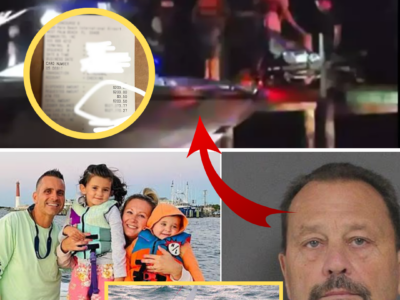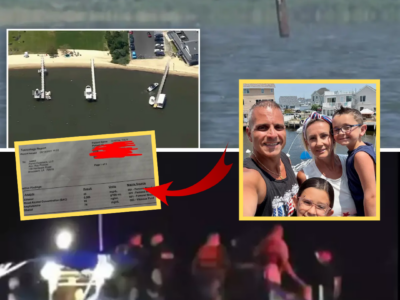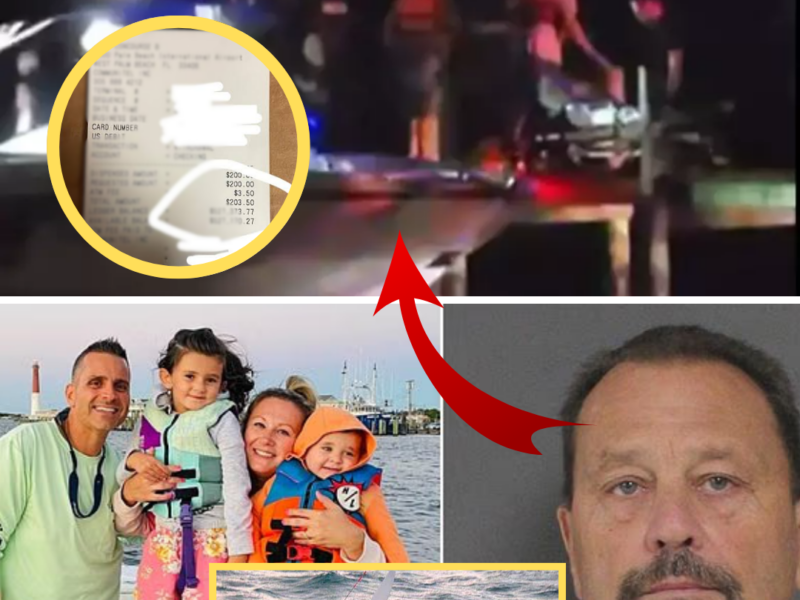
Mya and Siggy were more than just names in a case file; details about the bond between the siblings make the tragedy even more heart-wrenching
Mya and Siggy were more than just names in a case file; details about the bond between the siblings make the tragedy even more heart-wrenching.
The two were remembered by their family as an exceptionally close pair of siblings.
On the night of July 19, they boarded a boat together.
Just minutes later, they both fell victim to the same crash.
The heartbreaking coincidence surrounding their final journey makes the story behind the tragedy particularly haunting.
*****************
Mya Bella Golabek was 9 years old. Her brother, Sigmund Paul Golabek — known to family as Siggy — was 7. On the evening of July 19, 2026, the two children boarded a boat together after a family dinner in Bayville, New Jersey. Minutes later both were thrown into Barnegat Bay when the vessel struck a channel marker. Both were wearing life jackets. Both were later pronounced dead at the same hospital.
In the case file they appear as the two victims of a single collision. In the lives of their parents and grandparents they were a brother and sister who spent their last evening in each other’s company and who did not survive the short trip home. The fact that they died together, on the same boat, in the same moment, has made the loss particularly difficult for those who loved them.
The Evening That Began as an Ordinary Outing
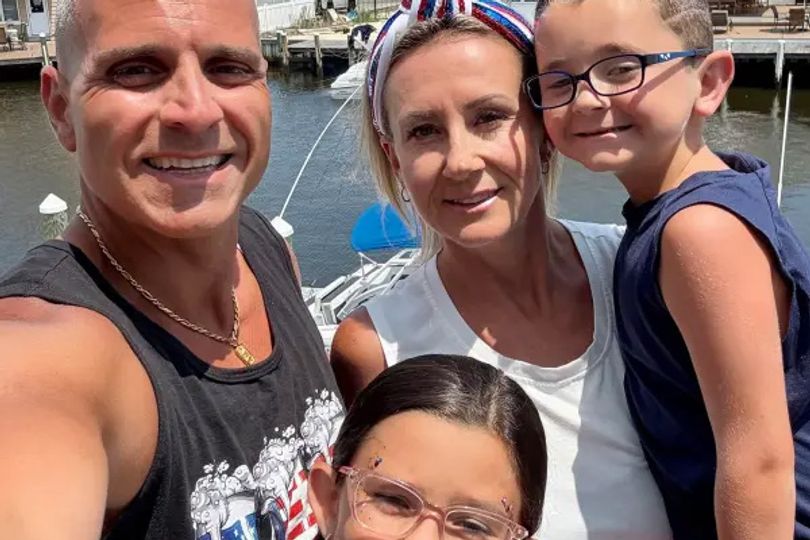
The family had gathered at MJ’s Restaurant Bar & Grill. Stephen C. Schneider and his wife Laurie arrived by boat. The children’s parents arrived in a separate boat with Mya and Sigmund. The group shared a meal that lasted about two hours. When it was time to leave, the children did not return with their parents. They boarded their grandparents’ 28-foot Tidewater center-console vessel for the ride across the bay.
Public records do not describe the exact conversation that led to the change. What is established is that Mya and Sigmund were together on their grandfather’s boat when it left the restaurant area. Schneider was at the helm. His wife was also aboard. The two children were seated near the front.
Shortly after 9 p.m. the boat struck an illuminated channel marker. The impact ejected both children into the water. Schneider and his wife attempted to recover them and began CPR. Emergency responders took the children to Community Medical Center in Toms River. Neither child survived.
Two Lives Ended in the Same Instant
The investigative record treats the deaths as the result of a single event. Both children were thrown from the same vessel. Both were wearing life jackets. Both received immediate attempts at rescue. Both were transported to the same hospital and pronounced dead.
For the family, the simultaneity carries a different weight. The two siblings did not die in separate incidents separated by time or distance. They were together at the dinner table, together when they switched boats, together when the collision occurred, and together in the water afterward. The final journey they took was a shared one.
Limited public information has been released about the children’s individual personalities or the specific nature of their relationship. What is known is that they were a brother and sister, three years apart, who spent their last evening in the company of their parents and grandparents and who did not return. The absence of detailed public anecdotes about their daily lives or particular closeness does not diminish the reality that two young siblings died side by side.
The Larger Context of the Case
Stephen Schneider later told police he had consumed two Guinness beers and one Miller Lite during the dinner. A blood sample drawn under warrant in the early hours of the following morning returned a blood alcohol concentration of approximately 0.16 percent, twice the legal limit in New Jersey. Laboratory analysis concluded that his judgment, perception, response time, and coordination were markedly impaired.
Schneider faces two counts of reckless vessel homicide, operating a vessel under the influence, and reckless operation of a vessel. The children’s parents have supported his pretrial release, describing him as a loving grandfather. That support reflects the complicated reality of a family grieving the loss of two children while also confronting the legal consequences for another member of the same family.
The decision for Mya and Sigmund to ride with their grandparents remains one of the fixed points in the timeline. It was an ordinary arrangement at the end of a family meal. It placed both children on the boat that Schneider was operating when the collision occurred.
The Weight of a Shared Fate
In many fatal incidents involving children, families are left to grieve losses that occurred at different times or in different circumstances. Here the losses are paired. The same impact that threw one child into the water threw the other. The same rescue efforts, the same hospital, the same pronouncement of death applied to both.
That pairing has shaped how the tragedy is remembered. Mya and Sigmund are not only two separate victims listed in a charging document. They are a sister and brother whose final recorded actions — boarding the boat, sitting near the front, being thrown into the bay — were performed together. The heartbreaking coincidence of their shared journey is part of what makes the case so difficult to absorb.
What Remains Known and Unknown
Public reporting has established the sequence of the evening, the identities and ages of the children, the fact that they were wearing life jackets, and the circumstances of the collision. It has not provided extensive personal detail about their characters, their daily relationship as siblings, or specific memories their family has chosen to keep private.
Respect for that privacy is appropriate. The verified facts are already sufficient to convey the scale of the loss: two young children, a brother and sister, spent their last evening with their family and did not survive the short trip home. They boarded the same boat. They were subjected to the same impact. They died as a result of the same crash.
A Timeline That Ends for Both at Once
The case file contains times, distances, a blood-alcohol figure, and formal charges. Within that file the two children appear as the victims of the collision. Outside the file they remain Mya and Sigmund — a 9-year-old girl and her 7-year-old brother whose lives ended on the same night, on the same boat, in the same water.
The boat swap after dinner, the operation of the vessel, the collision with the marker, and the failed rescue efforts form the factual sequence. The fact that the two siblings experienced every stage of that sequence together is what gives the timeline its particular emotional force. They were not separated by the events of the evening. They were joined by them until the end.
Stephen Schneider has given his account of the alcohol he consumed. The laboratory has supplied a blood-alcohol measurement. The investigation continues. Through all of it, the simplest and most painful detail remains unchanged: Mya and Siggy boarded a boat together, and neither of them came home.