⚡ 37 CAMERAS — AND NOT ONE SAW PRINCESS DIANA DIE
Paris, August 31, 1997. There were 37 traffic and security cameras along the Alma underpass route. Yet not a single one captured the crash that killed Princess Diana. The official word? “Maintenance.” But no one ever explained why every lens blinked at the same moment the world lost its brightest light.
37 Cameras — And Not One Saw Princess Diana Die
On August 31, 1997, at 12:23 AM, a black Mercedes S280 carrying Diana, Princess of Wales, crashed into the 13th pillar of the Pont de l’Alma tunnel in Paris, killing Diana, Dodi Fayed, and driver Henri Paul, and severely injuring bodyguard Trevor Rees-Jones. Amid the tragedy, one detail has fueled decades of speculation: despite 37 traffic and security cameras along the tunnel’s route, not a single frame captured the crash. The official explanation? “Maintenance.” Yet the simultaneous failure of every camera at such a pivotal moment has left many questioning how the world’s “brightest light” vanished unwitnessed. This article examines the camera controversy, the crash’s context, official findings, and why this mystery endures.
The Night of the Crash
By August 1997, Diana, aged 36, was a global icon, divorced from Prince Charles and known for her humanitarian work. On August 30, she and Dodi Fayed, son of billionaire Mohamed Al-Fayed, arrived in Paris, hounded by paparazzi. After dining at the Ritz Hotel, they left at 12:20 AM, attempting to evade photographers. The Mercedes, driven by Henri Paul, entered the Pont de l’Alma tunnel at 105 km/h (65 mph), clipped an untraced white Fiat Uno, and smashed into the pillar. Official inquiries, including the 1999 French investigation and 2008 UK inquest, attributed the crash to Paul’s intoxication (blood alcohol three times the legal limit) and paparazzi pursuit.
The first emergency call was logged at 12:26 AM, a three-minute delay in bustling Paris. Firefighters arrived by 12:32 AM, finding Diana briefly conscious, murmuring, “My God, what’s happened?” She died at 4:00 AM in hospital from a severed pulmonary vein.
The 37 Cameras: A Convenient Blackout?
The claim of “37 cameras” originates from early reports and conspiracy narratives, notably pushed by Mohamed Al-Fayed, who alleged an MI6-orchestrated assassination. Operation Paget, a 2004-2006 UK probe into 175 conspiracy claims, investigated the camera issue. It confirmed 14 CCTV cameras operated by the Paris Urban Traffic Department along the route from the Ritz to the tunnel, plus others managed by private entities like the Ritz Hotel. However, none captured the crash itself.
Why? The official explanation cites operational limitations, not a coordinated “maintenance” blackout. In 1997, Paris’s traffic cameras were analog, often fixed-position, and primarily for monitoring congestion, not recording high-quality footage. The Pont de l’Alma tunnel had no dedicated cameras inside, as it was a low-priority area for real-time surveillance. Of the 14 traffic cameras, ten were later found to be functioning, but their angles and low resolution missed the Mercedes or only captured it fleetingly, without crash details. Four were offline for routine maintenance, a common practice given the era’s clunky technology. Private cameras, like those at the Ritz, recorded the couple’s departure but not the tunnel.
The “maintenance” excuse, while vague, aligns with 1997’s technological reality. Unlike modern digital systems with cloud backups, analog CCTV tapes were often overwritten or poorly maintained. Operation Paget found no evidence of tampering or a synchronized shutdown. Yet the absence of footage, combined with sealed French files (some until 2082), fuels suspicion. Conspiracy theorists ask: Was evidence suppressed to hide foul play?
Conspiracy Theories and the Search for Meaning
Mohamed Al-Fayed claimed the crash prevented Diana’s marriage to Dodi or a rumored pregnancy. Former MI6 agent Richard Tomlinson alleged agency surveillance, citing a plan resembling the crash. Diana’s 1995 Panorama interview, where she claimed being bugged, added credibility to monitoring fears. Operation Paget dismissed assassination claims, finding no trace of MI6 involvement or camera sabotage.
The “37 cameras” narrative thrives on proportionality bias: a figure like Diana cannot die unwitnessed by chance. The untraced Fiat Uno and discrepancies in Paul’s blood tests amplify distrust. Psychologically, the lack of footage creates a narrative void, filled by speculation of royal or intelligence cover-ups.
Technology’s Limits in 1997
In 1997, surveillance was rudimentary. Paris’s traffic cameras lacked night vision or high-frame-rate recording. The tunnel’s dim lighting and the Mercedes’s speed (105 km/h) made capturing clear images unlikely. Mobile phones, used by bystanders, had poor tunnel coverage, delaying emergency calls. Paparazzi, present post-crash, prioritized photos over aid, reflecting a predatory media culture that Diana’s death later prompted reforms to curb.
The Enduring Mystery
The absence of crash footage is less a conspiracy than a reflection of 1997’s technological constraints. Yet the “37 cameras” claim persists, amplified in 2025 by social media and AI-driven speculation. Diana’s death—watched by billions in life, unwitnessed in death—resonates as a paradox. Her last words, her humanitarian legacy, and the global grief (her funeral drew 2.5 billion viewers) cement her as an icon. The camera blackout, likely mundane, symbolizes the chaos and loss of that night.
In the Pont de l’Alma, where no lens captured the tragedy, Diana’s light still lingers in memory, undimmed by the silence of those 37 cameras.
News

BREAKING: NEW DEVELOPMENTS EMERGE IN THE HENRY NOWAK CASE
BREAKING: NEW DEVELOPMENTS EMERGE IN THE HENRY NOWAK CASE The investigation surrounding Henry Nowak has taken another significant turn after authorities announced additional charges. The latest legal development is being described as a major shift in the case, with many…
UNBEARABL — HENRY NOWAK’S FATHER SPEAKS OUT AFTER THE SENTENCING
UNBEARABL — HENRY NOWAK’S FATHER SPEAKS OUT AFTER THE SENTENCING In an emotional public statement, Henry Nowak’s father has strongly criticized the way authorities handled his son’s final hours, describing the experience as “unbearable.” As the person responsible was sentenced,…
“THE DNA DIDN’T MATCH HIM.” 😳🚢 A major twist has emerged in the Anna Kepner case after investigators revealed DNA from an unknown teenage male was found during the cruise ship investigation 👀 👇 But it’s the single unidentified fingerprint that reportedly still doesn’t belong to anyone in the case that is now raising even more questions
New questions raised over Anna Kepner’s Carnival cruise murder after DNA from unknown male minor found Anna Kepner, 18, allegedly had sex with an unknown male juvenile aboard a Carnival cruise ship shortly before her shocking death, federal prosecutors revealed….
He’s changed: Ryan Willis McFarland, the son of the man accused of killing six family members before committing suicide, leaving his only son grieving the loss of his entire family, has officially spoken out to recount everything that happened, revealing his motives
Son loses entire family after father kills 6 before turning gun on himself, police say Six people were killed in an Iowa town before the gunman fatally shot himself, according to local police. Muscatine police said 52-year-old Ryan Willis McFarland…
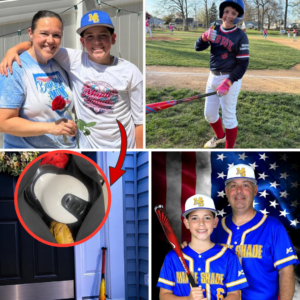
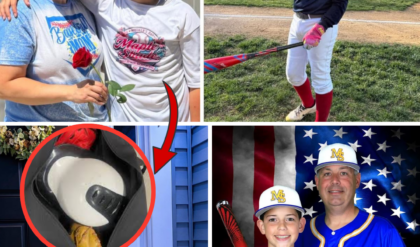
“If only I had looked back one more time…”: The father of 12-year-old Xavier Taylor says there’s a small detail hidden in the last family photo taken that afternoon, and now he can’t stop staring at it
In the dim glow of a hospital room at University Hospital in San Antonio, where the rhythmic beeps of life-support machines formed a constant backdrop to whispered prayers, the father of 12-year-old Xavier Taylor found himself trapped in an endless…
THEY DIDN’T REALIZE IT UNTIL LATER…: Following the latest update on Xavier Taylor’s health, his best friend revealed a problem with the protective gear—and the reason why left everyone speechless
In the hushed atmosphere of Xavier Taylor’s hospital room at University Hospital in San Antonio, where the faint glow of monitors cast long shadows across the walls lined with children’s drawings, the latest medical update delivered another layer of uncertainty…
End of content
No more pages to load