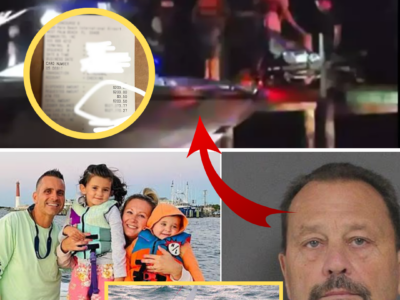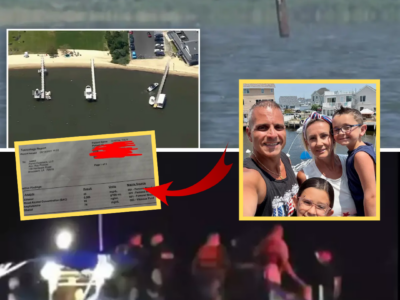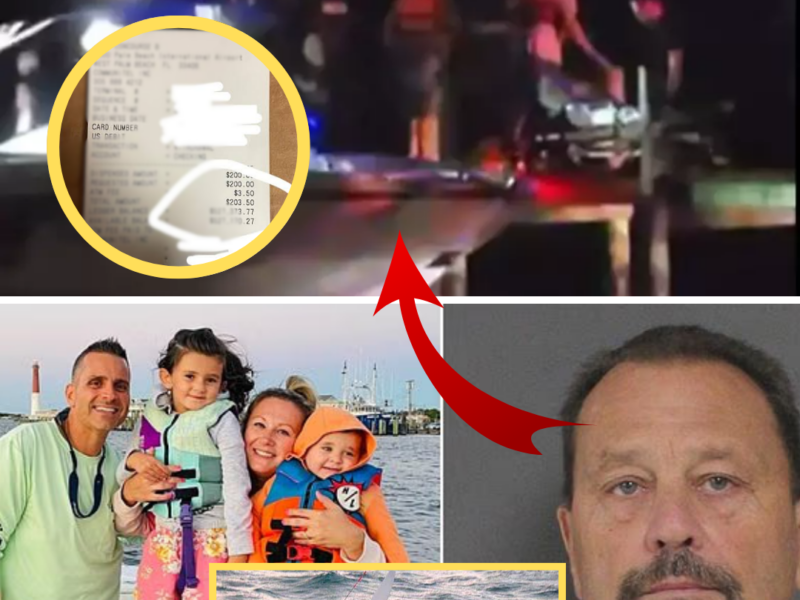
“Only three beers”: Stephen Schneider offered this explanation, but a witness cited a completely different figure!
“Only three beers”: Stephen Schneider offered this explanation, but a witness cited a completely different figure!
Stephen Schneider claimed he had consumed only two Guinnesses and one Miller Lite before the outing with Mya and Sigmund.
However, a subsequent blood alcohol content (BAC) reading of approximately 0.16% became one of the prosecution’s key pieces of evidence.
The real battle hinged on whether his account regarding the beers could hold up against the toxicology evidence.
***************

The profound legal and forensic impasse surrounding the prosecution of Stephen Schneider hinges on a glaring contradiction between self-reported moderation and unyielding chemical metrics: a modest claim of three drinks set against a staggering blood alcohol concentration of 0.16%. On a deceptively calm yet pitch-black July evening, the tranquil waters of New Jersey’s Barnegat Bay became the site of an unspeakable tragedy when a 30-foot center console boat violently collided with wooden Intracoastal Waterway marker number 39. The catastrophic impact instantly thrust 9-year-old Mya Bella Golabek and her 7-year-old brother, Sigmund Paul Golabek, into the cold, unforgiving depths of the estuary, ultimately claiming their young lives. In the weeks following the accident, as grief rippled through the tight-knit coastal community, a fierce battle erupted over what actually caused the fatal crash.
While the prosecution anchors its entire case on the premise of severe chemical impairment, pointing to the midnight blood draw as undeniable proof of reckless wrongdoing, the defense is aggressively challenging every facet of that narrative, forcing an intense courtroom reckoning over witness testimony, toxicological science, and maritime environmental hazards.
The controversy began to take shape when law enforcement unsealed the probable cause affidavits, revealing the stark contrast between what Schneider told investigators and what the laboratory instruments recorded. According to police reports, Schneider maintained that during a two-hour stop at a local waterfront restaurant prior to the outing, he consumed precisely two Guinness stouts and a single Miller Lite. Under standard pharmacokinetic models, Widmark curve equations, and general physiological averages for an adult male of his build, consuming three standard alcoholic beverages over a span of two hours should theoretically result in a blood alcohol level well below the legal operating threshold of 0.08%, let alone double that amount.
However, when a court-ordered blood sample was drawn at a medical facility at 12:46 a.m. and subsequently analyzed, it registered a blood alcohol content of approximately 0.16%. This massive disparity immediately became the epicenter of the legal dispute, leaving independent toxicologists, prosecutors, and defense attorneys grappling with how a self-reported intake of three beers could possibly align with a post-accident reading of 0.16%.
For the prosecution, this numerical reading serves as the ultimate cornerstone for establishing criminal recklessness and depraved indifference to human safety. Prosecutors argue that the 0.16% BAC level tells an unambiguous story of an operator who chose to get behind the helm of a powerful motor vessel while severely intoxicated, directly leading to the catastrophic navigational failure that killed his two grandchildren. In the eyes of the state, Schneider’s claim of having only three beers is nothing more than a self-serving minimization strategy designed to mitigate severe legal exposure and deflect personal accountability for a fatal accident.
The state intends to use expert toxicological testimony to demonstrate that achieving a 0.16% concentration requires a significantly higher volume of alcohol consumption, thereby exposing Schneider’s initial statements to law enforcement as fundamentally untruthful and establishing a pattern of evasiveness from the very night of the crash.
Conversely, the defense team is mounting a multi-faceted challenge to neutralize the devastating impact of the toxicological evidence without letting Schneider’s explanation completely undermine his credibility. Defense attorneys are closely scrutinizing the chain of custody governing the blood sample, the exact handling and storage procedures utilized by medical personnel, and the timing of the draw relative to the precise moment of impact. In complex forensic litigation, retrograde extrapolation—the science of working backward from a later test to estimate a person’s blood alcohol level at an earlier point in time—is fraught with variables such as peak absorption windows, metabolic individualities, and stress-induced physiological responses.
If Schneider was still actively absorbing alcohol at the time of the collision, his impairment level on the water may have been substantially different from the midnight laboratory result. Furthermore, the defense is investigating whether larger serving sizes, such as heavy 16-ounce or 20-ounce imperial pints often served at local establishments, could account for a higher alcohol intake than what is traditionally implied by the phrase “three beers.”
Yet, the core brilliance—and controversy—of the defense strategy lies in its refusal to let the trial become exclusively about a toxicological debate. While the state fixates on the driver’s blood alcohol level, the defense is aggressively shifting the courtroom focus toward the physical and environmental realities of Barnegat Bay on that moonless July night.
They are raising critical questions about the visibility and structural maintenance of Intracoastal Waterway marker number 39, the very obstruction that intercepted the vessel. Marine safety experts and accident reconstruction specialists are being brought in to testify whether the wooden piling met federal and state navigational lighting standards. In a pitch-black estuary where ambient shore lights create disorienting visual illusions, an unlit or poorly illuminated marker functions essentially as a hidden trap, waiting silently to catch passing watercraft. The defense contends that even a completely sober and hyper-vigilant mariner could easily fail to detect an unlit, unreflective wooden post protruding from the dark water, suggesting that environmental blindness rather than alcohol consumption was the true proximate cause of the crash.
This stark division between the two legal camps highlights a classic courtroom tug-of-war between subjective human testimony and objective chemical metrics, underpinned by the profound emotional shadow of Mya and Sigmund’s deaths. The tragedy shattered a family, yet in an extraordinary display of grace and forgiveness, the parents of the deceased children broke through the public fury by writing letters to the judge, asking that their grieving grandfather be released from jail to await trial at home. Their poignant plea underscored the absolute devastation tearing through the family, emphasizing that keeping an elderly relative locked behind bars could never undo the heartache of losing two children. As pre-trial hearings progress toward final depositions and jury selection, the battle lines remain fiercely drawn. Whether the jury will ultimately view the 0.16% BAC reading as an unvarnished proof of criminal recklessness or dismiss it in the face of compelling evidence regarding invisible maritime hazards will ultimately determine the legal fate of Stephen Schneider, cementing this case as one of the most complex chapters in modern maritime jurisprudence.