How a Location Tracking App Helped Reveal the Wilmer, Alabama Triple Murder — And Why the Phone’s Movement Still Haunts Investigators
In the quiet rural community of Wilmer, Alabama, the brutal murders of three members of the same family might have remained hidden for much longer if not for a small piece of technology on a smartphone. Investigators say the deaths of Lisa Gail Fields, her 17 year old pregnant daughter Keziah Luker, and 12 year old Thomas Cordelle Jr. were ultimately discovered after Keziah’s boyfriend noticed something deeply unusual on a location tracking app.
The app was Life360, a widely used family safety platform that allows people to see the real time location of loved ones through their smartphones. For many families, it is simply a way to keep track of relatives while traveling or ensure someone arrives home safely. In this case, however, it may have played a critical role in exposing a horrifying crime.

According to investigators, Keziah Luker’s boyfriend had access to her location through the Life360 app. At some point during the night before the bodies were discovered, he began noticing activity that did not make sense. The map showing the position of Keziah’s phone appeared to change in a way that raised immediate concern.
Normally the location indicator would show that Keziah was at home, where she lived with her family. But something about the movement he observed suggested the phone might have been shifting positions. The behavior was unusual enough to make him uneasy, especially because Keziah had suddenly stopped responding to calls and messages.
The moment he realized something was wrong, he contacted relatives and asked someone to check on her. That request would soon lead to the discovery of one of the most disturbing crime scenes in Mobile County in recent memory.
When family members arrived at the home on Auble Moody Road, they found the bodies of three victims inside. Authorities later confirmed the victims were Keziah Luker, her mother Lisa Gail Fields, and her younger brother Thomas Cordelle Jr. Each had been murdered in separate rooms of the residence.
Investigators quickly determined that the killings were not only violent but also involved deliberate restraint of the victims. Each family member had been bound with zip ties before the fatal attacks took place. The restraints suggested the victims had been subdued before the violence began.
The brutality of the murders shocked investigators. Lisa Gail Fields suffered multiple stab wounds and her throat was cut. Keziah Luker, who was eight months pregnant, died from a gunshot wound. Twelve year old Thomas Cordelle Jr. suffered a devastating throat injury that authorities described as nearly decapitating.

As detectives examined the evidence and began reconstructing the timeline of events, they realized that the strange activity on Keziah’s phone may have been one of the earliest signs that something terrible had happened inside the house.
Location tracking apps like Life360 rely on GPS signals and mobile network data to estimate the position of a phone. If a phone moves even a short distance, the change can appear on the map used by other members of the network. For Keziah’s boyfriend, the unusual movement suggested the phone might not have been where it was supposed to be.
What investigators later began considering is a deeply unsettling possibility. If Keziah herself was no longer using the phone when the movement occurred, someone else may have been carrying it.
That realization raises disturbing questions about the actions of the killer or killers inside the home. If the attackers handled Keziah’s phone, they may have unintentionally revealed their presence through the app’s location tracking system.
Detectives are now examining digital records connected to the device to determine exactly when the movement occurred and how far the phone traveled. Even small changes in location data could provide clues about the sequence of events during the crime.
If the phone was moved after the murders began, it might indicate the perpetrator remained inside the home for some time. The device could have been picked up during a search of the house or while the attacker moved through different rooms.
Investigators have also reported that parts of the residence appeared to have been ransacked. Drawers were open and items were displaced, suggesting someone had been looking for something inside the home. Whether the attackers found what they were searching for remains unknown.
The possibility that the killers searched the house after restraining the victims adds another layer of horror to the case. If the victims were tied up first, the attackers may have had the freedom to move throughout the residence while the family members were unable to escape.
Despite the extreme violence of the attack, one person inside the house survived. Authorities discovered an eighteen month old toddler alive and unharmed in the same home where the murders occurred. The child is believed to be Keziah Luker’s young daughter.
The survival of the toddler has become one of the most haunting aspects of the tragedy. Investigators have not explained whether the attackers were aware the child was present or why the toddler was spared.

Friends and relatives of the victims describe them as members of a close knit family who lived quietly in the rural community north of Mobile. Lisa Gail Fields was known as a hardworking mother devoted to her children. Keziah Luker had recently completed her GED and was preparing for the birth of her baby.
Because Keziah was eight months pregnant at the time of her death, the tragedy may legally involve an additional victim. Alabama law allows unborn children to be recognized in homicide cases under certain circumstances. If prosecutors determine the legal criteria are met, the case could potentially be treated as involving four victims.
For investigators, the digital evidence connected to Keziah’s phone may prove crucial in understanding exactly what happened during the final hours inside the home. Smartphones often record far more information than many users realize. GPS coordinates, connection logs, motion sensors, and communication records can all provide valuable insights into a person’s movements and actions.
Specialists in digital forensics are likely analyzing the phone’s location history second by second. Even a brief movement could reveal whether the device was carried into another room, taken outside the house, or transported somewhere nearby.
The boyfriend’s decision to pay attention to the unusual movement may have prevented the crime from remaining undiscovered for days. Without the Life360 alert, the murders might not have been discovered until someone visited the home or relatives realized the family had gone silent.
Instead, the strange movement of a small icon on a smartphone map triggered concern that led to a welfare check. That check ultimately exposed the horrifying scene inside the Wilmer home.
As the investigation continues, detectives are reviewing forensic evidence collected from the property, including DNA samples, fingerprints, and digital data from devices connected to the victims. They are also examining phone records and possible surveillance footage from nearby roads that could reveal vehicles entering or leaving the area around the time of the murders.
Authorities have indicated they are following several leads but have not publicly identified any suspects. Law enforcement officials believe someone may have information that could help solve the case and have urged members of the public to come forward if they noticed suspicious activity in the area.
For the community of Wilmer, the realization that a simple location tracking app helped uncover the crime has added a surreal dimension to the tragedy. A tool designed to help families stay connected may have been the very thing that exposed what happened inside the house.
Yet the digital clue also leaves behind a haunting mystery. At some point during the night, Keziah Luker’s phone appeared to move in a way that worried the person watching the map.
If she was no longer able to use the device herself, the question investigators now face becomes chillingly simple.
Who was holding the phone.
News

BREAKING: NEW DEVELOPMENTS EMERGE IN THE HENRY NOWAK CASE
BREAKING: NEW DEVELOPMENTS EMERGE IN THE HENRY NOWAK CASE The investigation surrounding Henry Nowak has taken another significant turn after authorities announced additional charges. The latest legal development is being described as a major shift in the case, with many…

UNBEARABL — HENRY NOWAK’S FATHER SPEAKS OUT AFTER THE SENTENCING
UNBEARABL — HENRY NOWAK’S FATHER SPEAKS OUT AFTER THE SENTENCING In an emotional public statement, Henry Nowak’s father has strongly criticized the way authorities handled his son’s final hours, describing the experience as “unbearable.” As the person responsible was sentenced,…
“THE DNA DIDN’T MATCH HIM.” 😳🚢 A major twist has emerged in the Anna Kepner case after investigators revealed DNA from an unknown teenage male was found during the cruise ship investigation 👀 👇 But it’s the single unidentified fingerprint that reportedly still doesn’t belong to anyone in the case that is now raising even more questions
New questions raised over Anna Kepner’s Carnival cruise murder after DNA from unknown male minor found Anna Kepner, 18, allegedly had sex with an unknown male juvenile aboard a Carnival cruise ship shortly before her shocking death, federal prosecutors revealed….
He’s changed: Ryan Willis McFarland, the son of the man accused of killing six family members before committing suicide, leaving his only son grieving the loss of his entire family, has officially spoken out to recount everything that happened, revealing his motives
Son loses entire family after father kills 6 before turning gun on himself, police say Six people were killed in an Iowa town before the gunman fatally shot himself, according to local police. Muscatine police said 52-year-old Ryan Willis McFarland…
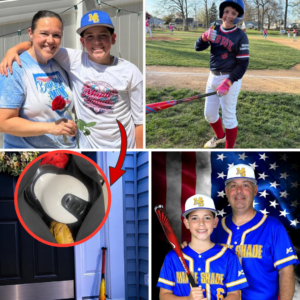
“If only I had looked back one more time…”: The father of 12-year-old Xavier Taylor says there’s a small detail hidden in the last family photo taken that afternoon, and now he can’t stop staring at it
In the dim glow of a hospital room at University Hospital in San Antonio, where the rhythmic beeps of life-support machines formed a constant backdrop to whispered prayers, the father of 12-year-old Xavier Taylor found himself trapped in an endless…
THEY DIDN’T REALIZE IT UNTIL LATER…: Following the latest update on Xavier Taylor’s health, his best friend revealed a problem with the protective gear—and the reason why left everyone speechless
In the hushed atmosphere of Xavier Taylor’s hospital room at University Hospital in San Antonio, where the faint glow of monitors cast long shadows across the walls lined with children’s drawings, the latest medical update delivered another layer of uncertainty…
End of content
No more pages to load